Can a 30 Ton Press be used for riveting?
As a supplier of 30 ton presses, I often get asked whether our equipment can be used for riveting. Riveting is a crucial metal - joining process used across various industries, from automotive manufacturing to aerospace engineering. In this blog, I'll explore the viability of using a 30 ton press for riveting, considering different aspects such as press capabilities, riveting requirements, and scenarios where it might be the right choice.
Understanding the 30 Ton Press
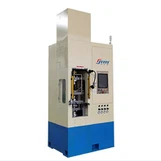
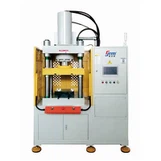
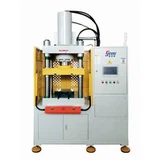
First, let's understand what a 30 ton press is. A 30 ton press is a powerful machine designed to apply a force of 30 tons. This force can be harnessed for multiple applications, including pressing, punching, and yes, potentially riveting. The press can be hydraulic, mechanical, or pneumatic, with hydraulic presses being the most common due to their smooth operation and precise control.
Our company offers high - quality 30 ton presses that are built with durability and efficiency in mind. These presses are engineered to handle a wide range of tasks, and their versatility is one of their key selling points. For example, our Hydraulic Press with Foot Pedal provides operators with easy - to - use functionality, allowing for hands - free operation during certain tasks, which can be quite advantageous in a riveting process.
Riveting Requirements
Before determining whether a 30 ton press is suitable for riveting, we need to understand the requirements of the riveting process. Riveting involves joining two or more pieces of metal by deforming a rivet to hold them together. The success of the riveting process depends on several factors, including the type of rivet, the thickness and material of the workpieces, and the required clamping force.


There are different types of rivets, such as solid rivets, blind rivets, and tubular rivets. Each type has its own set of requirements when it comes to installation. Solid rivets, for example, typically require a significant amount of force to deform and create a strong joint. The thickness and material of the workpieces also play a crucial role. Thicker and harder materials will demand more force to achieve a proper rivet deformation.
Can a 30 Ton Press Meet Riveting Needs?
The answer to whether a 30 ton press can be used for riveting is: it depends. In many cases, a 30 ton press has sufficient force to handle common riveting tasks. For thin - to - medium - thickness metal sheets and standard - sized rivets, a 30 ton press can provide the necessary clamping force to deform the rivet and create a secure joint.
Let's consider an example in the automotive industry. When assembling body panels, which are often made of steel or aluminum sheets of moderate thickness, a 30 ton press can effectively rivet the components together. The press can be adjusted to apply the right amount of force, ensuring that the rivets are properly set without causing damage to the panels.
However, there are limitations. For very thick metal plates or large - diameter solid rivets, a 30 ton press may not provide enough force. In such cases, a more powerful press, like our 50 Ton Electric Hydraulic Press, might be required. The 50 ton press offers a higher force capacity, making it better suited for heavy - duty riveting applications.
Advantages of Using a 30 Ton Press for Riveting
If the riveting task is within the capacity of a 30 ton press, there are several advantages to using this equipment.
Cost - effectiveness
A 30 ton press is generally more affordable than higher - capacity presses. For small to medium - sized businesses or projects with a limited budget, investing in a 30 ton press can be a cost - effective solution for riveting needs. It allows companies to perform riveting operations without breaking the bank.
Space - efficiency
30 ton presses are relatively compact compared to larger presses. They take up less floor space in a workshop, which is a valuable consideration, especially for facilities with limited space. This makes them suitable for small - scale manufacturing operations or workshops where space is at a premium.
Versatility
As mentioned earlier, 30 ton presses are versatile machines. In addition to riveting, they can be used for other tasks such as punching holes, bending metal, and pressing bearings. This multi - functionality makes them a valuable asset in a manufacturing environment.
Limitations and Considerations
While a 30 ton press can be used for riveting in many cases, there are some limitations and considerations to keep in mind.
Force Limitations
As discussed, the force capacity of a 30 ton press may not be sufficient for all riveting applications. If you are working with thick materials or large rivets, you may need to upgrade to a more powerful press.
Precision
Riveting often requires a high level of precision. The press must be able to apply the force evenly and accurately to ensure a proper rivet deformation. Some 30 ton presses may not have the same level of precision control as more advanced, higher - end models. It's important to choose a press with features that allow for precise force adjustment and control.
Alternatives to a 30 Ton Press for Riveting
If a 30 ton press is not suitable for your riveting needs, there are alternatives. For smaller - scale riveting tasks, a 20 Ton Press might be sufficient. It offers a lower force capacity but can be more cost - effective and space - saving.
On the other hand, if you need to handle heavy - duty riveting tasks, a press with a capacity greater than 30 tons, such as a 50 ton or 100 ton press, would be a better choice. These presses can provide the necessary force to deform large rivets and join thick materials.
Conclusion
In conclusion, a 30 ton press can be used for riveting in many cases, especially when dealing with thin - to - medium - thickness materials and standard - sized rivets. It offers cost - effectiveness, space - efficiency, and versatility. However, it's important to assess your specific riveting requirements carefully. Consider the type of rivets, the thickness and material of the workpieces, and the required level of precision.
If you're interested in learning more about our 30 ton presses or need advice on whether they are suitable for your riveting applications, we're here to help. Our team of experts can provide detailed information and guidance to help you make the right decision. Contact us to start a discussion about your procurement needs and find the best press solution for your business.
References
- Machinery's Handbook, 31st Edition. This comprehensive reference book provides in - depth information on metalworking processes, including riveting and press operations.
- Automotive Manufacturing Technology textbooks, which offer insights into the use of presses in the automotive industry for riveting and other assembly operations.