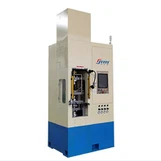
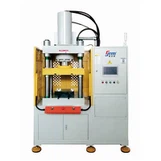
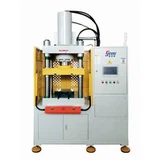
Hey there! As a supplier of 55 - ton hydraulic presses, I often get asked if these bad - boys can be used for extruding. Well, let's dive right into it and find out.
First off, what's extrusion? Extrusion is a manufacturing process where a material, usually a metal, plastic, or rubber, is forced through a die of a specific cross - sectional shape. This process is super important in industries like automotive, construction, and consumer goods manufacturing. It's used to create things like pipes, rods, and complex cross - section profiles.
Now, let's talk about our 55 - ton hydraulic press. A hydraulic press works by using hydraulic cylinders to generate a compressive force. The "55 tons" refers to the maximum amount of force that the press can exert. That's a whole lot of power! But can it be harnessed for extrusion?
The Feasibility of Using a 55 - Ton Hydraulic Press for Extrusion
Material Considerations
The type of material you want to extrude plays a huge role. For softer materials like some plastics and rubber, a 55 - ton hydraulic press might just do the trick. These materials don't require an insanely high amount of force to be pushed through a die. For example, polyethylene, a common plastic, can be extruded with a relatively lower force compared to metals.
On the other hand, metals are a different story. Some metals, like aluminum, can be extruded with a 55 - ton press if the cross - section of the extrusion is small and the length is not too long. But for tougher metals like steel, it's going to be a real challenge. Steel has a high yield strength, which means it takes a massive amount of force to deform it into the desired shape. In most cases, extruding steel would require a press with much higher tonnage.
Die Design
The design of the die is also crucial. A well - designed die can help distribute the force evenly during the extrusion process. If the die is too complex or has a very small cross - section, it might require more force than a 55 - ton press can provide. The die needs to be carefully engineered to ensure that the material flows smoothly through it without getting stuck or causing excessive wear on the press components.
Extrusion Speed
Another factor to consider is the extrusion speed. A 55 - ton hydraulic press might not be the fastest option out there. In high - volume production environments, speed is often of the essence. If you need to produce a large number of extrusions in a short period, you might want to look into a Fast Hydraulic Press. These presses are designed to operate at higher speeds, which can significantly increase your production efficiency.
Advantages of Using a 55 - Ton Hydraulic Press for Extrusion
Cost - Effectiveness
One of the biggest advantages of using a 55 - ton hydraulic press for extrusion is cost - effectiveness. Compared to larger, more powerful presses, a 55 - ton press is generally more affordable to purchase and maintain. If you're a small - to - medium - sized business or just starting out in the extrusion industry, this can be a huge plus. You can get into the game without breaking the bank.
Flexibility
A 55 - ton hydraulic press offers a good deal of flexibility. It can be used for a variety of extrusion applications, especially those involving smaller parts or less demanding materials. You can also easily switch between different dies to produce different shapes and sizes of extrusions. This makes it a versatile tool for businesses that need to produce a range of products.
Limitations
Limited Force Capacity
As mentioned earlier, the 55 - ton force capacity can be a limitation when it comes to extruding large or tough materials. If you need to extrude thick - walled pipes or large - scale metal profiles, you'll likely need a press with a higher tonnage, such as a 50 Ton Electric Hydraulic Press or even larger.
Production Volume
For high - volume production, a 55 - ton press might not be able to keep up. The slower extrusion speed and the need for more frequent die changes can limit the number of parts you can produce in a given time frame. If you're looking to mass - produce extrusions, you might want to consider investing in a more powerful and faster press.
Other Hydraulic Press Options
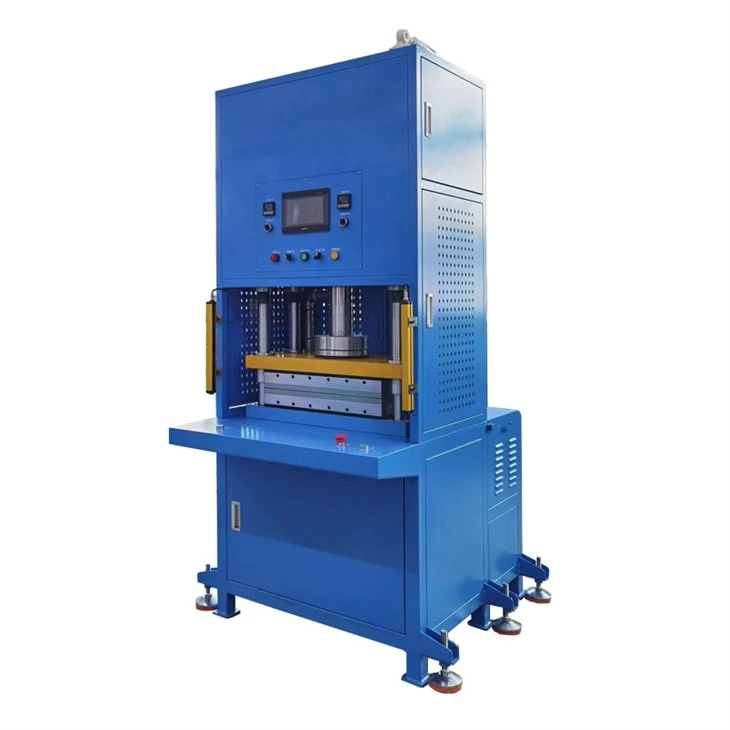
If the 55 - ton hydraulic press doesn't quite meet your extrusion needs, we also offer other options. For smaller - scale extrusion projects or applications where less force is required, our 10 Ton Electric Hydraulic Press could be a great choice. It's more compact and energy - efficient, making it suitable for workshops with limited space.

Conclusion
So, can a 55 - ton hydraulic press be used for extruding? The answer is yes, but with some limitations. It's a viable option for extruding softer materials or smaller - scale metal parts. It offers cost - effectiveness and flexibility, but it might not be suitable for high - volume production or extruding large, tough materials.
If you're interested in learning more about our 55 - ton hydraulic presses or any of our other products, feel free to reach out. We're here to help you find the right solution for your extrusion needs. Whether you're a small business just starting out or an established manufacturer looking to upgrade your equipment, we've got you covered.
References
- "Manufacturing Engineering and Technology" by S. Kalpakjian and S. R. Schmid
- "Introduction to Plastics Engineering" by J. A. Brydson