As a supplier of fast hydraulic presses, I often encounter inquiries from customers about the diverse applications of our equipment. One question that frequently arises is whether a fast hydraulic press can be used for laminating operations. In this blog post, I'll delve into the technical aspects, advantages, and considerations of using a fast hydraulic press for laminating, drawing on my experience in the industry.
Understanding the Basics of Laminating
Laminating is a process of bonding two or more layers of materials together to create a single, more durable or functional composite. This process is widely used in various industries, including woodworking, automotive, aerospace, and electronics. The materials used in laminating can range from paper and plastic films to metal sheets and composite fibers. The key to a successful lamination is applying the right amount of pressure, heat (in some cases), and time to ensure a strong and uniform bond between the layers.
How Fast Hydraulic Presses Work
Fast hydraulic presses are designed to generate high pressure quickly and efficiently. They operate on the principle of Pascal's law, which states that pressure applied to a confined fluid is transmitted equally in all directions. In a hydraulic press, a hydraulic pump forces hydraulic fluid into a cylinder, which in turn moves a piston. The piston then applies pressure to the workpiece placed between the press platens.
The "fast" aspect of a fast hydraulic press refers to its ability to reach the desired pressure rapidly and cycle quickly between operations. This is achieved through advanced hydraulic systems, high - capacity pumps, and optimized control systems. These features make fast hydraulic presses ideal for applications that require high - speed production and precise pressure control.

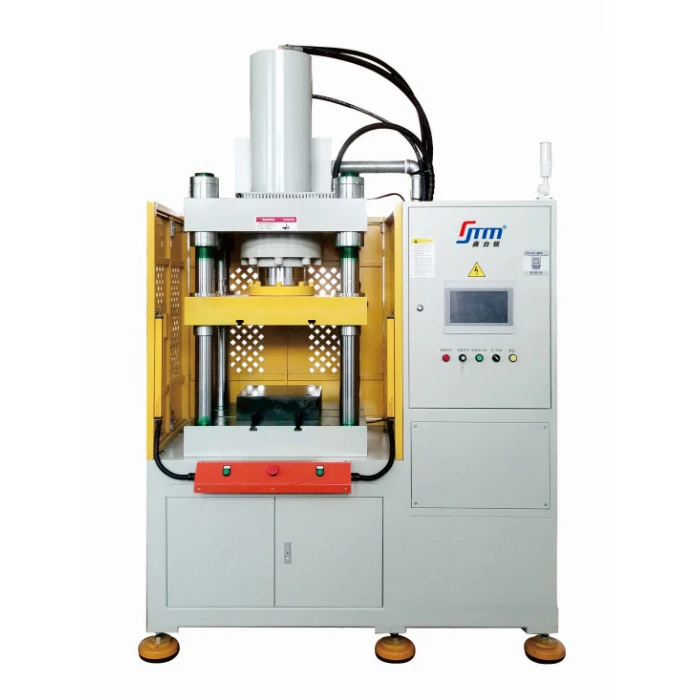
Using a Fast Hydraulic Press for Laminating
Advantages
- High Pressure and Uniformity
Fast hydraulic presses can generate extremely high pressures, which is crucial for ensuring a strong bond between the layers in a lamination. The pressure is evenly distributed across the platens, resulting in a uniform bond throughout the laminated material. This is particularly important for large - format laminations or when using materials that require high pressure to bond effectively. - Speed and Efficiency
The rapid cycling capability of fast hydraulic presses allows for high - volume production. In a laminating process, this means that more laminated products can be produced in a shorter period of time, increasing overall productivity and reducing production costs. - Precise Pressure Control
Modern fast hydraulic presses are equipped with advanced control systems that allow for precise adjustment of the pressure. This is essential for laminating different types of materials, as each material may require a specific pressure range to achieve the best results. For example, laminating a thin plastic film may require a lower pressure compared to laminating a thick composite panel. - Versatility
Fast hydraulic presses can be used with a variety of laminating materials and processes. They can be adapted to work with cold lamination (which does not require heat) or hot lamination (where heat is applied to activate the adhesive). This versatility makes them suitable for a wide range of industries and applications.
Considerations
- Temperature Control
In some laminating processes, heat is required to activate the adhesive. While fast hydraulic presses can be equipped with heating elements on the platens, ensuring precise temperature control can be a challenge. The rapid cycling of the press may cause temperature fluctuations, which can affect the quality of the lamination. Therefore, it is important to have a well - designed temperature control system in place. - Material Compatibility
Not all materials are suitable for lamination using a fast hydraulic press. Some materials may be too brittle or sensitive to high pressure, which can cause them to crack or deform during the lamination process. It is essential to conduct thorough testing on the materials before full - scale production to ensure compatibility. - Maintenance
Fast hydraulic presses are complex machines that require regular maintenance to ensure optimal performance. The hydraulic system, in particular, needs to be inspected and serviced regularly to prevent leaks and ensure proper pressure generation. Additionally, the platens need to be kept clean and flat to ensure uniform pressure distribution.
Examples of Laminating Applications with Fast Hydraulic Presses
- Wood Laminating
In the woodworking industry, fast hydraulic presses are used to laminate veneers onto wood substrates. This process is used to create high - quality furniture, cabinetry, and flooring. The high pressure and uniform distribution of the press ensure a strong bond between the veneer and the substrate, resulting in a durable and aesthetically pleasing product. - Composite Laminating
In the aerospace and automotive industries, fast hydraulic presses are used to laminate composite materials, such as carbon fiber and fiberglass. These materials are lightweight and strong, making them ideal for applications where weight reduction is critical. The precise pressure and temperature control of the press are essential for achieving the desired mechanical properties of the composite laminate. - Plastic Film Laminating
Fast hydraulic presses can also be used to laminate plastic films onto various substrates, such as paper or metal. This process is used to create packaging materials, labels, and decorative films. The speed and efficiency of the press allow for high - volume production of these products.
Conclusion
In conclusion, a fast hydraulic press can indeed be used for laminating operations, offering numerous advantages in terms of pressure, speed, and precision. However, it is important to consider the specific requirements of the laminating process, including temperature control, material compatibility, and maintenance.
If you are interested in using a fast hydraulic press for your laminating operations, I encourage you to explore our range of products. We offer a variety of fast hydraulic presses, including the 100 Ton Hydraulic Press, Hydraulic Hose Press, and Hydraulic Press with Foot Pedal. Our team of experts is available to assist you in selecting the right press for your needs and providing technical support throughout the installation and operation process. Contact us to start a discussion about your laminating requirements and how our fast hydraulic presses can help you achieve your production goals.
References
- Smith, J. (2018). Hydraulic Press Technology: Principles and Applications. Industrial Press Inc.
- Jones, A. (2020). Laminating Processes and Materials: A Comprehensive Guide. Wiley - Blackwell.
- Brown, R. (2019). Advances in Composite Laminating Technologies. Springer.