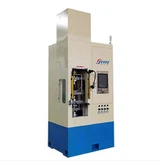
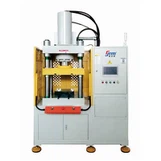
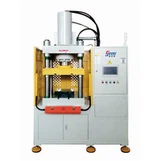
Can a servo mechanical press be used for precision stamping? That's a question I get asked a lot as a supplier of Servo Mechanical Presses. And let me tell you, the answer is a resounding yes! In this blog, I'll break down why servo mechanical presses are a great fit for precision stamping, share some real - world examples, and give you the low - down on how they stack up against other types of presses.
First off, let's talk about what makes precision stamping so special. Precision stamping is all about creating parts with extremely tight tolerances. We're talking about parts where every dimension has to be just right, whether it's the thickness, the shape, or the surface finish. This is crucial in industries like automotive, aerospace, and electronics, where a single mis - stamped part can lead to big problems down the line.
So, how does a servo mechanical press measure up when it comes to precision stamping? Well, one of the biggest advantages of a servo mechanical press is its ability to control the ram movement with incredible precision. Unlike traditional mechanical presses, which have a fixed motion pattern, a servo mechanical press can adjust the speed, position, and force of the ram at any point during the stamping process. This means that you can customize the stamping operation to suit the specific requirements of your part.
For example, let's say you're stamping a very thin and delicate part. With a servo mechanical press, you can slow down the ram speed during the critical forming phase to prevent cracking or deformation. On the other hand, if you're stamping a thicker part, you can increase the force and speed as needed. This flexibility gives you a level of control that's hard to achieve with other types of presses.
Another key feature of servo mechanical presses is their high repeatability. Once you've set up the press for a particular stamping job, it can reproduce the same stamping operation over and over again with very little variation. This is essential for mass - producing precision parts, as it ensures that every part meets the same high - quality standards.
Now, let's compare servo mechanical presses with some other types of presses commonly used in stamping. One popular alternative is the hydraulic press. Hydraulic presses are known for their high force capabilities, but they often lack the speed and precision of servo mechanical presses. A Servo Hydraulic Press Machine tries to combine the best of both worlds, but in many cases, a servo mechanical press can still offer better performance for precision stamping.
Hydraulic presses also tend to have longer cycle times compared to servo mechanical presses. This is because the hydraulic system needs time to build up and release pressure. In a high - volume production environment, these longer cycle times can add up and reduce overall productivity.
Then there's the High Precision Servo Press. While it sounds similar to a servo mechanical press, it's important to note that there are some differences. A high - precision servo press is designed specifically for applications that require extremely tight tolerances. However, servo mechanical presses are more versatile and can handle a wider range of stamping operations. They can be used for both light - duty and heavy - duty stamping, making them a great choice for many different industries.
A Hydraulic Servo Press is another option, but it has its own set of limitations. Hydraulic servo presses rely on hydraulic fluid to transmit power, which can introduce some variability in the stamping process. Servo mechanical presses, on the other hand, use a mechanical drive system that provides a more direct and consistent transfer of power, resulting in better precision.
In real - world applications, servo mechanical presses have proven their worth time and time again. In the automotive industry, they're used to stamp parts like engine components, transmission parts, and body panels. These parts require high precision to ensure proper fit and function, and servo mechanical presses can deliver the accuracy needed.
In the electronics industry, servo mechanical presses are used to stamp small, intricate parts like connectors and circuit boards. The ability to control the stamping process with such precision is crucial for producing these high - tech components.
So, if you're in the market for a press for precision stamping, a servo mechanical press should definitely be on your radar. It offers the precision, flexibility, and repeatability that are essential for producing high - quality stamped parts.
If you're interested in learning more about how a servo mechanical press can benefit your stamping operations, or if you're ready to start a conversation about purchasing one, don't hesitate to reach out. We're here to help you find the right solution for your specific needs. Whether you're a small - scale manufacturer or a large - scale production facility, we have the expertise and the products to meet your requirements.
In conclusion, servo mechanical presses are more than capable of being used for precision stamping. Their advanced features and capabilities make them a top choice for industries that demand the highest level of quality and accuracy in their stamped parts. So, if you're looking to take your stamping operations to the next level, consider investing in a servo mechanical press.
References


- "Stamping Technology Handbook"
- Industry reports on press technologies and precision manufacturing