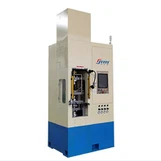
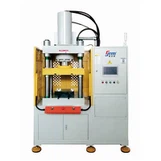
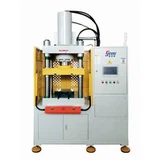
Can hand press machines be used for battery pressing? This is a question that many in the battery manufacturing and related industries often ask. As a supplier of hand press machines, I've had numerous discussions with clients and industry experts on this topic. In this blog post, I'll delve into the feasibility, advantages, limitations, and considerations when using hand press machines for battery pressing.
Feasibility of Using Hand Press Machines for Battery Pressing
Hand press machines, also known as Hand Power Press Machine, have been around for a long time and are used in a variety of industries for tasks such as stamping, punching, and forming. When it comes to battery pressing, the feasibility largely depends on the type of battery, the specific pressing requirements, and the design of the hand press machine.
For small - scale battery production or prototyping, hand press machines can be a viable option. Many small battery manufacturers or research institutions working on new battery technologies need to test and produce small batches of batteries. Hand press machines offer a cost - effective and flexible solution in such scenarios. They can be easily adjusted and customized to meet different pressing needs, allowing for quick experimentation and adaptation.
However, for large - scale commercial battery production, the situation is more complex. The high - volume and consistent quality requirements of mass production may pose challenges for hand press machines. Automated power press machines are often preferred in large - scale operations due to their ability to maintain high precision, speed, and repeatability. But this doesn't mean hand press machines have no place in large - scale settings. They can still be used for secondary operations or in areas where flexibility is more important than high - speed production.
Advantages of Using Hand Press Machines for Battery Pressing
Cost - Effectiveness
One of the most significant advantages of hand press machines is their relatively low cost. For startups or small businesses in the battery industry, purchasing an expensive automated power press machine may not be financially viable. Hand press machines offer a more affordable alternative, allowing these businesses to get started with battery production without a huge upfront investment. Even for larger companies, having a few hand press machines for specific tasks can be a cost - saving measure.
Flexibility
Hand press machines are highly flexible. They can be easily adjusted to accommodate different battery sizes, shapes, and pressing requirements. This flexibility is crucial in the battery industry, where new battery designs are constantly being developed. For example, if a research team is working on a new type of thin - film battery, they can quickly modify the hand press machine to test different pressing pressures and techniques.
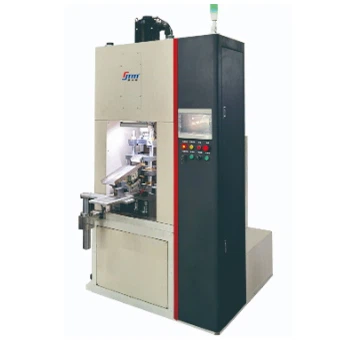

Ease of Use
Compared to complex automated power press machines, hand press machines are much easier to operate. They require minimal training, which is beneficial for small teams or individuals who may not have extensive technical knowledge. This ease of use also means that maintenance and troubleshooting can be done in - house, reducing downtime and maintenance costs.
Limitations of Using Hand Press Machines for Battery Pressing
Limited Production Speed
The most obvious limitation of hand press machines is their relatively slow production speed. Since they are manually operated, the rate of production is much lower than that of automated power press machines. In a large - scale battery manufacturing plant, where thousands or even millions of batteries need to be produced daily, hand press machines simply cannot keep up with the demand.
Inconsistent Quality
Another drawback is the potential for inconsistent quality. Human operators may not be able to apply the exact same pressure and force every time, which can lead to variations in the quality of the pressed batteries. In applications where high precision and consistency are critical, such as in the production of lithium - ion batteries for electric vehicles, this inconsistency can be a major issue.
Considerations When Using Hand Press Machines for Battery Pressing
Safety
Safety is of utmost importance when using hand press machines for battery pressing. Batteries can be hazardous, especially if they are mishandled during the pressing process. Operators need to be properly trained on safety procedures, including how to handle the batteries, how to operate the hand press machine safely, and what to do in case of an emergency. Safety features such as guards and emergency stop buttons should be installed on the hand press machines.
Precision and Accuracy
To overcome the issue of inconsistent quality, it's essential to ensure that the hand press machine is capable of providing the required precision and accuracy. This may involve using high - quality components, calibrating the machine regularly, and implementing quality control measures during the pressing process. For example, using pressure sensors to monitor and adjust the pressing force can help improve the consistency of the battery pressing.
Compatibility with Battery Materials
Different types of batteries are made from different materials, and the hand press machine needs to be compatible with these materials. For example, some battery materials may be sensitive to high pressure or heat, so the hand press machine should be designed to operate within the appropriate parameters. Additionally, the tooling used in the hand press machine should be made from materials that are resistant to corrosion and wear, especially when dealing with battery electrolytes.
Alternatives and Supplementary Equipment
If the limitations of hand press machines are a concern, there are alternatives and supplementary equipment that can be considered. For example, Power Press Second Hand or Power Press Machine Second Hand can offer a more cost - effective option compared to brand - new automated power press machines. These second - hand machines can still provide high - speed and consistent production, while being more affordable.
In addition, some manufacturers use a combination of hand press machines and automated equipment. Hand press machines can be used for initial prototyping and small - batch production, while automated machines take over for large - scale manufacturing. This hybrid approach allows for the best of both worlds, combining the flexibility of hand press machines with the efficiency of automated equipment.
Conclusion
In conclusion, hand press machines can be used for battery pressing, especially in small - scale production, prototyping, and secondary operations. They offer cost - effectiveness, flexibility, and ease of use, but also come with limitations such as limited production speed and inconsistent quality. When considering using hand press machines for battery pressing, it's important to take into account factors such as safety, precision, and compatibility with battery materials.
If you're in the battery industry and are interested in exploring the use of hand press machines for your battery pressing needs, I encourage you to reach out to me. We can have a detailed discussion about your specific requirements and how our hand press machines can be customized to meet them. Whether you're a startup looking for an affordable solution or an established company in need of flexible equipment, I'm here to help you make the right choice.
References
- Smith, J. (2020). Handbook of Battery Manufacturing. Elsevier.
- Johnson, R. (2019). Press Machine Technology: Principles and Applications. Wiley.
- Brown, A. (2021). Advances in Battery Technology and Production. Springer.