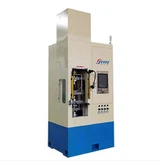
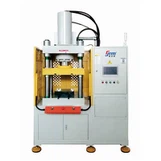
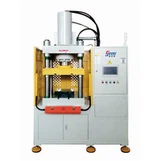
In the dynamic landscape of modern manufacturing, the servo hydraulic press machine stands as a cornerstone of efficiency and precision. As a dedicated supplier of Servo Hydraulic Press Machine, I've witnessed firsthand the versatility and adaptability of these remarkable machines in handling a diverse array of workpieces. This blog post aims to delve into the intricacies of how a servo hydraulic press machine manages different workpieces, exploring the key factors that contribute to its success.
Understanding the Basics of a Servo Hydraulic Press Machine
Before we dive into the details of workpiece handling, let's briefly review the fundamental principles of a servo hydraulic press machine. At its core, a servo hydraulic press combines the power of hydraulic systems with the precision control of servo motors. This integration allows for accurate force, speed, and position control, making it an ideal choice for a wide range of applications.
The servo motor in a servo hydraulic press machine regulates the flow and pressure of hydraulic fluid, enabling precise control over the movement of the press ram. This level of control is crucial when working with different workpieces, as it allows for customization of the pressing process to meet the specific requirements of each job.
Factors Affecting Workpiece Handling
Several factors come into play when a servo hydraulic press machine handles different workpieces. These factors include the material properties of the workpiece, its shape and size, and the required pressing force and precision. Let's take a closer look at each of these factors:
Material Properties
The material properties of a workpiece, such as its hardness, ductility, and elasticity, significantly influence the pressing process. For example, harder materials require higher pressing forces to deform, while more ductile materials can be shaped with less force. A servo hydraulic press machine can be programmed to adjust the pressing force and speed based on the material properties of the workpiece, ensuring optimal results.
Shape and Size
The shape and size of a workpiece also play a crucial role in its handling. Complex shapes may require multiple pressing operations or the use of specialized tooling to achieve the desired form. A servo hydraulic press machine can be equipped with a variety of tooling options, including dies, punches, and fixtures, to accommodate different workpiece shapes and sizes. Additionally, the machine's programmable control system allows for precise positioning of the workpiece, ensuring accurate and consistent results.
Pressing Force and Precision
The required pressing force and precision vary depending on the application. Some workpieces may require a high level of force to achieve the desired deformation, while others may require a more delicate touch to avoid damage. A servo hydraulic press machine offers precise control over the pressing force, allowing for fine-tuning of the process to meet the specific requirements of each job. Additionally, the machine's high-precision servo control system ensures accurate positioning and repeatability, resulting in consistent quality across multiple workpieces.
Techniques for Handling Different Workpieces
To effectively handle different workpieces, a servo hydraulic press machine employs several techniques. These techniques include:


Programmable Control
One of the key advantages of a servo hydraulic press machine is its programmable control system. This system allows operators to set and adjust various parameters, such as pressing force, speed, and position, to suit the specific requirements of each workpiece. By programming the machine, operators can ensure consistent and accurate results, even when working with complex or unique workpieces.
Tooling Selection
The choice of tooling is critical when handling different workpieces. A servo hydraulic press machine can be equipped with a wide range of tooling options, including dies, punches, and fixtures, to accommodate different workpiece shapes and sizes. The tooling should be selected based on the material properties of the workpiece, the required pressing force, and the desired final shape. Additionally, the tooling should be properly maintained and calibrated to ensure optimal performance.
Multi-Stage Pressing
For complex workpieces, multi-stage pressing may be required to achieve the desired form. A servo hydraulic press machine can be programmed to perform multiple pressing operations in a single cycle, allowing for efficient and accurate production. Multi-stage pressing can also help to reduce the risk of workpiece damage by applying the required force in a controlled manner.
Real-Time Monitoring and Feedback
To ensure the quality and consistency of the pressing process, a servo hydraulic press machine can be equipped with real-time monitoring and feedback systems. These systems can detect and alert operators to any deviations from the programmed parameters, allowing for immediate corrective action. Real-time monitoring and feedback also help to optimize the pressing process, reducing waste and improving productivity.
Case Studies: Handling Different Workpieces
To illustrate the versatility of a servo hydraulic press machine in handling different workpieces, let's consider a few case studies:
Automotive Components
In the automotive industry, servo hydraulic press machines are used to manufacture a wide range of components, including engine blocks, transmission cases, and suspension parts. These components are typically made from high-strength materials, such as steel and aluminum, and require precise shaping and forming. A servo hydraulic press machine can be programmed to apply the required pressing force and speed to achieve the desired shape, while its high-precision control system ensures accurate positioning and repeatability.
Aerospace Parts
The aerospace industry demands the highest levels of precision and quality in the manufacturing of parts. Servo hydraulic press machines are used to produce components such as turbine blades, wing spars, and landing gear parts. These parts are often made from exotic materials, such as titanium and composites, and require complex shaping and forming operations. A servo hydraulic press machine can be equipped with specialized tooling and control systems to handle these materials and achieve the required precision.
Electronic Devices
In the electronics industry, servo hydraulic press machines are used to assemble and package electronic devices, such as smartphones, tablets, and laptops. These devices require precise pressing operations to ensure proper alignment and connection of components. A servo hydraulic press machine can be programmed to apply a gentle pressing force to avoid damage to delicate electronic components, while its high-precision control system ensures accurate positioning and repeatability.
Conclusion
In conclusion, a servo hydraulic press machine is a versatile and powerful tool for handling different workpieces. Its programmable control system, wide range of tooling options, and high-precision servo control make it an ideal choice for a variety of applications. By understanding the factors that affect workpiece handling and employing the appropriate techniques, manufacturers can achieve optimal results and improve productivity.
If you're in the market for a Servo Hydraulic Press Machine, Servo Mechanical Press, or High Precision Servo Press, I encourage you to contact us to discuss your specific requirements. Our team of experts is dedicated to providing you with the best solutions for your manufacturing needs.
References
- ASM Handbook, Volume 14A: Metalworking: Bulk Forming. ASM International, 2013.
- Die Design Handbook. Society of Manufacturing Engineers, 2008.
- Fundamentals of Metal Forming. Oxford University Press, 2010.