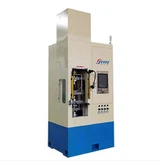
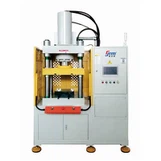
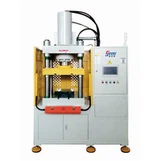
In the industrial landscape, hydraulic line presses are indispensable tools, used in a wide range of applications from automotive manufacturing to heavy machinery production. As a supplier of Hydraulic Line Press, I am well - versed in the safety features of these modern machines. Safety is not just an afterthought; it is a fundamental aspect of design and operation, ensuring the well - being of operators and the longevity of the equipment.
Emergency Stop Systems
One of the most critical safety features in modern hydraulic line presses is the emergency stop system. This is a fail - safe mechanism that allows operators to immediately halt all machine operations in case of an emergency. The emergency stop button is typically large, brightly colored, and easily accessible from the operator's station. When pressed, it cuts off the power supply to the hydraulic pump and disengages the pressing action.
The design of the emergency stop system is based on strict safety standards. It is engineered to be reliable and responsive, with redundant circuits in many high - end models. This redundancy ensures that even if one part of the system fails, the emergency stop function will still work. For example, in a Four Column Three Beam Hydraulic Press, which is often used for heavy - duty pressing tasks, the emergency stop system is a multi - layered protection. It not only stops the main pressing operation but also locks the hydraulic cylinders to prevent any unintended movement.
Pressure Relief Valves
Pressure relief valves are another essential safety feature. These valves are designed to limit the pressure within the hydraulic system to a safe level. In a hydraulic line press, excessive pressure can lead to equipment failure, leaks, or even explosions. The pressure relief valve acts as a safeguard by automatically releasing hydraulic fluid when the pressure exceeds a pre - set limit.
The setting of the pressure relief valve is carefully calibrated based on the maximum safe operating pressure of the press. For instance, in a 30 Ton Press, the pressure relief valve is set to ensure that the press never operates beyond its rated capacity. This protects both the machine and the operator from the potential dangers associated with over - pressurization. Regular maintenance and inspection of these valves are crucial to ensure their proper functioning.
Safety Guards and Enclosures
Modern hydraulic line presses are equipped with safety guards and enclosures to prevent operators from coming into contact with moving parts and high - pressure components. These guards are made of strong materials such as steel or reinforced plastic and are designed to withstand impact.
The safety guards are interlocked with the machine's control system. When a guard is opened or removed during operation, the press automatically stops. This feature prevents operators from accidentally reaching into the danger zone while the machine is running. For example, in a hydraulic press used for stamping operations, the safety guards enclose the stamping area, protecting the operator from flying debris and the moving ram.
Light Curtains and Sensors
Light curtains and sensors are advanced safety features that enhance the protection provided by traditional guards. Light curtains are arrays of infrared light beams that create an invisible barrier around the dangerous parts of the press. When an object, such as an operator's hand, breaks the light beam, the press immediately stops.
Sensors can also be used to detect abnormal vibrations, temperature changes, or fluid leaks. These sensors are connected to the machine's control system, which can trigger an alarm or shut down the press if a problem is detected. For example, a temperature sensor can detect overheating in the hydraulic fluid, indicating a potential problem with the pump or cooling system. By shutting down the press before the situation worsens, these sensors prevent costly damage and ensure operator safety.
Operator Training and Manuals
While the physical safety features of a hydraulic line press are crucial, proper operator training is equally important. As a supplier, we provide comprehensive training programs for our customers. These programs cover everything from basic operation to emergency procedures.


We also supply detailed user manuals that explain the safety features, maintenance requirements, and operating procedures of the press. The manuals are written in a clear and concise manner, with diagrams and illustrations to help operators understand the information. By ensuring that operators are well - trained and informed, we reduce the risk of accidents and improve the overall safety of the workplace.
Maintenance and Inspection
Regular maintenance and inspection are essential for the continued safe operation of hydraulic line presses. Our company offers maintenance services and provides guidelines for self - maintenance. During maintenance, all safety features are checked for proper functioning.
For example, the emergency stop buttons are tested to ensure they are responsive, the pressure relief valves are calibrated, and the safety guards and light curtains are inspected for damage. By keeping the press in good working condition, we extend its lifespan and ensure that the safety features remain effective.
Risk Assessment and Compliance
Before installing a hydraulic line press, a thorough risk assessment should be conducted. This assessment identifies potential hazards and determines the appropriate safety measures to be implemented. Our company can assist customers in conducting these risk assessments and ensuring compliance with relevant safety standards.
Compliance with standards such as OSHA (Occupational Safety and Health Administration) in the United States or CE (Conformité Européene) in Europe is non - negotiable. Our products are designed and manufactured to meet these strict safety requirements, giving our customers peace of mind.
Conclusion
In conclusion, modern hydraulic line presses are equipped with a variety of safety features that protect operators and equipment. From emergency stop systems to advanced sensors, each feature plays a vital role in ensuring safe operation. As a supplier, we are committed to providing high - quality hydraulic line presses with the latest safety technologies.
If you are in the market for a hydraulic line press, or if you have any questions about the safety features of our products, we encourage you to contact us for a detailed discussion. Our team of experts is ready to assist you in selecting the right press for your needs and ensuring a safe and efficient operation.
References
- OSHA Standards for Hydraulic Presses
- CE Safety Guidelines for Industrial Machinery
- Manufacturer's Manuals for Hydraulic Line Presses