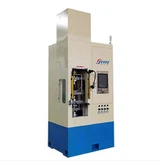
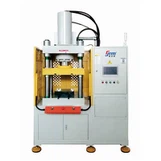
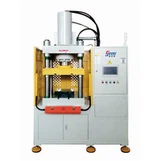
As a supplier of 20 Ton Benchtop Presses, I've had the privilege of witnessing firsthand the diverse applications and capabilities of these powerful machines. One of the most common questions I receive from customers is about the compatibility of a 20 Ton Benchtop Press with different dies. In this blog post, I'll delve into this topic in detail, exploring the factors that determine compatibility and providing practical insights for making the right choices.
Understanding the Basics of Dies and Benchtop Presses
Before we discuss compatibility, it's essential to understand what dies are and how they work in conjunction with a 20 Ton Benchtop Press. Dies are specialized tools used to shape, cut, or form materials such as metal, plastic, or wood. They come in a wide variety of shapes and sizes, each designed for a specific application. A 20 Ton Benchtop Press, on the other hand, is a compact and powerful machine that uses hydraulic or mechanical force to apply pressure to the material being worked on.


The compatibility between a 20 Ton Benchtop Press and different dies depends on several factors, including the press's tonnage capacity, the die's size and shape, and the type of material being processed. Let's take a closer look at each of these factors.
Tonnage Capacity
The tonnage capacity of a 20 Ton Benchtop Press refers to the maximum amount of force it can apply. This is a crucial factor when considering die compatibility because different dies require different levels of force to operate effectively. For example, a simple blanking die that cuts out a flat shape from a sheet of metal may require less force than a complex forming die that shapes the metal into a three-dimensional object.
When selecting a die for your 20 Ton Benchtop Press, it's important to ensure that the press's tonnage capacity is sufficient to handle the die's requirements. Using a die that requires more force than the press can provide can result in poor quality work, damage to the die or the press, and even safety hazards. On the other hand, using a die that requires significantly less force than the press's capacity may not fully utilize the press's capabilities and can lead to inefficient operation.
Die Size and Shape
The size and shape of the die also play a significant role in determining compatibility with a 20 Ton Benchtop Press. The press's work area, which is the space between the ram (the moving part of the press) and the bed (the stationary part of the press), must be large enough to accommodate the die. Additionally, the die's mounting holes or other attachment points must match the press's mounting system to ensure a secure and stable fit.
In some cases, it may be necessary to modify the press or the die to achieve compatibility. For example, if the die is too large for the press's work area, you may need to consider using a larger press, such as a 30 Ton Press. Alternatively, if the die's mounting holes do not match the press's mounting system, you may need to use adapters or make modifications to the die or the press.
Material Type
The type of material being processed is another important factor to consider when choosing a die for your 20 Ton Benchtop Press. Different materials have different properties, such as hardness, ductility, and thickness, which can affect the die's performance and compatibility with the press. For example, a die designed for cutting soft materials like aluminum may not be suitable for cutting hard materials like steel.
When selecting a die for a specific material, it's important to choose a die that is made from a material that is compatible with the workpiece material. For example, carbide dies are often used for cutting hard materials because they are extremely hard and wear-resistant. Additionally, the die's design should be optimized for the specific material being processed to ensure clean cuts, accurate shapes, and minimal waste.
Types of Dies Compatible with a 20 Ton Benchtop Press
Now that we've discussed the factors that determine die compatibility, let's take a look at some of the types of dies that are commonly used with a 20 Ton Benchtop Press.
Blanking Dies
Blanking dies are used to cut out flat shapes from a sheet of material. They are one of the most common types of dies used in metalworking and are suitable for a wide range of materials, including steel, aluminum, brass, and copper. Blanking dies typically require less force than other types of dies, making them a good choice for a 20 Ton Benchtop Press.
Piercing Dies
Piercing dies are used to create holes in a sheet of material. They are similar to blanking dies but are designed to cut out a smaller, circular or rectangular shape. Piercing dies can be used to create holes for fasteners, ventilation, or other purposes. Like blanking dies, piercing dies typically require less force than other types of dies and are compatible with a 20 Ton Benchtop Press.
Bending Dies
Bending dies are used to bend a sheet of material into a specific shape. They are commonly used in the manufacturing of metal components such as brackets, frames, and enclosures. Bending dies require more force than blanking or piercing dies because they must overcome the material's resistance to bending. However, a 20 Ton Benchtop Press is often capable of handling bending operations for small to medium-sized parts.
Forming Dies
Forming dies are used to shape a sheet of material into a three-dimensional object. They are more complex than blanking, piercing, or bending dies and require more force to operate. Forming dies can be used to create a wide range of products, including automotive parts, aerospace components, and consumer goods. While a 20 Ton Benchtop Press may not be suitable for all forming operations, it can be used for smaller-scale projects or for materials that are relatively easy to form.
Tips for Ensuring Die Compatibility
To ensure that your 20 Ton Benchtop Press is compatible with the dies you choose, here are some tips to keep in mind:
- Consult with the Die Manufacturer: The die manufacturer is the best source of information about the die's requirements and compatibility with different presses. Before purchasing a die, contact the manufacturer and provide them with details about your press, including its tonnage capacity, work area, and mounting system. They can help you select a die that is suitable for your press and your specific application.
- Test the Die: Before using a new die on a production run, it's a good idea to test it on a sample workpiece. This will allow you to check the die's performance, ensure that it is compatible with the press, and make any necessary adjustments.
- Maintain the Press and the Dies: Regular maintenance is essential for ensuring the long-term performance and compatibility of your 20 Ton Benchtop Press and the dies. Follow the manufacturer's recommended maintenance schedule for the press, including lubrication, cleaning, and inspection. Additionally, keep the dies clean and free of debris, and replace any worn or damaged parts as needed.
Conclusion
In conclusion, the compatibility of a 20 Ton Benchtop Press with different dies depends on several factors, including the press's tonnage capacity, the die's size and shape, and the type of material being processed. By understanding these factors and following the tips outlined in this blog post, you can ensure that you choose the right dies for your press and achieve optimal performance and results.
If you're in the market for a 20 Ton Benchtop Press or need help selecting the right dies for your application, please don't hesitate to contact us. We have a team of experts who can provide you with personalized advice and support to help you make the right choices. Whether you're a small business owner, a hobbyist, or a large-scale manufacturer, we have the products and expertise to meet your needs.
References
- ASM Handbook Volume 14A: Metalworking: Bulk Forming. ASM International.
- Tool and Manufacturing Engineers Handbook, Volume II: Forming. Society of Manufacturing Engineers.
- Die Design Handbook. Society of Manufacturing Engineers.