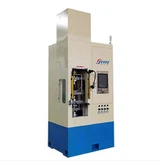
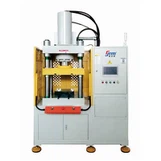
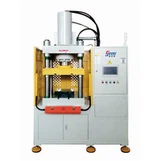
Hey there! As a supplier of 20 Ton H Frame Presses, I often get asked about the electrical power supply requirements for these machines. It's a crucial question because getting the power supply right is essential for the safe and efficient operation of the press. So, let's dive into it and break down what you need to know.
Understanding the Basics of a 20 Ton H Frame Press
First off, let's quickly go over what a 20 Ton H Frame Press is. It's a type of hydraulic press that's shaped like an "H". The "20 Ton" refers to its pressing capacity, which means it can exert a force of 20 tons. These presses are used in a variety of industries for tasks like metal forming, punching, bending, and assembly.
The main components of a 20 Ton H Frame Press include a hydraulic cylinder, a pump, a motor, and a control system. The motor is what drives the pump, which in turn supplies hydraulic fluid to the cylinder to generate the pressing force.
Factors Affecting Power Requirements
There are several factors that determine the electrical power supply requirement for a 20 Ton H Frame Press. Let's take a look at each of them.
Motor Power
The most significant factor is the power of the motor. The motor is responsible for driving the hydraulic pump, and its power rating is usually measured in horsepower (HP) or kilowatts (kW). A typical 20 Ton H Frame Press might have a motor with a power rating of 3 to 5 HP (2.2 to 3.7 kW). However, this can vary depending on the design and specifications of the press.


For example, if the press is designed for high-speed operation or has a large stroke length, it might require a more powerful motor. On the other hand, a press with a slower operating speed or a shorter stroke length might be able to get by with a smaller motor.
Operating Cycle
The operating cycle of the press also affects the power requirement. The operating cycle refers to the time it takes for the press to complete one full cycle of operation, from the start of the pressing stroke to the return of the ram to its original position.
If the press has a high operating cycle, meaning it can complete more cycles per minute, it will require more power. This is because the motor has to work harder and more frequently to drive the pump and generate the necessary pressing force. Conversely, a press with a low operating cycle will require less power.
Efficiency of the Hydraulic System
The efficiency of the hydraulic system also plays a role in determining the power requirement. A more efficient hydraulic system will require less power to operate because it can convert the electrical energy into hydraulic energy more effectively.
Factors that can affect the efficiency of the hydraulic system include the quality of the hydraulic components, the design of the hydraulic circuit, and the viscosity of the hydraulic fluid. Using high-quality components, optimizing the hydraulic circuit design, and using the right hydraulic fluid can all help improve the efficiency of the system and reduce the power requirement.
Calculating the Power Requirement
To calculate the approximate power requirement for a 20 Ton H Frame Press, you can use the following formula:
Power (kW) = (Force (kN) x Stroke (m) x Operating Cycles per Minute) / (60 x Efficiency)
Let's break down the formula:
- Force: The pressing force of the press, which is 20 tons in this case. Since 1 ton is equal to 9.81 kN, a 20 Ton press has a pressing force of 20 x 9.81 = 196.2 kN.
- Stroke: The distance the ram travels during the pressing stroke. This can vary depending on the design of the press, but let's assume it's 0.1 m for this example.
- Operating Cycles per Minute: The number of cycles the press can complete in one minute. Let's assume it's 10 cycles per minute.
- Efficiency: The efficiency of the hydraulic system. A typical efficiency for a hydraulic press is around 80% or 0.8.
Plugging these values into the formula, we get:
Power (kW) = (196.2 kN x 0.1 m x 10 cycles per minute) / (60 x 0.8)
Power (kW) = (196.2 kN.m x 10) / (48)
Power (kW) = 1962 kN.m / 48
Power (kW) ≈ 41 kW
However, this is just an approximate calculation. The actual power requirement may vary depending on the specific design and operating conditions of the press. It's always best to consult the manufacturer's specifications or a qualified engineer for a more accurate calculation.
Electrical Supply Specifications
Once you've determined the power requirement for the press, you need to make sure your electrical supply can meet those requirements. Here are some important electrical supply specifications to consider:
Voltage
The voltage of the electrical supply should match the voltage rating of the motor. Most 20 Ton H Frame Presses are designed to operate on a three-phase electrical supply with a voltage of 380V to 480V. However, some presses may be available for single-phase electrical supplies with a voltage of 220V.
It's important to note that using the wrong voltage can damage the motor and other electrical components of the press. So, make sure you check the voltage rating of the press and use the appropriate electrical supply.
Current
The current rating of the electrical supply should be sufficient to handle the power requirement of the press. You can calculate the current using the following formula:
Current (A) = Power (kW) / (Voltage (V) x √3 x Power Factor)
The power factor is a measure of how effectively the electrical equipment uses the electrical energy. For a motor, the power factor is typically around 0.8 to 0.9.
Let's assume the power requirement of the press is 41 kW, the voltage is 480V, and the power factor is 0.8. Plugging these values into the formula, we get:
Current (A) = 41 kW / (480V x √3 x 0.8)
Current (A) = 41,000 W / (480V x 1.732 x 0.8)
Current (A) = 41,000 W / 665.28 V
Current (A) ≈ 61.6 A
This means the electrical supply should be able to provide a current of at least 61.6 A to operate the press safely and efficiently.
Frequency
The frequency of the electrical supply should also match the frequency rating of the motor. In most countries, the standard frequency is 50 Hz or 60 Hz. Make sure you check the frequency rating of the press and use the appropriate electrical supply.
Other Considerations
In addition to the power requirement and electrical supply specifications, there are a few other things to consider when it comes to the electrical power supply for a 20 Ton H Frame Press.
Electrical Protection
It's important to install appropriate electrical protection devices to protect the press and the electrical supply from damage. This includes circuit breakers, fuses, and overload relays. These devices can help prevent electrical faults, such as short circuits and overloads, and ensure the safe operation of the press.
Grounding
Proper grounding is essential for the safety of the press and the operators. The press should be grounded to a reliable earth ground to prevent electrical shock and protect the electrical equipment from damage. Make sure you follow the manufacturer's instructions and local electrical codes when grounding the press.
Maintenance
Regular maintenance of the electrical system is also important to ensure the safe and efficient operation of the press. This includes checking the electrical connections, inspecting the electrical components for damage or wear, and replacing any faulty components as needed.
Related Products
If you're interested in other types of hydraulic presses, we also offer a range of products, including the 100 Ton Hydraulic Press, the Otc 50 Ton Press, and the Small Hydraulic Press. These presses are designed to meet different pressing requirements and can be customized to suit your specific needs.
Conclusion
In conclusion, the electrical power supply requirement for a 20 Ton H Frame Press depends on several factors, including the motor power, operating cycle, and efficiency of the hydraulic system. By understanding these factors and calculating the power requirement accurately, you can ensure that your electrical supply can meet the needs of the press and operate it safely and efficiently.
If you have any questions or need further information about the electrical power supply requirements for a 20 Ton H Frame Press, or if you're interested in purchasing a press, feel free to reach out to us. We're here to help you find the right solution for your pressing needs.
References
- Hydraulic Press Handbook
- Electrical Engineering Textbooks