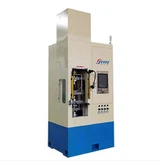
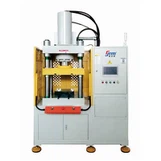
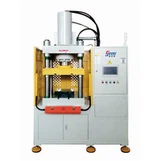
Hey there! I'm a supplier of 20 Ton Hydraulic Presses, and today I wanna chat about the heat dissipation efficiency of these bad boys. It's a topic that doesn't get as much attention as it should, but it's super important for the performance and lifespan of the press.
First off, let's understand why heat dissipation matters. When a 20 Ton Hydraulic Press is in operation, the hydraulic system generates a significant amount of heat. This heat comes from the friction between moving parts, the compression of hydraulic fluid, and the electrical components. If this heat isn't dissipated properly, it can lead to a whole bunch of problems.
One of the main issues is the degradation of the hydraulic fluid. High temperatures can cause the fluid to break down, reducing its lubricating properties and increasing the wear and tear on the hydraulic components. This can lead to leaks, reduced efficiency, and ultimately, costly repairs. Another problem is the expansion of metal parts due to heat. This can cause misalignments, which can affect the accuracy and precision of the press.
So, what factors affect the heat dissipation efficiency of a 20 Ton Hydraulic Press? Well, there are a few key ones.
1. Cooling System Design
The design of the cooling system is crucial. Most 20 Ton Hydraulic Presses come with either air-cooled or water-cooled systems. Air-cooled systems use fans to blow air over heat exchangers, which transfer the heat from the hydraulic fluid to the surrounding air. Water-cooled systems, on the other hand, use water to absorb the heat from the fluid.
Air-cooled systems are generally more cost-effective and easier to maintain. They're also suitable for smaller presses or applications where water isn't readily available. However, they're not as efficient as water-cooled systems, especially in high-temperature environments. Water-cooled systems can dissipate heat more quickly and effectively, but they require a constant supply of water and can be more expensive to install and maintain.
2. Hydraulic Fluid Quality
The quality of the hydraulic fluid also plays a big role in heat dissipation. High-quality fluids have better thermal stability, which means they can withstand higher temperatures without breaking down. They also have better lubricating properties, which reduce friction and heat generation.
When choosing a hydraulic fluid for your 20 Ton Hydraulic Press, make sure to select one that's specifically designed for high-pressure applications. It should also have a high viscosity index, which means it can maintain its viscosity over a wide range of temperatures.
3. Press Usage and Environment
How you use the press and the environment it operates in can also affect heat dissipation. If the press is used continuously for long periods without breaks, it will generate more heat and require a more efficient cooling system. Similarly, if the press is located in a hot or humid environment, it will be more challenging to dissipate heat.
To improve heat dissipation, you can try to reduce the load on the press, take regular breaks during operation, and ensure proper ventilation in the area where the press is located.
Now, let's talk about how we, as a 20 Ton Hydraulic Press supplier, ensure high heat dissipation efficiency in our products.
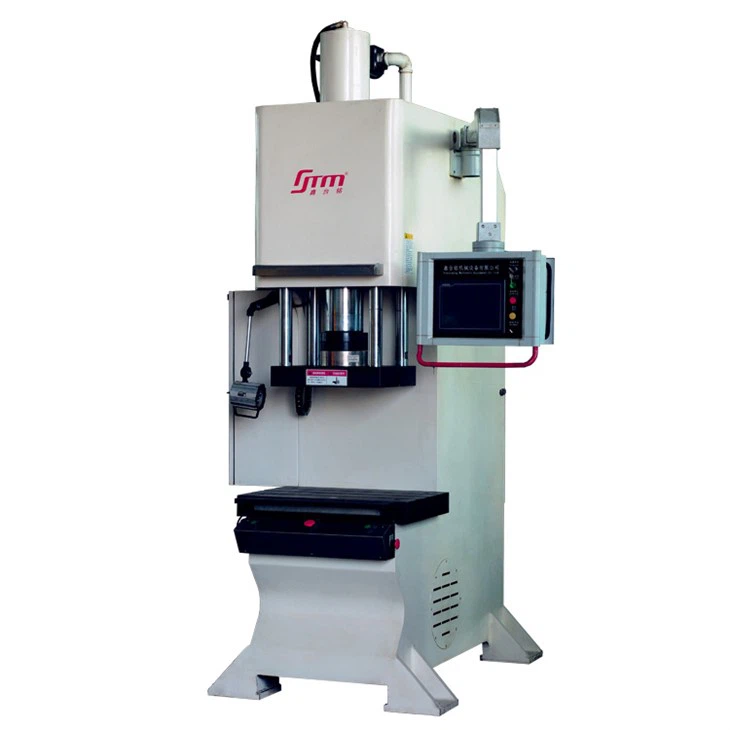

We use state-of-the-art cooling system designs in our presses. Our air-cooled systems are equipped with high-performance fans and large heat exchangers to maximize heat transfer. For water-cooled systems, we use advanced water circulation pumps and efficient heat exchangers to ensure rapid and effective heat dissipation.
We also pay close attention to the quality of the hydraulic fluid. We work with leading fluid manufacturers to source high-quality fluids that meet the strictest industry standards. Our technical team provides detailed guidelines on fluid selection and maintenance to ensure optimal performance.
In addition, we offer customized solutions based on your specific usage and environmental requirements. Whether you need a press for a small workshop or a large industrial facility, we can design a cooling system that meets your needs.
If you're in the market for a 20 Ton Hydraulic Press, you might also be interested in our other products. Check out our Precision Hydraulic Press for high-precision applications, or our 55 Ton Hydraulic Press for more heavy-duty tasks. We also have Air Operated Hydraulic Press options available.
In conclusion, heat dissipation efficiency is a critical factor in the performance and longevity of a 20 Ton Hydraulic Press. By understanding the factors that affect it and choosing a high-quality press with an efficient cooling system, you can ensure smooth operation and minimize maintenance costs.
If you have any questions or are interested in purchasing a 20 Ton Hydraulic Press, don't hesitate to reach out. We're here to help you find the perfect solution for your needs.
References
- "Hydraulic Systems Handbook" by Donald G. Fitch
- "Industrial Hydraulics" by Peter Nemes