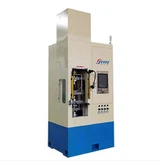
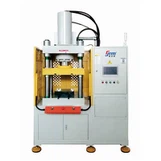
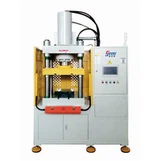
The hydraulic pump flow rate plays a crucial role in determining the overall performance of a Jet Hydraulic Press. As a supplier of Jet Hydraulic Press, I have witnessed firsthand how variations in flow rate can significantly impact the efficiency, productivity, and quality of the pressing operations. In this blog post, I will delve into the intricate relationship between the hydraulic pump flow rate and the performance of a Jet Hydraulic Press, exploring the key factors and considerations that every operator and purchaser should be aware of.
Understanding the Basics of Hydraulic Pump Flow Rate
Before we dive into the impact of flow rate on the Jet Hydraulic Press, it's essential to understand what hydraulic pump flow rate is. Hydraulic pump flow rate refers to the volume of fluid that a hydraulic pump can deliver per unit of time, typically measured in liters per minute (LPM) or gallons per minute (GPM). This flow rate is a critical parameter as it directly influences the speed at which the hydraulic cylinders in the press can extend and retract, thereby affecting the overall cycle time of the pressing operation.
Influence on Pressing Speed
One of the most obvious impacts of the hydraulic pump flow rate is on the pressing speed of the Jet Hydraulic Press. A higher flow rate means that more hydraulic fluid can be delivered to the cylinders in a shorter period, allowing the press to move the ram or platen at a faster pace. This is particularly beneficial in high - volume production environments where reducing cycle time is of utmost importance. For example, in a manufacturing plant that produces metal components using a 50 Ton Electric Hydraulic Press, a higher flow rate can significantly increase the number of parts produced per hour, leading to higher productivity and potentially greater profits.
Conversely, a lower flow rate will result in slower pressing speeds. While this may not be a problem in applications where precision and careful control are required, such as in the production of delicate or high - value components, it can be a major drawback in mass - production scenarios.
Impact on Force Generation
The flow rate also has an indirect impact on the force generation of the Jet Hydraulic Press. According to Pascal's law, the force exerted by a hydraulic cylinder is proportional to the pressure and the area of the piston. While the flow rate itself does not directly determine the pressure, it can affect the pressure build - up time. A higher flow rate allows the hydraulic system to reach the desired pressure more quickly, enabling the press to apply the required force in a shorter time frame.


In applications where a large amount of force needs to be applied rapidly, such as in forging or stamping operations using a 30 Tonne Hydraulic Press, a sufficient flow rate is essential. If the flow rate is too low, the pressure build - up will be slow, and the press may not be able to deliver the required force in a timely manner, leading to incomplete or sub - standard pressing results.
Effect on System Stability
Another important aspect to consider is the impact of the hydraulic pump flow rate on the stability of the Jet Hydraulic Press system. An inconsistent or improper flow rate can cause fluctuations in the movement of the press, leading to vibrations, noise, and uneven pressure distribution. This can not only affect the quality of the pressed products but also increase the wear and tear on the press components, reducing their lifespan.
A well - regulated and appropriate flow rate ensures smooth and stable operation of the press. It allows the hydraulic cylinders to move in a controlled manner, minimizing the risk of sudden jerks or movements that could damage the workpiece or the press itself. For instance, in a precision pressing application where the alignment and uniformity of the pressing force are critical, a stable flow rate is necessary to achieve the desired results.
Considerations for Choosing the Right Flow Rate
When selecting a Jet Hydraulic Press, choosing the right hydraulic pump flow rate is crucial. Several factors need to be taken into account:
Application Requirements
The nature of the pressing application is the primary factor. If the application involves high - speed production with relatively low force requirements, a higher flow rate pump may be suitable. On the other hand, if precision and slow - speed operation are needed, a lower flow rate pump might be a better choice.
Press Capacity
The capacity of the press also plays a role. Larger presses with higher tonnage ratings generally require higher flow rates to ensure efficient operation. For example, a large - scale industrial press used for heavy - duty forging will need a pump with a higher flow rate compared to a smaller press used for light - duty assembly work.
Cost - Benefit Analysis
Higher flow rate pumps typically come with a higher price tag and may also consume more energy. Therefore, a cost - benefit analysis is necessary. Operators need to weigh the potential increase in productivity and performance against the additional costs associated with a higher flow rate pump.
Maintenance and Flow Rate
Proper maintenance of the hydraulic system is essential to ensure that the flow rate remains consistent over time. Regularly checking and replacing hydraulic filters, seals, and hoses can prevent blockages and leaks that could disrupt the flow of fluid. In addition, monitoring the hydraulic fluid level and quality is crucial, as contaminated or low - level fluid can also affect the pump's ability to deliver the required flow rate.
Conclusion
In conclusion, the hydraulic pump flow rate has a profound impact on the performance of a Jet Hydraulic Press. It affects the pressing speed, force generation, system stability, and ultimately, the productivity and quality of the pressing operations. As a supplier, I understand the importance of helping our customers choose the right flow rate for their specific applications. Whether you are in the market for a new Jet Hydraulic Press or looking to optimize the performance of your existing one, it is essential to consider the factors discussed in this blog post.
If you are interested in learning more about our Jet Hydraulic Presses or need assistance in selecting the right equipment for your needs, we encourage you to reach out to us for a detailed discussion. Our team of experts is ready to provide you with professional advice and guidance to ensure that you make the best purchasing decision.
References
- Hydraulic Systems Handbook, Second Edition. By E. O. Doebelin.
- Fluid Power Engineering. By R. Keith Mobley.