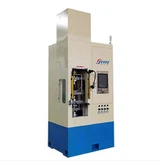
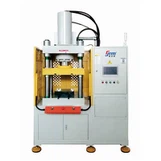
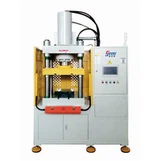
The mechanical structure of a high precision servo press plays a crucial role in determining its rigidity, which in turn significantly impacts the press's performance, accuracy, and overall functionality. As a leading supplier of High Precision Servo Press, I have witnessed firsthand how different mechanical designs can influence the rigidity of these sophisticated machines. In this blog post, I will delve into the various aspects of mechanical structure and their effects on the rigidity of high precision servo presses.
Understanding Rigidity in High Precision Servo Presses
Rigidity in a high precision servo press refers to its ability to resist deformation under load. A rigid press ensures that the applied force is transmitted accurately to the workpiece, resulting in precise and consistent forming operations. Inaccurate force transmission due to low rigidity can lead to dimensional errors, uneven forming, and reduced product quality. Therefore, achieving high rigidity is essential for high precision servo presses used in industries such as automotive, electronics, and aerospace, where tight tolerances are required.
Impact of Frame Design on Rigidity
The frame is the backbone of a high precision servo press, and its design has a profound influence on the press's rigidity. Two common frame designs for servo presses are the C Frame and the H Frame.
C Frame Electric Servo Press
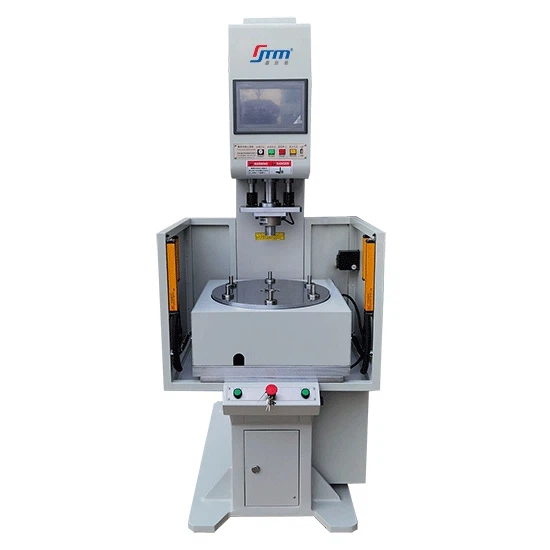
The C Frame Electric Servo Press has a characteristic C-shaped frame, which provides easy access to the work area. However, the open design of the C frame can make it more susceptible to deflection under load compared to other frame types. The single-sided support structure of the C frame means that the load is not evenly distributed, which can lead to bending and torsional stresses. To compensate for this, C frame presses often feature reinforced frames or additional bracing to enhance rigidity. Despite these measures, the C frame design generally offers lower rigidity compared to the H frame design, especially for high-tonnage applications.
H Frame Electric Servo Press
The H Frame Electric Servo Press is known for its superior rigidity. The H frame consists of two vertical columns connected by a horizontal beam, forming an H-shaped structure. This design provides a more balanced and symmetrical load distribution, reducing the risk of deflection and ensuring better alignment of the ram and the workpiece. The closed-loop structure of the H frame also makes it more resistant to torsional forces, resulting in higher precision and repeatability. As a result, H frame electric servo presses are often preferred for applications that require high accuracy and large tonnage.
Influence of Ram and Slide Design
The ram and slide assembly is another critical component that affects the rigidity of a high precision servo press. The ram is responsible for transmitting the force from the servo motor to the workpiece, while the slide guides the ram's movement.
Ram Design
The design of the ram can impact its stiffness and resistance to bending. A ram with a larger cross-sectional area and a well-designed internal structure will generally have higher rigidity. For example, some rams are designed with ribbed or box-shaped cross-sections to increase their moment of inertia, which enhances their resistance to bending under load. Additionally, the material used for the ram also plays a role in its rigidity. High-strength steels or alloys are commonly used to ensure that the ram can withstand the high forces generated during the pressing operation.
Slide Design
The slide guides the ram's movement and helps maintain its alignment with the workpiece. A well-designed slide system is essential for ensuring the press's rigidity and accuracy. Linear guides or roller guides are often used in high precision servo presses to reduce friction and provide smooth and precise movement. These guides also help to distribute the load evenly along the ram, minimizing the risk of deflection. The stiffness of the slide itself is also crucial. A rigid slide with minimal play or backlash will ensure that the ram moves in a straight line, resulting in more accurate forming operations.
Role of Connecting Rods and Crankshafts
In some high precision servo presses, connecting rods and crankshafts are used to convert the rotary motion of the servo motor into linear motion of the ram. The design and quality of these components can significantly affect the press's rigidity.
Connecting Rods
The connecting rods transmit the force from the crankshaft to the ram. Their length, diameter, and material properties can all influence their stiffness. Longer connecting rods can reduce the angularity of the ram's movement, resulting in more uniform force distribution. However, longer rods may also be more prone to bending under load. Therefore, the design of the connecting rods must strike a balance between length and stiffness. High-quality materials and precision machining are essential to ensure that the connecting rods can withstand the high stresses generated during the pressing operation.
Crankshafts
The crankshaft is responsible for converting the rotary motion of the servo motor into linear motion of the ram. A rigid crankshaft is essential for maintaining the press's accuracy and stability. The design of the crankshaft, including its diameter, journal size, and counterweight arrangement, can affect its stiffness and resistance to torsional forces. A well-designed crankshaft will minimize the deflection and vibration during the pressing operation, resulting in more precise and consistent forming.
Importance of Rigidity in High Precision Servo Presses
The rigidity of a high precision servo press is crucial for several reasons:
Precision and Accuracy
A rigid press ensures that the applied force is transmitted accurately to the workpiece, resulting in precise and consistent forming operations. This is essential for applications that require tight tolerances, such as the manufacturing of electronic components or automotive parts.
Product Quality
High rigidity helps to minimize the risk of dimensional errors, uneven forming, and other defects in the workpiece. This results in higher product quality and fewer rejects, reducing production costs and improving customer satisfaction.
Tool Life
A rigid press reduces the stress on the tooling, extending its lifespan. The consistent force distribution and accurate movement of the ram ensure that the tool is subjected to less wear and tear, resulting in lower tooling costs and longer maintenance intervals.

Machine Durability
A press with high rigidity is more resistant to wear and tear, ensuring its long-term durability. The reduced deflection and vibration also help to prevent damage to other components of the press, such as the servo motor and the control system.
Conclusion
The mechanical structure of a high precision servo press has a significant influence on its rigidity, which is essential for achieving high accuracy, precision, and product quality. The frame design, ram and slide design, and the quality of the connecting rods and crankshafts all play crucial roles in determining the press's rigidity. As a supplier of high precision servo presses, we understand the importance of these factors and strive to design and manufacture presses that offer the highest levels of rigidity and performance.
If you are in the market for a high precision servo press and need a machine that can meet your specific requirements, we would be delighted to assist you. Our team of experts can provide you with detailed information about our products and help you choose the right press for your application. Contact us today to start the procurement process and take your manufacturing operations to the next level.
References
- "Design and Analysis of High Precision Servo Presses" - International Journal of Machine Tools and Manufacture
- "Rigidity Analysis of Mechanical Presses" - Journal of Manufacturing Science and Engineering
- "Advanced Manufacturing Technologies for High Precision Pressing" - ASME Transactions