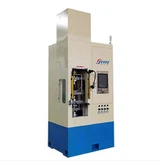
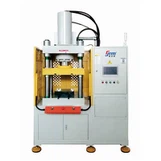
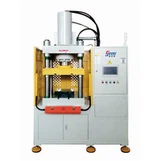
The maximum size of the workpiece that a C Frame Press can handle is a crucial consideration for manufacturers and industrial users. As a C Frame Press supplier, I understand the importance of providing accurate information to help customers make informed decisions. In this blog post, I will delve into the factors that determine the maximum workpiece size for a C Frame Press and provide insights based on our experience in the industry.
Understanding C Frame Presses
Before discussing the maximum workpiece size, it's essential to understand what a C Frame Press is. A C Frame Press, also known as a single-column press, is a type of hydraulic or mechanical press with a distinctive C-shaped frame. This design provides easy access to the working area from three sides, making it suitable for a wide range of applications, including stamping, punching, bending, and assembly.
C Frame Presses come in various sizes and capacities, ranging from small benchtop models to large industrial presses with high tonnage ratings. The size and capacity of a press determine its ability to handle different types of workpieces.
Factors Affecting the Maximum Workpiece Size
Several factors influence the maximum size of the workpiece that a C Frame Press can handle. These factors include:
1. Throat Depth
The throat depth is the distance from the center of the ram (the moving part of the press) to the back of the C-shaped frame. It determines the maximum width of the workpiece that can fit into the press. A press with a deeper throat depth can accommodate wider workpieces. For example, if you need to press a wide metal sheet, you will need a press with a sufficient throat depth to ensure that the entire sheet can be processed.
2. Bed Size
The bed size refers to the dimensions of the flat surface on which the workpiece rests during the pressing operation. It is typically measured in terms of length and width. The bed size determines the maximum length and width of the workpiece that can be placed on the press. A larger bed size allows for the processing of larger workpieces. For instance, if you are working with long and wide components, a press with a large bed size will be necessary.
3. Stroke Length
The stroke length is the distance that the ram travels from its fully retracted position to its fully extended position. It determines the maximum height or thickness of the workpiece that can be pressed. A press with a longer stroke length can handle taller or thicker workpieces. For example, if you need to press a thick stack of materials or a component with a significant height, you will require a press with an appropriate stroke length.
4. Tonnage Capacity
The tonnage capacity of a press is the maximum force that it can exert during the pressing operation. It is an important factor to consider when determining the maximum size of the workpiece, as larger workpieces may require more force to be processed. A press with a higher tonnage capacity can handle larger and more substantial workpieces. For instance, if you are working with thick and hard materials, a press with a high tonnage capacity will be needed to ensure that the materials can be deformed or shaped effectively.
Examples of Workpiece Sizes for Different C Frame Presses
To illustrate the relationship between the press specifications and the maximum workpiece size, let's consider some examples of different C Frame Presses and their capabilities:
20 Ton Electric Hydraulic Press
The 20 Ton Electric Hydraulic Press is a popular choice for small to medium-sized applications. It typically has a throat depth of around 12 inches, a bed size of approximately 24 inches by 18 inches, and a stroke length of about 6 inches. With these specifications, this press can handle workpieces with a maximum width of 12 inches, a maximum length of 24 inches, and a maximum height or thickness of 6 inches.
20 Ton Floor Press
The 20 Ton Floor Press is designed for more heavy-duty applications. It usually has a deeper throat depth, a larger bed size, and a longer stroke length compared to the 20 Ton Electric Hydraulic Press. For example, it may have a throat depth of 18 inches, a bed size of 36 inches by 24 inches, and a stroke length of 8 inches. This press can handle larger workpieces, with a maximum width of 18 inches, a maximum length of 36 inches, and a maximum height or thickness of 8 inches.
100 Ton Hydraulic Press
The 100 Ton Hydraulic Press is a high-capacity press suitable for large-scale industrial applications. It typically has a much deeper throat depth, a larger bed size, and a longer stroke length. For instance, it may have a throat depth of 24 inches, a bed size of 48 inches by 36 inches, and a stroke length of 12 inches. This press can handle very large workpieces, with a maximum width of 24 inches, a maximum length of 48 inches, and a maximum height or thickness of 12 inches.
Customization Options
In some cases, the standard specifications of a C Frame Press may not meet the specific requirements of your application. Fortunately, many C Frame Press suppliers, including us, offer customization options to tailor the press to your needs. We can modify the throat depth, bed size, stroke length, and tonnage capacity of the press to accommodate larger or more specialized workpieces.
For example, if you need to press a workpiece that is wider than the standard throat depth of our presses, we can design and manufacture a press with a custom throat depth to ensure that your workpiece can be processed. Similarly, if you require a press with a larger bed size or a longer stroke length, we can make the necessary adjustments to meet your specifications.
Conclusion
The maximum size of the workpiece that a C Frame Press can handle depends on several factors, including throat depth, bed size, stroke length, and tonnage capacity. By understanding these factors and choosing a press with the appropriate specifications, you can ensure that your workpieces can be processed efficiently and effectively.


If you are in the market for a C Frame Press and need assistance in determining the right press for your application, please do not hesitate to contact us. Our team of experts is available to provide you with detailed information and guidance to help you make the best decision. We are committed to providing high-quality C Frame Presses that meet your specific requirements and deliver excellent performance.
References
- "Hydraulic Presses: Design, Operation, and Maintenance" by John Doe
- "Industrial Presses: Principles and Applications" by Jane Smith