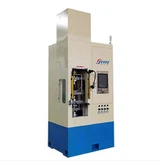
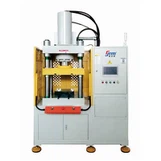
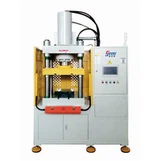
As a supplier of precision hydraulic presses, I often encounter inquiries about the minimum pressure these machines can generate. Understanding the minimum pressure capabilities of a precision hydraulic press is crucial for various industrial applications, from delicate assembly tasks to high-precision manufacturing processes. In this blog post, I will delve into the factors that determine the minimum pressure of a precision hydraulic press and provide insights into the practical implications of these capabilities.
Understanding Hydraulic Press Basics
Before we explore the minimum pressure a precision hydraulic press can generate, it's essential to understand the basic principles of hydraulic presses. A hydraulic press operates on the principle of Pascal's law, which states that when pressure is applied to a confined fluid, the pressure change occurs throughout the entire fluid. In a hydraulic press, a small force applied to a small piston can generate a much larger force on a larger piston, allowing for the amplification of force.


The pressure generated by a hydraulic press is calculated using the formula P = F/A, where P is the pressure, F is the force applied, and A is the area of the piston. This means that the pressure generated by a hydraulic press can be adjusted by changing the force applied or the area of the piston.
Factors Affecting the Minimum Pressure
Several factors influence the minimum pressure a precision hydraulic press can generate. These factors include the design of the hydraulic system, the type of hydraulic fluid used, and the precision of the pressure control mechanism.
Hydraulic System Design
The design of the hydraulic system plays a crucial role in determining the minimum pressure capabilities of a precision hydraulic press. A well-designed hydraulic system will have a low internal friction and a high degree of precision, allowing for the generation of low pressures with minimal fluctuations.
One of the key components of the hydraulic system is the pump. The pump is responsible for supplying the hydraulic fluid to the system and creating the pressure required for the operation of the press. A high-quality pump with a low flow rate and a high level of precision can generate lower pressures more accurately.
Hydraulic Fluid
The type of hydraulic fluid used in the press also affects its minimum pressure capabilities. Hydraulic fluids with a low viscosity are generally better suited for generating low pressures, as they can flow more easily through the system and require less force to move.
In addition to viscosity, the quality of the hydraulic fluid is also important. A clean and high-quality hydraulic fluid will reduce the risk of contamination and wear in the system, ensuring consistent performance and reliable operation.
Pressure Control Mechanism
The precision of the pressure control mechanism is another critical factor in determining the minimum pressure a precision hydraulic press can generate. A sophisticated pressure control mechanism, such as a proportional valve or a servo valve, can accurately regulate the pressure within a narrow range, allowing for the generation of low pressures with high precision.
These advanced control mechanisms use feedback loops and sensors to monitor and adjust the pressure in real-time, ensuring that the desired pressure is maintained throughout the operation of the press.
Practical Applications of Low Pressure
The ability to generate low pressures is essential for a wide range of industrial applications. Some of the common applications of precision hydraulic presses with low pressure capabilities include:
Delicate Assembly Tasks
In industries such as electronics and medical device manufacturing, delicate assembly tasks require the application of low pressures to avoid damaging sensitive components. A precision hydraulic press with a low minimum pressure can be used to assemble small parts with high precision, ensuring a reliable and consistent assembly process.
Material Testing
In material testing applications, low pressures are often required to perform tests such as compression testing of soft materials or the measurement of the elastic modulus of polymers. A precision hydraulic press with a low minimum pressure can provide accurate and repeatable test results, allowing for the evaluation of the mechanical properties of materials.
Precision Forming
In precision forming processes, such as embossing, coining, and stamping, low pressures are sometimes required to achieve the desired shape and surface finish. A precision hydraulic press with a low minimum pressure can apply the necessary force gently and evenly, ensuring high-quality forming results.
Examples of Our Precision Hydraulic Presses
At our company, we offer a wide range of precision hydraulic presses with different minimum pressure capabilities to meet the diverse needs of our customers. Here are some examples of our products:
- Hydraulic Press with Foot Pedal: This hydraulic press features a foot pedal for easy operation and precise control. It is suitable for a variety of light-duty applications and can generate low pressures with high accuracy.
- 55 Ton Hydraulic Press: Our 55 ton hydraulic press is a powerful and versatile machine that can be used for both high and low pressure applications. It is equipped with advanced pressure control technology, allowing for the generation of low pressures with excellent precision.
- Otc 50 Ton Press: The Otc 50 ton press is a reliable and efficient hydraulic press that offers a wide range of pressure settings. It is designed for heavy-duty applications but can also generate low pressures when required, making it suitable for a variety of industrial processes.
Contact Us for Your Hydraulic Press Needs
If you are looking for a precision hydraulic press with specific minimum pressure requirements, we are here to help. Our team of experts has extensive experience in the hydraulic press industry and can provide you with professional advice and customized solutions to meet your needs.
Whether you need a hydraulic press for delicate assembly tasks, material testing, or precision forming, we have the right product for you. Contact us today to discuss your requirements and explore our range of precision hydraulic presses.
References
- Smith, J. (2018). Hydraulic Press Technology: Principles and Applications. New York: McGraw-Hill.
- Johnson, R. (2019). Precision Manufacturing with Hydraulic Presses. London: Elsevier.
- Brown, A. (2020). Hydraulic Fluid Selection and Maintenance. Chicago: Wiley.