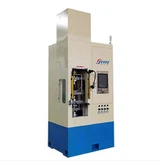
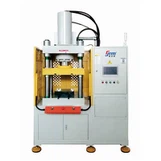
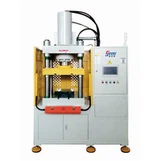
Hey there! As a supplier of 20 Ton H Frame Presses, I often get asked about the power consumption of these machines. It's a crucial question, especially for businesses looking to manage their energy costs and ensure efficient operations. So, let's dive right in and explore what the power consumption of a 20 Ton H Frame Press really looks like.
First off, it's important to understand that the power consumption of a 20 Ton H Frame Press can vary depending on several factors. These factors include the design of the press, the type of motor it uses, the frequency of operation, and the specific tasks it's performing.


The motor is one of the main components that determine power consumption. Most 20 Ton H Frame Presses are equipped with electric motors. The power rating of these motors can range from a few kilowatts to over 10 kilowatts. For example, a smaller, more basic 20 Ton H Frame Press might have a 3 - 5 kW motor, while a more advanced model with additional features could have a 7.5 - 10 kW motor.
When the press is in operation, the motor has to work to generate the force needed to perform tasks such as pressing, punching, or bending. The power consumption during operation is directly related to the load on the motor. If the press is working on a heavy - duty task, like punching through thick metal sheets, the motor will draw more power compared to a lighter task like pressing a thin plastic component.
Let's talk about the different stages of a press cycle and how they affect power consumption. At the start of a cycle, when the press is idling or moving into position, the power consumption is relatively low. The motor is mainly just powering the movement of the ram and other mechanical parts without applying significant force. However, when the ram makes contact with the workpiece and starts to apply pressure, the power draw increases significantly. This is the stage where the motor has to work hard to generate the 20 tons of force required for the press operation.
Once the task is completed and the ram retracts, the power consumption drops again. But keep in mind that if the press is set to operate continuously in a high - volume production environment, the overall power consumption can add up quickly.
Another factor that affects power consumption is the efficiency of the press. A well - designed press with high - quality components and a good hydraulic system will be more energy - efficient. For instance, a press with a modern, variable - frequency drive (VFD) motor can adjust its speed and power output according to the load, which can lead to significant energy savings over time.
Now, if you're considering purchasing a 20 Ton H Frame Press, you might be wondering how to estimate the actual power cost. To do this, you first need to know the power rating of the motor in kilowatts (kW). Then, you can multiply the power rating by the number of hours the press will be in operation per day and the cost of electricity per kilowatt - hour (kWh).
For example, if you have a 7.5 kW press and it operates for 8 hours a day, and the cost of electricity in your area is $0.15 per kWh, the daily power cost would be calculated as follows:
Power consumption per day = 7.5 kW x 8 hours = 60 kWh
Daily power cost = 60 kWh x $0.15/kWh = $9
Over a month (assuming 22 working days), the power cost would be $9 x 22 = $198.
If you're interested in reducing the power consumption of your 20 Ton H Frame Press, there are a few things you can do. As mentioned earlier, choosing a press with a VFD motor is a great option. You can also ensure that the press is properly maintained. Regular maintenance, such as checking the hydraulic fluid levels, lubricating moving parts, and inspecting the electrical components, can help keep the press running efficiently and reduce unnecessary power consumption.
At our company, we offer a range of 20 Ton H Frame Presses with different power ratings and features to suit your specific needs. Whether you're a small - scale workshop or a large - scale industrial manufacturer, we've got the right press for you.
If you're in the market for a press, we also have some other great options to consider. Check out our Small Electric Hydraulic Press if you have smaller - scale tasks or limited space. For more heavy - duty industrial applications, our Industrial Hydraulic Press Machine is a great choice. And of course, if you specifically need a 20 Ton press, our 20 Ton Floor Press is designed to meet your requirements.
In conclusion, understanding the power consumption of a 20 Ton H Frame Press is essential for managing your production costs. By considering factors such as motor power rating, load on the motor, and the efficiency of the press, you can make an informed decision when purchasing a press. And if you're looking for a reliable 20 Ton H Frame Press, we're here to help. We can provide you with detailed information about the power consumption of our different models and how they can fit into your production process.
If you're interested in learning more or want to discuss your specific needs, feel free to reach out. We're always happy to have a chat and help you find the best press solution for your business.
References
- "Hydraulic Press Handbook", Industrial Press Inc.
- "Power Consumption in Manufacturing Equipment", Journal of Industrial Engineering