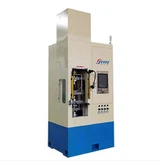
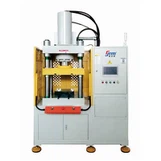
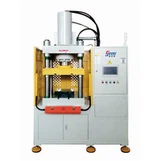
In the world of industrial machinery, the Jet Hydraulic Press stands as a powerful and indispensable tool, finding its application in a wide range of manufacturing processes. As a dedicated supplier of Jet Hydraulic Presses, I have witnessed firsthand the crucial role that each component plays in ensuring the efficient and safe operation of these machines. Among these components, the relief valve is a key element that deserves special attention. In this blog post, I will delve into the role of the relief valve in a Jet Hydraulic Press, exploring its functions, importance, and impact on the overall performance of the press.
Understanding the Jet Hydraulic Press
Before we dive into the role of the relief valve, let's first have a basic understanding of the Jet Hydraulic Press. A Jet Hydraulic Press is a machine that uses hydraulic pressure to generate a large amount of force for various industrial applications, such as metal forming, forging, stamping, and molding. It consists of a hydraulic pump, a cylinder, a piston, and a control system. The hydraulic pump supplies pressurized hydraulic fluid to the cylinder, which in turn moves the piston to exert force on the workpiece.
The Jet Hydraulic Press offers several advantages over other types of presses. It provides a high level of force with precise control, making it suitable for applications that require accurate shaping and forming. It also has a relatively simple design, which reduces maintenance requirements and increases reliability. Additionally, the hydraulic system allows for smooth and continuous operation, minimizing shock and vibration.
The Function of the Relief Valve
The relief valve is a safety device that is installed in the hydraulic system of the Jet Hydraulic Press. Its primary function is to protect the system from overpressure, which can cause damage to the components and pose a safety hazard to the operators. When the pressure in the hydraulic system exceeds a preset limit, the relief valve opens and allows the excess hydraulic fluid to flow back to the reservoir, thereby reducing the pressure in the system.
There are two main types of relief valves used in Jet Hydraulic Presses: direct-acting relief valves and pilot-operated relief valves. Direct-acting relief valves are simple in design and operate directly in response to the pressure in the system. They consist of a spring-loaded poppet or ball that is held in place by the spring force. When the pressure in the system exceeds the spring force, the poppet or ball is lifted off its seat, allowing the excess fluid to flow through the valve.
Pilot-operated relief valves, on the other hand, are more complex and offer better performance. They use a pilot valve to control the opening and closing of the main valve. The pilot valve is a small, direct-acting relief valve that senses the pressure in the system and controls the flow of hydraulic fluid to the main valve. When the pressure in the system exceeds the preset limit, the pilot valve opens, allowing the hydraulic fluid to flow to the main valve and open it.
Importance of the Relief Valve
The relief valve plays a crucial role in ensuring the safe and reliable operation of the Jet Hydraulic Press. Without a properly functioning relief valve, the hydraulic system could be subjected to excessive pressure, which can lead to a variety of problems. For example, overpressure can cause the hydraulic hoses and fittings to burst, resulting in fluid leaks and potential fire hazards. It can also damage the hydraulic pump, cylinder, and other components, leading to costly repairs and downtime.
In addition to protecting the system from overpressure, the relief valve also helps to maintain the stability and accuracy of the press. By controlling the pressure in the hydraulic system, the relief valve ensures that the force exerted on the workpiece is consistent and within the desired range. This is particularly important in applications that require precise shaping and forming, such as precision machining and die casting.
Impact on the Overall Performance of the Press
The performance of the Jet Hydraulic Press is directly affected by the performance of the relief valve. A well-designed and properly functioning relief valve can improve the efficiency and productivity of the press. It allows the press to operate at its maximum capacity without the risk of overpressure, which can increase the throughput and reduce the cycle time.
On the other hand, a faulty or malfunctioning relief valve can have a negative impact on the performance of the press. It can cause the pressure in the hydraulic system to fluctuate, resulting in inconsistent force and poor quality of the finished products. It can also lead to increased wear and tear on the components, reducing their lifespan and increasing maintenance costs.


Choosing the Right Relief Valve
When selecting a relief valve for a Jet Hydraulic Press, several factors need to be considered. These include the maximum operating pressure of the system, the flow rate of the hydraulic fluid, the type of hydraulic fluid used, and the specific requirements of the application. It is important to choose a relief valve that is rated for the maximum operating pressure of the system and has a sufficient flow capacity to handle the excess fluid.
In addition to the technical specifications, it is also important to consider the quality and reliability of the relief valve. Look for a relief valve that is manufactured by a reputable company and has a proven track record of performance. It is also a good idea to choose a relief valve that comes with a warranty, which provides some protection against defects and malfunctions.
Conclusion
In conclusion, the relief valve is a critical component of the Jet Hydraulic Press. It plays a vital role in protecting the system from overpressure, ensuring the safe and reliable operation of the press, and maintaining the stability and accuracy of the force exerted on the workpiece. As a supplier of Jet Hydraulic Presses, I understand the importance of choosing the right relief valve for each application. By selecting a high-quality relief valve and ensuring its proper installation and maintenance, you can maximize the performance and lifespan of your Jet Hydraulic Press.
If you are interested in learning more about Jet Hydraulic Presses or need assistance in selecting the right relief valve for your application, please feel free to contact us. We have a team of experienced engineers and technicians who can provide you with expert advice and support. We also offer a wide range of Small Electric Hydraulic Press, Hydraulic Line Press, and 20 Ton Hydraulic Press to meet your specific needs. Let's work together to find the best solution for your manufacturing requirements.
References
- "Hydraulic Systems: Principles, Operation, and Maintenance" by Robert L. Sheldon
- "Industrial Hydraulics Handbook" by Ronald K. Jurgen
- "Fluid Power with Applications" by Anthony Esposito