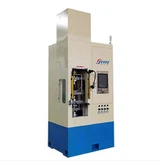
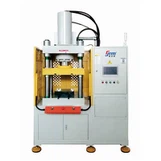
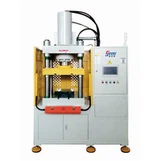
Hey there! As a supplier of Servo Mechanical Presses, I've gotten a lot of questions about what happens to these machines during long - term operation. One of the most common questions is about the temperature rise. So, let's dig into it.
First off, why does the temperature of a Servo Mechanical Press rise during long - term operation? Well, it's a mix of different factors. When the press is running, there's a lot of mechanical movement going on. The motor has to work hard to drive the various components, like the flywheel, gears, and the ram. This mechanical work generates heat due to friction. Friction occurs between moving parts, and as you know, when two surfaces rub against each other, heat is produced.
Think about it like when you rub your hands together really fast. They start to get warm, right? The same principle applies to the parts inside a Servo Mechanical Press. The gears mesh with each other, and the bearings support the rotating shafts. All these interactions create friction, and that friction leads to heat build - up.
Another source of heat is the electrical components. The servo motor, which is the heart of a Servo Mechanical Press, consumes electrical energy to operate. Not all of this energy is converted into useful mechanical work. A portion of it is lost as heat. This is because electrical resistance in the motor's windings causes power dissipation in the form of heat. The more the press runs, the more energy is consumed, and the more heat is generated.
Now, let's talk about how significant this temperature rise can be. It varies depending on a few things. The power rating of the press is a major factor. A higher - powered press will generally generate more heat because it's doing more work. For example, a small - scale Servo Mechanical Press used for light - duty tasks might experience a relatively modest temperature rise, say around 20 - 30 degrees Celsius above the ambient temperature. On the other hand, a large - scale press designed for heavy - duty forging or stamping operations could see a temperature rise of 50 degrees Celsius or more.
The operating conditions also play a big role. If the press is running in a hot environment, the starting point for the temperature rise is already higher. And if the press is running continuously without any breaks, the heat has no chance to dissipate, leading to a more substantial temperature increase.
So, what are the consequences of this temperature rise? Well, it can have some negative impacts on the press's performance and lifespan. High temperatures can cause the lubricants in the machine to break down. Lubricants are crucial for reducing friction between moving parts. When they break down due to heat, the friction increases, which can lead to accelerated wear and tear of the components. This means more frequent maintenance and replacement of parts, which can be costly.
High temperatures can also affect the electrical components. The insulation in the motor windings can degrade over time when exposed to excessive heat. This can lead to short - circuits or other electrical failures, which can put the entire press out of commission.
To deal with the temperature rise, we've incorporated several cooling mechanisms in our Servo Mechanical Presses. One common method is air cooling. We design the press with proper ventilation channels so that cool air can flow through the machine and carry away the heat. Some of our larger models also have fans installed to enhance the air circulation.
Another option is liquid cooling. In this system, a coolant, usually water or a special coolant fluid, is circulated through channels in the motor and other heat - generating components. The coolant absorbs the heat and then transfers it to a radiator, where it's dissipated into the surrounding air.
As a supplier, we understand the importance of managing the temperature rise in our Servo Mechanical Presses. That's why we've spent a lot of time and resources on research and development to optimize the cooling systems. We want our customers to get the most out of their presses without having to worry too much about overheating.
If you're in the market for a Servo Mechanical Press, you might also be interested in our other products. Check out our Servo Hydraulic Press Machine and H Frame Electric Servo Press. They also come with advanced cooling features to ensure reliable long - term operation.
Our Servo Mechanical Press is designed to be energy - efficient and durable, even under long - term operation. We use high - quality materials and state - of - the - art manufacturing techniques to build a press that can handle the heat and keep performing at its best.
If you have any questions about our Servo Mechanical Presses, the temperature rise, or anything else related to our products, don't hesitate to reach out. We're here to help you find the right press for your needs and ensure that you get the most value from your investment. Whether you're a small - business owner looking for a light - duty press or a large - scale manufacturer in need of a heavy - duty solution, we've got you covered.
So, if you're thinking about purchasing a Servo Mechanical Press, let's start a conversation. We can discuss your specific requirements, the best cooling options for your application, and provide you with a detailed quote. Contact us today to get the ball rolling on finding the perfect press for your business.


References:
- Machinery's Handbook: A comprehensive guide to mechanical engineering and manufacturing processes, which provides in - depth information on the operation and maintenance of mechanical presses.
- Journal of Manufacturing Science and Engineering: Articles on the latest research and developments in the field of manufacturing, including studies on the thermal management of industrial machinery.