In the realm of modern manufacturing, servo mechanical presses have emerged as a revolutionary force, offering unparalleled precision, efficiency, and flexibility. As a trusted supplier of Servo Mechanical Press, we're committed to providing in - depth knowledge about these remarkable machines. One of the crucial aspects that define the performance of a servo mechanical press is the torque characteristics of its servo motor. In this blog, we'll delve into the intricacies of servo motor torque characteristics in a servo mechanical press.
Understanding Servo Motors in Servo Mechanical Presses
Servo motors are at the heart of servo mechanical presses. Unlike traditional motors, servo motors can precisely control speed, position, and torque. This precision is achieved through a closed - loop control system that constantly monitors the motor's actual performance and adjusts it to match the desired parameters.
In a servo mechanical press, the servo motor is responsible for driving the mechanical components, such as the crankshaft or the eccentric shaft, to generate the required pressing force. The ability to precisely control the torque of the servo motor allows for a wide range of pressing operations, from delicate stamping to heavy - duty forging.
Torque - Speed Characteristics
The torque - speed characteristics of a servo motor play a vital role in determining the performance of a servo mechanical press. Generally, servo motors exhibit different torque - speed relationships, which can be classified into two main regions: the constant - torque region and the constant - power region.
Constant - Torque Region
In the constant - torque region, the servo motor can provide a constant amount of torque over a certain speed range. This is typically at lower speeds. In a servo mechanical press, this region is crucial for operations that require high force at relatively low speeds, such as deep drawing or embossing.
For example, when performing a deep - drawing operation, the press needs to apply a large amount of force to deform the metal sheet gradually. The constant - torque characteristic of the servo motor ensures that the required force is maintained throughout the stroke, resulting in consistent and high - quality parts.
Constant - Power Region
As the speed of the servo motor increases beyond the constant - torque region, it enters the constant - power region. In this region, the power output of the motor remains constant, while the torque decreases as the speed increases. This characteristic is useful for high - speed operations, such as high - speed stamping.
In high - speed stamping, the press needs to complete a large number of strokes in a short period. The constant - power characteristic allows the servo motor to operate at higher speeds while still providing sufficient power to perform the stamping operation.
Peak Torque and Continuous Torque
Another important aspect of servo motor torque characteristics is the difference between peak torque and continuous torque.
Peak Torque
Peak torque is the maximum amount of torque that the servo motor can deliver for a short period. In a servo mechanical press, peak torque is essential for starting the press, accelerating the moving parts, and handling sudden load changes.
For instance, when the press starts from rest, the servo motor needs to provide a high peak torque to overcome the inertia of the mechanical components and start the pressing operation. Similarly, during the impact phase of a stamping operation, the motor may need to deliver peak torque to ensure proper deformation of the workpiece.
Continuous Torque
Continuous torque, on the other hand, is the amount of torque that the servo motor can provide continuously without overheating. This is a critical parameter for long - term operation of the servo mechanical press.
In a production environment where the press operates continuously for extended periods, the continuous - torque rating of the servo motor determines the maximum load that the press can handle without causing damage to the motor. If the load exceeds the continuous - torque rating, the motor may overheat, leading to reduced efficiency and potential failure.
Dynamic Torque Response
In addition to the static torque - speed characteristics, the dynamic torque response of a servo motor is also crucial in a servo mechanical press. Dynamic torque response refers to the ability of the motor to quickly adjust its torque output in response to changes in the load or the control command.
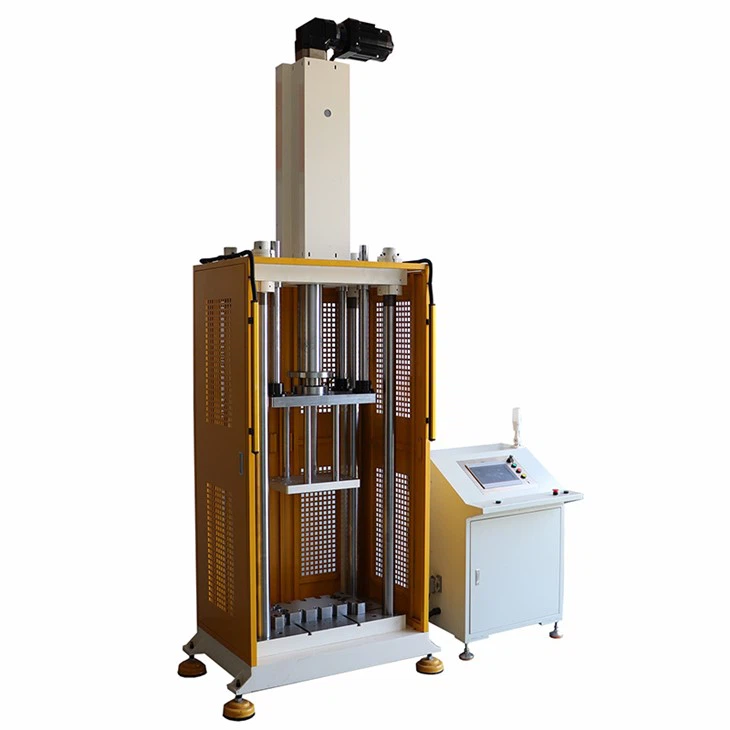

In a servo mechanical press, the load can change rapidly during the pressing operation. For example, when the punch hits the workpiece, the load on the motor increases suddenly. A servo motor with a fast dynamic torque response can quickly increase its torque output to handle this sudden load change, ensuring smooth and stable operation of the press.
Moreover, the dynamic torque response is also important for precise control of the press motion. During multi - stage pressing operations, the servo motor needs to adjust its torque output accurately at different stages of the stroke. A fast - responding servo motor can achieve this with high precision, resulting in better part quality and higher productivity.
Influence on Press Performance
The torque characteristics of the servo motor have a direct impact on the overall performance of a servo mechanical press.
Precision
The ability to precisely control the torque of the servo motor allows for highly accurate pressing operations. In applications such as micro - stamping, where the tolerance requirements are extremely tight, the constant - torque and dynamic - torque control capabilities of the servo motor ensure that the press can apply the exact amount of force needed, resulting in parts with high dimensional accuracy.
Flexibility
The wide range of torque - speed characteristics and the ability to adjust the torque dynamically make servo mechanical presses highly flexible. Different types of pressing operations can be performed on the same press by simply adjusting the control parameters of the servo motor. This reduces the need for multiple presses and increases the overall efficiency of the manufacturing process.
Energy Efficiency
Servo motors are generally more energy - efficient than traditional motors. By precisely controlling the torque output according to the actual load requirements, servo motors can reduce energy consumption. For example, during idle periods or low - load operations, the servo motor can operate at a lower torque, saving energy.
Conclusion
As a leading supplier of Servo Mechanical Press, we understand the critical role that the torque characteristics of the servo motor play in the performance of our presses. The constant - torque and constant - power regions, peak and continuous torque, and dynamic torque response all contribute to the precision, flexibility, and energy efficiency of our servo mechanical presses.
Whether you're looking for a Servo Hydraulic Press Machine for your specific application or considering an H Frame Electric Servo Press for its unique design, our team of experts can provide you with in - depth technical support and customized solutions.
If you're interested in learning more about our servo mechanical presses or have specific requirements for your manufacturing process, we encourage you to contact us for a detailed discussion. Our experienced sales team is ready to assist you in finding the perfect press solution for your needs.
References
- "Servo Motor Handbook" by Motion Control Association
- "Advanced Manufacturing Technology" by John Wiley & Sons
- "Automation in Metal Forming" by ASM International