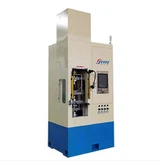
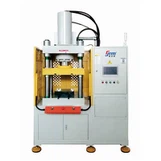
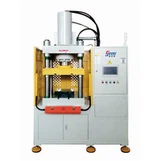
As a supplier of 20 Ton Benchtop Presses, I've been frequently asked whether these machines are suitable for metalworking. The short answer is a resounding yes. In this blog post, I'll delve into the details of how a 20 Ton Benchtop Press can be a valuable asset in metalworking operations, exploring its capabilities, limitations, and practical applications.

Understanding the 20 Ton Benchtop Press
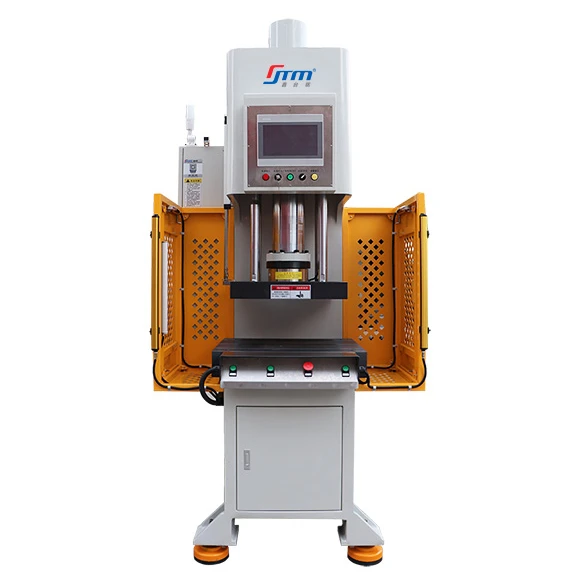
Before we discuss its use in metalworking, let's first understand what a 20 Ton Benchtop Press is. This type of press is a compact, yet powerful machine designed to apply a maximum force of 20 tons. It is typically mounted on a workbench, making it ideal for small to medium - scale workshops and operations where space is limited.
The press operates using a hydraulic or mechanical system. Hydraulic systems are more common in 20 Ton Benchtop Presses due to their ability to provide smooth, consistent force. They work by using a hydraulic fluid to transfer pressure from a pump to a piston, which then applies the force to the workpiece.
Capabilities for Metalworking
Bending and Forming
One of the primary applications of a 20 Ton Benchtop Press in metalworking is bending and forming. With a force of 20 tons, it can easily bend thin to moderately thick metal sheets and bars. For example, it can bend mild steel sheets up to a certain thickness, depending on the width of the bend and the type of tooling used. This is useful for creating brackets, frames, and other custom - shaped metal components.
The press can also be used for more complex forming operations, such as embossing and coining. By using specialized dies, it can create detailed patterns and shapes on the metal surface. This is often seen in the production of decorative metal pieces or in the manufacturing of parts with specific surface features.
Punching
Punching holes in metal is another common metalworking task that a 20 Ton Benchtop Press can handle. It can punch holes in various sizes and shapes in metal sheets and plates. The size of the hole that can be punched depends on the thickness of the metal and the strength of the punch and die set. For thinner metals, a wider range of hole sizes can be achieved. This is essential in industries such as automotive, aerospace, and electronics, where metal parts often require holes for assembly or ventilation.
Assembly
In metalworking, assembly is an important step. A 20 Ton Benchtop Press can be used to press - fit components together. For example, it can press bearings into shafts or insert pins into holes in metal parts. This ensures a tight and secure fit, which is crucial for the proper functioning of the assembled product. The controlled force of the press helps to prevent damage to the components during the assembly process.
Limitations
While a 20 Ton Benchtop Press is a versatile machine, it does have its limitations in metalworking.
Thickness and Hardness of Metal
The press has a limit to the thickness and hardness of the metal it can work with. For very thick or high - strength metals, such as some types of stainless steel or hardened alloys, a 20 - ton force may not be sufficient. In such cases, a more powerful press, like a 30 Tonne Hydraulic Press, may be required.
Size of Workpiece
Due to its benchtop design, the press has a limited working area. Large - scale metalworking projects that involve oversized workpieces may not be feasible with a 20 Ton Benchtop Press. For larger workpieces, floor - standing presses with a larger bed size and higher capacity are more appropriate.
Practical Considerations
Tooling
The effectiveness of a 20 Ton Benchtop Press in metalworking largely depends on the tooling used. High - quality punches, dies, and other tooling components are essential for achieving accurate and consistent results. Different metalworking operations require different types of tooling. For example, bending operations may require V - dies, while punching operations need a punch and die set. It's important to choose the right tooling for the specific task at hand.
Safety
Safety is of utmost importance when using a 20 Ton Benchtop Press in metalworking. Operators should be trained on how to use the press safely, including proper handling of the workpiece, tooling, and the press controls. Safety features such as guards and emergency stop buttons should be in place and used correctly. Additionally, wearing appropriate personal protective equipment, such as safety glasses and gloves, is essential.
Applications in Different Industries
Automotive Industry
In the automotive industry, a 20 Ton Benchtop Press can be used for manufacturing small - scale components. It can bend and form metal parts for car interiors, such as brackets and clips. It can also be used for punching holes in metal sheets for body panels or for assembling small mechanical components.
Jewelry Making
Jewelry makers can benefit from a 20 Ton Benchtop Press for forming and shaping metal. It can be used to create intricate designs on precious metals, such as gold and silver. The press can also be used for setting gemstones in metal settings, providing a precise and controlled force.
Electronics Industry
In the electronics industry, the press can be used for punching holes in metal enclosures for electronic devices. It can also be used for assembling small metal parts in electronic components, ensuring a proper fit and connection.
Choosing the Right Press for Your Metalworking Needs
When considering a 20 Ton Benchtop Press for metalworking, it's important to evaluate your specific requirements. If you primarily work with thin to moderately thick metals and have limited space, a 20 Ton Benchtop Press may be a suitable choice. However, if you need to work with thicker or harder metals, or if you have larger - scale projects, you may need to consider a more powerful press.
There are also other types of presses available that may be relevant to your metalworking needs. For example, an Air Operated Hydraulic Press offers the advantage of faster operation and is suitable for high - volume production. A Small Hydraulic Press may be a good option if you have even more limited space and lighter - duty metalworking tasks.
Conclusion
In conclusion, a 20 Ton Benchtop Press can indeed be used for metalworking. It offers a range of capabilities for bending, forming, punching, and assembly operations in small to medium - scale metalworking projects. While it has its limitations, with the right tooling and proper safety measures, it can be a valuable addition to any metalworking workshop.
If you're interested in learning more about our 20 Ton Benchtop Presses or have specific metalworking requirements, we invite you to contact us for a detailed discussion. Our team of experts is ready to assist you in choosing the right press for your needs and ensuring a successful metalworking operation.
References
- ASM Handbook Committee. (2008). ASM Handbook, Volume 14A: Metalworking: Bulk Forming. ASM International.
- Kalpakjian, S., & Schmid, S. R. (2014). Manufacturing Engineering and Technology. Pearson.