Hey there! I'm a supplier of Precision Hydraulic Presses, and today I want to share some insights on how to monitor the operation status of these nifty machines.
First off, let's understand why monitoring a precision hydraulic press is so important. These presses are used in a wide range of industries, from automotive to aerospace, for tasks like stamping, forming, and molding. Any malfunction or deviation in their operation can lead to defective products, increased downtime, and even safety hazards. So, keeping a close eye on their status is crucial.
1. Visual Inspection
One of the simplest yet most effective ways to monitor a precision hydraulic press is through visual inspection. This should be done regularly, like every shift or at the start of each production run.
Check the physical appearance of the press. Look for any signs of leaks in the hydraulic system. Hydraulic fluid is usually a tell - tale sign. If you see puddles or drips around the hoses, cylinders, or valves, that's a red flag. Leaks can not only reduce the efficiency of the press but also contaminate the work environment.
Inspect the structural components of the press. Make sure there are no cracks or signs of excessive wear on the frame, columns, and platens. For example, if you're using a C Frame Press, the C - shaped frame is a critical part. Any damage to it can affect the alignment and performance of the press.

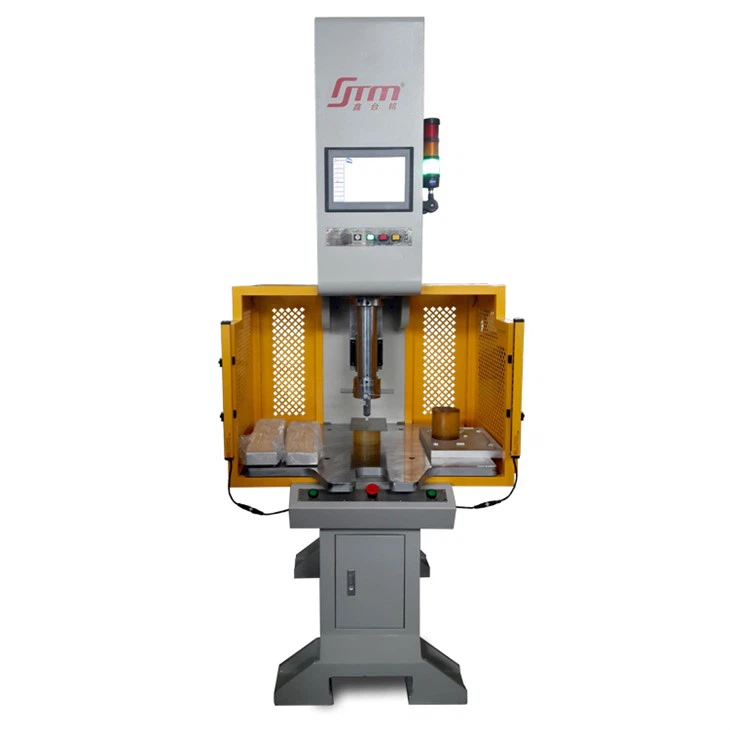
Also, take a look at the moving parts. The ram, for instance, should move smoothly up and down without any jerks or unusual noises. If you notice any grinding or rattling sounds, it could indicate a problem with the bearings, guides, or other mechanical components.
2. Pressure Monitoring
Pressure is a key parameter in a hydraulic press. Monitoring the hydraulic pressure can give you a good idea of how the press is performing.
Install pressure sensors at strategic points in the hydraulic system. These sensors can measure the pressure in the pump, cylinders, and other components. You can connect these sensors to a control panel or a data acquisition system.
Set up pressure limits for normal operation. If the pressure goes above or below these limits, it could signal a problem. For example, if the pressure in the main cylinder is too low, it might mean that there's a leak in the hydraulic lines or a problem with the pump. On the other hand, excessive pressure can cause damage to the hydraulic components and the press itself.
Regularly record and analyze the pressure data. Look for any trends or fluctuations. If you see a gradual increase in pressure over time, it could indicate a blockage in the system. By keeping track of this data, you can detect potential issues before they turn into major problems.
3. Temperature Monitoring
Temperature is another important factor to consider when monitoring a precision hydraulic press. High temperatures can degrade the hydraulic fluid, reduce the efficiency of the seals, and damage the components.
Install temperature sensors in the hydraulic reservoir, pump, and cylinders. The hydraulic fluid temperature should be within a certain range for optimal performance. If the temperature rises too high, it could be due to excessive friction, a malfunctioning cooling system, or overloading of the press.
Keep an eye on the temperature trends. If the temperature is steadily increasing during operation, it's a sign that something is wrong. You might need to check the cooling system, clean the heat exchangers, or reduce the workload on the press.
4. Position and Stroke Monitoring
Accurate positioning and stroke control are essential for the quality of the products produced by a precision hydraulic press.
Use position sensors to monitor the position of the ram. These sensors can provide real - time information about the ram's position during the pressing cycle. You can set up position limits to ensure that the ram stops at the correct positions.
Monitor the stroke length as well. Any deviation in the stroke length can lead to inconsistent product dimensions. If the stroke is too short, the product might not be fully formed, and if it's too long, it could damage the tooling or the press itself.
By monitoring the position and stroke, you can ensure that the press is operating within the specified parameters and producing high - quality products.
5. Vibration Monitoring
Vibration analysis is a powerful tool for detecting mechanical problems in a precision hydraulic press. Excessive vibration can be caused by unbalanced components, misaligned parts, or worn - out bearings.
Install vibration sensors on the press frame, ram, and other critical components. These sensors can measure the amplitude, frequency, and direction of the vibrations.
Analyze the vibration data to identify any abnormal patterns. For example, if you notice a high - frequency vibration, it could indicate a problem with the bearings. By detecting these issues early, you can prevent further damage to the press and avoid costly repairs.
6. Monitoring the Control System
The control system of a precision hydraulic press is responsible for regulating the operation of the press. It controls the pressure, position, stroke, and other parameters.
Regularly check the control panel for any error messages or warning lights. These messages can provide valuable information about the status of the press. If an error message appears, follow the troubleshooting guide provided by the manufacturer to diagnose and fix the problem.
Test the control system's functionality periodically. Make sure that all the buttons, switches, and sensors are working properly. You can perform simple tests, such as changing the pressure settings or adjusting the stroke length, to verify that the control system is responding correctly.
7. Data Logging and Analysis
Collecting and analyzing data from all the monitoring systems is crucial for effective press operation.
Use a data logging system to record the data from the pressure sensors, temperature sensors, position sensors, and other monitoring devices. This data can be stored in a database for future reference.
Analyze the data to identify any patterns or trends. You can use statistical analysis tools to detect anomalies and predict potential problems. For example, if you notice that the pressure fluctuations are becoming more frequent over time, it could indicate an impending failure in the hydraulic system.
By using data - driven decision - making, you can optimize the performance of the press, reduce downtime, and improve the quality of the products.
Conclusion
Monitoring the operation status of a precision hydraulic press is a multi - faceted task. By using a combination of visual inspection, pressure monitoring, temperature monitoring, position and stroke monitoring, vibration monitoring, and control system monitoring, you can ensure that your press is operating at its best.
If you're in the market for a precision hydraulic press or need more information on how to monitor and maintain your existing press, don't hesitate to reach out. We're here to help you make the most of your investment in these powerful machines. Whether you're interested in a Fast Hydraulic Press for high - speed production or a 10 Ton Electric Hydraulic Press for lighter applications, we've got you covered. Contact us today to start a discussion about your specific needs and how we can assist you.
References
- "Hydraulic Press Handbook"
- "Industrial Hydraulics: Fundamentals, Maintenance, and Troubleshooting"
- Manufacturer's manuals for precision hydraulic presses