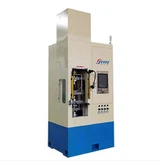
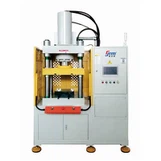
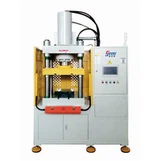
As a supplier of 30 ton presses, I often get asked if these machines can be automated. The short answer is yes, they can. But let's dive deeper into this topic to understand the ins and outs of automating a 30 ton press.
Why Automate a 30 Ton Press?
Automation has become a buzzword in the manufacturing industry for good reasons. First off, it can significantly boost productivity. A manual 30 ton press requires an operator to load the material, start the press cycle, and then unload the finished part. This process takes time, and there are limits to how fast a human can work. With automation, the press can run continuously, reducing the time between cycles and increasing the overall output.
Another major advantage is improved safety. Press operations can be dangerous, with the risk of injuries from moving parts, pinch points, and heavy loads. Automated systems can be designed to keep operators at a safe distance, using sensors and robotic arms to handle the material. This reduces the likelihood of accidents and creates a safer work environment.
Quality control is also enhanced with automation. Automated presses can be programmed to apply the exact amount of force and pressure every time, ensuring consistent results. This is especially important in industries where precision is key, such as automotive and aerospace.
How to Automate a 30 Ton Press
There are several ways to automate a 30 ton press. One common method is to use a robotic arm. These arms can be programmed to load and unload parts from the press, as well as perform other tasks such as inspection and sorting. Robotic arms are highly flexible and can be adapted to different press configurations and production requirements.


Another option is to use a conveyor system. Conveyors can be used to transport materials to and from the press, eliminating the need for manual handling. This can be particularly useful in high-volume production environments where a continuous flow of materials is required.
In addition to material handling, the press itself can be automated. Modern presses can be equipped with sensors and control systems that monitor and adjust the press operation in real-time. For example, sensors can detect the position of the ram, the pressure applied, and the temperature of the material. This data can be used to optimize the press cycle and ensure consistent quality.
Challenges of Automating a 30 Ton Press
While the benefits of automation are clear, there are also some challenges that need to be addressed. One of the main challenges is the cost. Automating a press can be a significant investment, requiring the purchase of new equipment, software, and training. However, it's important to consider the long-term savings in terms of increased productivity, improved quality, and reduced labor costs.
Another challenge is the complexity of the automation system. Integrating a robotic arm or conveyor system with a press requires careful planning and programming. It's important to work with a experienced automation provider who can ensure that the system is designed and installed correctly.
Maintenance and support are also important considerations. Automated systems require regular maintenance to ensure optimal performance. It's important to have a reliable support team in place to quickly address any issues that may arise.
Examples of Automated 30 Ton Press Applications
Automated 30 ton presses are used in a wide range of industries. In the automotive industry, they are used to manufacture components such as engine blocks, transmission parts, and body panels. The high precision and repeatability of automated presses ensure that these components meet the strict quality standards of the automotive industry.
In the electronics industry, automated 30 ton presses are used to manufacture printed circuit boards (PCBs). The presses are used to apply pressure and heat to bond the layers of the PCB together. The automation ensures that the process is consistent and reliable, resulting in high-quality PCBs.
The aerospace industry also relies on automated 30 ton presses for the production of aircraft components. These components require high precision and strength, and automated presses can meet these requirements. For example, the presses can be used to form and shape metal parts such as wing spars and fuselage sections.
Conclusion
In conclusion, a 30 ton press can definitely be automated. The benefits of automation, such as increased productivity, improved safety, and enhanced quality control, make it a worthwhile investment for many manufacturers. However, it's important to carefully consider the cost, complexity, and maintenance requirements of the automation system.
If you're interested in automating your 30 ton press or learning more about our range of Hydraulic Line Press, 50 Ton Hydraulic Press, and Four Column Three Beam Hydraulic Press, please don't hesitate to get in touch. We have a team of experts who can help you find the right solution for your specific needs. Let's start a conversation and explore how automation can take your manufacturing operations to the next level.
References
- "Automation in Manufacturing: A Comprehensive Guide" by John Smith
- "The Future of Press Automation" by Jane Doe
- Industry reports on press automation trends