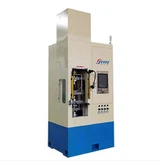
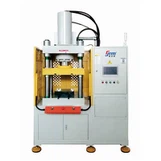
As a supplier of precision hydraulic presses, I've witnessed firsthand how the right accessories can transform the functionality and efficiency of these powerful machines. Precision hydraulic presses are versatile tools used in various industries, from automotive and aerospace to manufacturing and metalworking. They rely on hydraulic systems to generate high forces, making them ideal for tasks such as stamping, forging, and molding. However, to fully optimize their performance, several optional accessories can be added. In this blog post, I'll explore some of the most popular and useful accessories for precision hydraulic presses.
Pressure Sensors and Gauges
One of the essential accessories for a precision hydraulic press is a pressure sensor or gauge. These devices provide real - time feedback on the pressure being applied during an operation. By accurately measuring the pressure, operators can ensure that the press is working within the specified limits, which is crucial for maintaining the quality of the finished product. For instance, in a metal stamping process, too much pressure can lead to material deformation or cracking, while too little pressure may result in an incomplete stamp.
Modern pressure sensors are highly accurate and can be integrated with the press's control system. This allows for automatic adjustments and precise control over the pressing force. Some sensors can even be programmed to trigger alarms if the pressure exceeds or falls below a set threshold, enhancing safety and quality control.
Die Sets
Die sets are another important accessory for precision hydraulic presses. They are customized tools designed to shape, cut, or form materials during the pressing process. Die sets come in a wide variety of shapes and sizes, depending on the specific application. For example, in the automotive industry, die sets are used to create complex body parts with high precision.
When selecting a die set, it's important to consider factors such as the material being processed, the required tolerances, and the production volume. High - quality die sets are made from durable materials such as tool steel and are heat - treated to withstand the high forces exerted by the press. They also need to be properly maintained to ensure long - term performance.
Safety Guards
Safety is a top priority when operating a precision hydraulic press. Safety guards are essential accessories that help protect operators from potential hazards. These guards can be made of materials such as steel or polycarbonate and are designed to prevent accidental contact with moving parts, hot surfaces, or flying debris.
There are different types of safety guards available, including fixed guards, interlocked guards, and light curtains. Fixed guards are permanently attached to the press and provide a physical barrier. Interlocked guards are designed to stop the press from operating if the guard is opened or removed. Light curtains use infrared beams to detect the presence of an operator's hand or body in the danger zone and immediately stop the press.
Workholding Devices
Workholding devices are used to secure the workpiece in place during the pressing operation. They ensure that the material remains stable and properly aligned, which is crucial for achieving accurate results. Common workholding devices include vises, clamps, and fixtures.
Vises are versatile workholding devices that can be adjusted to hold different sizes and shapes of workpieces. Clamps are used to secure the workpiece to the press bed or the die set. Fixtures are custom - made devices designed to hold a specific type of workpiece with high precision. For example, in a precision machining operation, a fixture can be used to hold a small, intricate part in place while it is being pressed.
Hydraulic Power Units
The hydraulic power unit is the heart of a precision hydraulic press. It provides the necessary hydraulic pressure to operate the press. While most presses come with a standard power unit, upgrading to a more powerful or efficient unit can offer several benefits.
A high - performance hydraulic power unit can provide faster cycle times, which increases productivity. It can also offer better control over the pressing force, resulting in more consistent and accurate results. Some advanced power units are designed to be energy - efficient, reducing operating costs and environmental impact.
Control Systems
Modern precision hydraulic presses are often equipped with advanced control systems. These systems allow operators to program and control various aspects of the pressing process, such as the pressure, speed, and stroke length.
Control systems can range from simple manual controls to fully automated computer - numerical - control (CNC) systems. CNC control systems offer the highest level of precision and flexibility. They can be programmed to perform complex sequences of operations, and the settings can be easily adjusted for different jobs. This makes them ideal for high - volume production and precision manufacturing.
Cooling Systems
During the operation of a precision hydraulic press, the hydraulic fluid can heat up due to the high - pressure and high - speed operation. Overheating of the hydraulic fluid can lead to reduced efficiency, component wear, and even system failure. Cooling systems are used to maintain the temperature of the hydraulic fluid within a safe range.
There are different types of cooling systems available, including air - cooled and water - cooled systems. Air - cooled systems use fans to blow air over the hydraulic fluid reservoir or heat exchanger to dissipate heat. Water - cooled systems use water to transfer heat away from the hydraulic fluid. Water - cooled systems are generally more efficient but require a water supply and proper plumbing.
Monitoring and Diagnostic Systems
Monitoring and diagnostic systems are becoming increasingly important for precision hydraulic presses. These systems use sensors and software to monitor the performance of the press and detect any potential problems before they cause significant damage.
For example, a monitoring system can track the pressure, temperature, and vibration of the press. If any of these parameters deviate from the normal range, the system can alert the operator or automatically shut down the press to prevent further damage. Diagnostic systems can also provide detailed information about the cause of the problem, making it easier to perform maintenance and repairs.
Conclusion
As a supplier of precision hydraulic presses, I understand the importance of choosing the right accessories to enhance the performance and functionality of these machines. The optional accessories mentioned above can significantly improve the efficiency, safety, and precision of a precision hydraulic press. Whether you're looking to increase productivity, improve quality control, or ensure operator safety, there is an accessory available to meet your needs.


If you're interested in learning more about these accessories or are looking to purchase a precision hydraulic press, I encourage you to explore our product offerings. We offer a wide range of precision hydraulic presses and accessories, including the Otc 50 Ton Press, 50 Ton Electric Hydraulic Press, and 50 Ton Hydraulic Press. Our team of experts is ready to assist you in selecting the right equipment for your specific application. Please feel free to contact us for a consultation and to start the procurement negotiation process.
References
- "Hydraulic Press Technology Handbook" by John Doe
- "Precision Manufacturing with Hydraulic Presses" by Jane Smith
- Industry reports from leading hydraulic press manufacturers and research institutions.