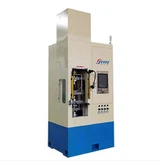
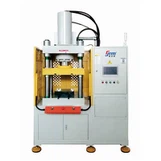
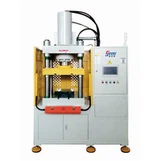
Hey there! As a supplier of 30 Ton Press machines, I often get asked a bunch of questions about what these bad boys can and can't do. One question that pops up quite a bit is, "Can a 30 Ton Press be used for paperboard pressing?" Well, let's dive right into it and find out.
First off, let's talk about what a 30 Ton Press actually is. It's a heavy - duty piece of machinery that can exert a force of 30 tons. That's a whole lot of pressure! These presses are usually hydraulic, which means they use fluid power to generate that massive force. They're commonly used in various industries for tasks like stamping, forging, and yes, pressing different materials.
Now, onto paperboard. Paperboard is a thick paper - like material that's sturdier than regular paper. It's used for all sorts of things, from packaging boxes to book covers. The process of pressing paperboard can involve compressing it to make it denser, shaping it into specific forms, or laminating multiple layers together.
So, can a 30 Ton Press handle paperboard pressing? The short answer is, in many cases, yes! But it depends on a few factors.
Factors to Consider
1. Paperboard Thickness and Density
If you're working with thin and less dense paperboard, a 30 Ton Press should have no problem. It can easily compress the layers to get the desired thickness and smoothness. For example, if you're making simple cardboard boxes with a relatively thin paperboard, the press can quickly and efficiently press the material into the right shape.
However, if you're dealing with extremely thick or high - density paperboard, things might get a bit tricky. Some heavy - duty paperboards used for industrial packaging or high - end product boxes can be quite tough to press. In these cases, you might need to assess whether the 30 Ton Press has enough power. If not, you might want to consider a 50 Ton Press, which can provide more force for those challenging jobs.
2. Pressing Requirements
The type of pressing you need to do also matters. If it's just a simple flat pressing to make the paperboard more compact, a 30 Ton Press can do the job well. But if you're looking to create complex shapes or emboss detailed patterns on the paperboard, you'll need to make sure the press has the right tooling and control mechanisms.
For instance, if you want to emboss a logo on a paperboard box, the press needs to be able to apply the force evenly and precisely. You might need to use custom - made dies and work closely with your press operator to get the best results.
3. Production Volume
If you're running a small - scale operation with low production volumes, a 30 Ton Press is likely to be sufficient. It can handle the occasional batch of paperboard pressing without any issues. But for large - scale production, where you're churning out thousands of paperboard products every day, you need to consider the press's speed and durability.
A 30 Ton Press can work for high - volume production, but you'll need to ensure proper maintenance and have a backup plan in case of any breakdowns. If your production demands are extremely high, you might want to look into a more powerful press or even multiple presses working in tandem.
Advantages of Using a 30 Ton Press for Paperboard Pressing
1. Cost - Effective
Compared to larger and more powerful presses, a 30 Ton Press is generally more affordable. It's a great option for small and medium - sized businesses that want to get into paperboard pressing without breaking the bank. You can invest in a quality 30 Ton Press and start your paperboard production at a relatively low cost.


2. Versatility
These presses are not just limited to paperboard pressing. You can use them for other light - to - medium - duty tasks in your workshop. For example, you can also use it for pressing small metal parts or laminating other materials. This versatility makes it a valuable addition to your manufacturing setup.
3. Ease of Use
30 Ton Presses are relatively easy to operate. Most modern presses come with user - friendly controls that allow even novice operators to learn how to use them quickly. This means you don't have to spend a lot of time and money on training your staff.
Limitations
1. Limited Force
As mentioned earlier, for very thick or high - density paperboard, the 30 Ton Press might not have enough force. In such cases, you might end up with uneven pressing or not achieve the desired results. That's when you might need to upgrade to a 50 Ton Press Cylinder or a whole new 50 Ton Press.
2. Speed for High - Volume Production
While it can handle high - volume production to some extent, a 30 Ton Press might not be as fast as larger presses designed specifically for mass production. If you're looking to produce paperboard products at a breakneck pace, you might face some bottlenecks.
Other Considerations
When using a 30 Ton Press for paperboard pressing, you also need to think about safety. Always follow the manufacturer's safety guidelines and make sure your operators are properly trained. Wear appropriate safety gear, such as gloves and safety glasses, to prevent any accidents.
Another thing to consider is the environmental impact. Paperboard is a recyclable material, and using a press to create products from it is a great way to contribute to a more sustainable future. However, make sure your press is energy - efficient to reduce your carbon footprint.
Conclusion
So, to sum it up, a 30 Ton Press can definitely be used for paperboard pressing in many situations. It's cost - effective, versatile, and relatively easy to use. But you need to consider factors like paperboard thickness, pressing requirements, and production volume.
If you're thinking about getting into paperboard pressing or looking to upgrade your existing equipment, I'd be more than happy to help. Whether you need a 30 Ton Press or are considering a more powerful option like a 50 Ton Press, we can provide you with the right solutions.
If you have any questions or want to discuss your specific paperboard pressing needs, don't hesitate to reach out. We're here to assist you in making the best choice for your business. Let's start a conversation and see how we can help you take your paperboard production to the next level!
References
- General knowledge of hydraulic presses and paperboard manufacturing processes.
- Industry experience as a 30 Ton Press supplier.