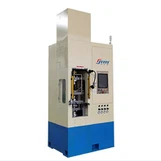
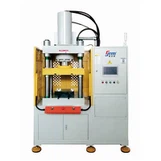
Hey there! As a supplier of High Precision Servo Presses, I often get asked a bunch of questions from customers. One question that pops up quite a bit is, "Can a high precision servo press be used for multi - stage pressing operations?" Well, let's dig into this topic and find out.
First off, let's understand what a high precision servo press is. A High Precision Servo Press is a state - of - the - art piece of equipment. It uses servo motors to control the movement of the ram, which means it can offer extremely accurate control over force, position, and speed. This level of control is way better than traditional mechanical or hydraulic presses.

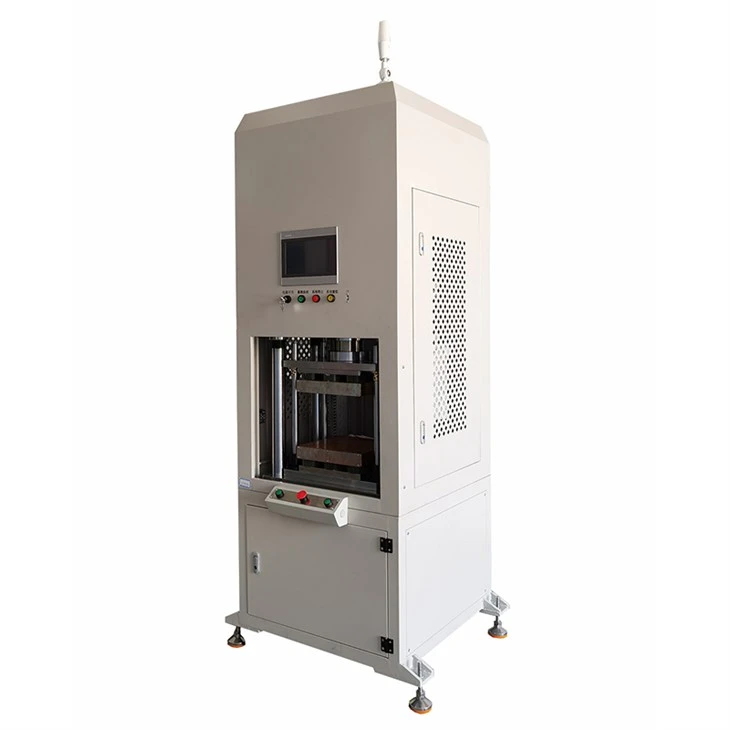
Now, onto multi - stage pressing operations. Multi - stage pressing is a process where a workpiece goes through several pressing steps in sequence. Each step has its own specific requirements in terms of force, stroke, and speed. For example, in the manufacturing of complex metal parts, you might start with a rough forming stage, then move on to a fine - tuning stage, and finally a calibration stage.
So, can a high precision servo press handle these multi - stage operations? The answer is a big yes! Here's why.
1. Precise Force Control
One of the key requirements in multi - stage pressing is the ability to apply different levels of force at each stage. A high precision servo press shines in this area. With its advanced servo motor control system, it can adjust the force applied to the workpiece with incredible accuracy. For instance, in the initial rough forming stage, a higher force might be needed to reshape the material. The servo press can easily ramp up the force to the required level. Then, in the fine - tuning stage, a much lower and more precise force is needed to avoid over - working the part. The press can quickly and accurately reduce the force, ensuring the part is shaped just right.
2. Adjustable Stroke and Speed
Multi - stage pressing also demands different stroke lengths and speeds for each stage. A high precision servo press offers great flexibility in this regard. The stroke length can be easily programmed according to the specific requirements of each pressing stage. If a stage requires a short and quick movement, the press can be set to a short stroke and high speed. Conversely, if a more gentle and slow movement is needed, like in the calibration stage, the press can be adjusted to a longer stroke with a slower speed. This adaptability allows for a seamless transition between different pressing stages.
3. Programmable Logic
Another advantage of using a high precision servo press for multi - stage operations is its programmable logic. You can program the entire multi - stage process into the press's control system. Once programmed, the press will automatically execute each stage in the correct sequence, with the right force, stroke, and speed settings. This not only improves the efficiency of the production process but also reduces the chances of human error. You don't have to manually adjust the press settings between each stage, saving time and ensuring consistent quality.
4. Real - Time Monitoring and Feedback
A high precision servo press is equipped with sensors that can monitor the pressing process in real - time. During multi - stage pressing, these sensors can detect any deviations from the programmed settings, such as changes in force or position. If a deviation is detected, the press can automatically adjust its operation to correct the issue. This real - time feedback loop ensures that each stage of the multi - stage pressing process is carried out accurately, resulting in high - quality finished products.
Types of High Precision Servo Presses for Multi - Stage Pressing
There are different types of high precision servo presses that are well - suited for multi - stage operations. Two popular types are the H Frame Electric Servo Press and the C Frame Electric Servo Press.
The H Frame Electric Servo Press is known for its stability and high load - bearing capacity. It has a robust structure that can withstand the high forces often involved in multi - stage pressing. This type of press is ideal for large - scale production of heavy - duty parts.
On the other hand, the C Frame Electric Servo Press offers more flexibility in terms of accessibility. Its open - sided design allows for easy loading and unloading of workpieces, which is especially useful when dealing with complex parts that require frequent handling during the multi - stage process.
Case Studies
Let's take a look at some real - world examples to see how high precision servo presses are used in multi - stage pressing operations.
Case 1: Automotive Component Manufacturing
In the automotive industry, the production of engine components often involves multi - stage pressing. A high precision servo press is used to manufacture a complex engine valve seat. The process starts with a rough stamping stage, where the basic shape of the valve seat is formed. The press applies a high force to reshape the metal blank. Then, in the second stage, a lower force is used to create the precise contours of the seat. Finally, a calibration stage is carried out to ensure the dimensions of the valve seat are within the tight tolerance requirements. The servo press's ability to adjust force, stroke, and speed at each stage has significantly improved the quality and consistency of the valve seats, reducing the rejection rate and increasing production efficiency.
Case 2: Electronics Industry
In the electronics industry, the production of small, delicate components also benefits from multi - stage pressing with high precision servo presses. For example, when manufacturing smartphone camera modules, a multi - stage pressing process is used to assemble the various components. The press starts with a gentle pressing stage to align the parts, then a slightly higher force is applied to secure the components together. The press's precise force control ensures that the delicate electronic components are not damaged during the pressing process.
Cost - Effectiveness
Using a high precision servo press for multi - stage pressing can also be cost - effective in the long run. While the initial investment in a servo press might be higher compared to traditional presses, the savings in terms of reduced scrap rates, improved productivity, and lower maintenance costs can quickly offset the upfront cost. With its ability to produce high - quality parts consistently, there are fewer rejected parts, which means less waste of materials and labor. Also, the advanced control system of the servo press reduces the likelihood of mechanical failures, resulting in lower maintenance costs over time.
Conclusion
In conclusion, a high precision servo press is an excellent choice for multi - stage pressing operations. Its precise force control, adjustable stroke and speed, programmable logic, and real - time monitoring capabilities make it well - suited for the complex requirements of multi - stage pressing. Whether you're in the automotive, electronics, or any other industry that requires the production of complex parts, a high precision servo press can help you achieve better quality, higher efficiency, and lower costs.
If you're interested in learning more about how our high precision servo presses can benefit your multi - stage pressing operations, or if you're looking to make a purchase, don't hesitate to get in touch. We're here to answer all your questions and help you find the right solution for your specific needs.
References
- "Advanced Manufacturing Technologies: Servo Presses in Precision Forming" - Industry Report, 20XX
- "Multi - stage Pressing Processes: Theory and Practice" - Journal of Manufacturing Science, Volume XX, Issue XX