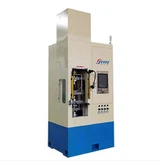
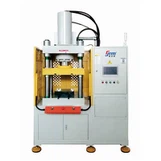
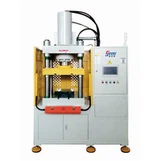
As a provider of high precision servo presses, I am often asked whether our machines can be used for riveting operations. Riveting is a crucial process in various industries, including automotive, aerospace, electronics, and general manufacturing. It involves joining two or more materials together using a rivet, a mechanical fastener. In this blog post, I will explore the capabilities of high precision servo presses in riveting operations, discussing their advantages, limitations, and key considerations.
Understanding High Precision Servo Presses
Before delving into the suitability of high precision servo presses for riveting, it's essential to understand what these machines are. A high precision servo press is a type of press that uses a servo motor to control the motion of the ram. Unlike traditional mechanical or hydraulic presses, servo presses offer precise control over force, position, and speed. This precision is achieved through advanced control algorithms and feedback systems, which allow the press to adjust its operation in real-time based on the specific requirements of the application.


Advantages of Using High Precision Servo Presses for Riveting
- Precision and Repeatability
One of the primary advantages of using a high precision servo press for riveting is its ability to provide accurate and consistent results. The servo motor allows for precise control over the force applied during the riveting process, ensuring that each rivet is installed with the exact amount of force required. This precision is crucial for maintaining the integrity of the joint and preventing issues such as over-riveting or under-riveting. Additionally, the press can repeat the same operation with high accuracy, which is essential for mass production applications where consistency is key. - Force and Position Control
High precision servo presses offer excellent control over both force and position. This means that the press can apply the right amount of force at the right position to ensure proper rivet installation. For example, in applications where the rivet needs to be installed to a specific depth, the servo press can accurately control the position of the ram to achieve the desired result. This level of control is difficult to achieve with traditional presses, which often rely on mechanical stops or hydraulic pressure settings that may not be as precise. - Flexibility
Servo presses are highly flexible and can be easily programmed to accommodate different riveting requirements. They can be adjusted to apply different levels of force, change the speed of the ram, and perform various types of riveting operations, such as single-point riveting, multiple-point riveting, or sequential riveting. This flexibility makes them suitable for a wide range of applications, from small-scale production to large-scale manufacturing. - Energy Efficiency
Compared to traditional hydraulic presses, high precision servo presses are more energy-efficient. The servo motor only consumes power when it is in operation, and it can be programmed to operate at optimal efficiency levels. This results in lower energy consumption and reduced operating costs over the long term. Additionally, servo presses produce less heat and noise, creating a more comfortable working environment for operators. - Process Monitoring and Quality Control
High precision servo presses are equipped with advanced sensors and monitoring systems that can provide real-time feedback on the riveting process. These systems can detect any abnormalities or deviations from the desired parameters, such as changes in force or position, and alert the operator immediately. This allows for quick corrective action to be taken, ensuring that the quality of the riveted joints is maintained. Additionally, the data collected by the monitoring system can be used for quality control purposes, such as statistical process control (SPC) analysis.
Limitations of High Precision Servo Presses for Riveting
While high precision servo presses offer many advantages for riveting operations, they also have some limitations.
- Initial Cost
The initial cost of a high precision servo press is typically higher than that of a traditional mechanical or hydraulic press. This is due to the advanced technology and components used in the servo press, such as the servo motor, control system, and sensors. However, it's important to consider the long-term benefits of using a servo press, such as lower operating costs, higher productivity, and better quality control, which can offset the initial investment over time. - Complexity
Servo presses are more complex than traditional presses, both in terms of their operation and maintenance. They require specialized training for operators and technicians to ensure proper use and maintenance. Additionally, the advanced control systems and sensors used in servo presses may require more frequent calibration and servicing to maintain their accuracy and reliability. - Limited Force Capacity
In some cases, high precision servo presses may have limited force capacity compared to traditional hydraulic presses. This can be a limitation for applications that require very high forces, such as large-scale riveting operations in the automotive or aerospace industries. However, there are servo presses available on the market with higher force capacities, and the technology is constantly evolving to address this issue.
Key Considerations for Using High Precision Servo Presses for Riveting
- Rivet Type and Material
The type and material of the rivet being used will have a significant impact on the riveting process. Different rivets require different levels of force and installation techniques. For example, solid rivets typically require more force to install than blind rivets. Additionally, the material of the rivet, such as aluminum, steel, or copper, will affect its hardness and ductility, which in turn will influence the riveting process. It's important to choose a high precision servo press that can be adjusted to accommodate the specific requirements of the rivet being used. - Workpiece Material and Thickness
The material and thickness of the workpiece being riveted also need to be considered. Different materials have different mechanical properties, such as hardness, strength, and ductility, which will affect the riveting process. For example, riveting a thick steel workpiece will require more force than riveting a thin aluminum workpiece. Additionally, the thickness of the workpiece will determine the length of the rivet required and the amount of force needed to install it. - Riveting Speed and Cycle Time
The speed at which the riveting operation needs to be performed and the desired cycle time are important considerations. High precision servo presses can be programmed to operate at different speeds, but it's important to balance speed with accuracy and quality. A faster riveting speed may result in lower quality if the press is not able to apply the right amount of force or control the position accurately. Additionally, the cycle time, which includes the time for loading and unloading the workpiece, as well as the riveting operation itself, needs to be optimized to ensure maximum productivity. - Integration with Other Equipment
In many manufacturing processes, high precision servo presses need to be integrated with other equipment, such as robotic arms, conveyors, or inspection systems. This requires careful planning and coordination to ensure seamless operation and compatibility between the different components. It's important to choose a servo press that can be easily integrated with other equipment and that has the necessary interfaces and communication protocols.
Examples of High Precision Servo Presses for Riveting
There are several types of high precision servo presses that are suitable for riveting operations.
- C Frame Electric Servo Press
The C Frame Electric Servo Press is a popular choice for riveting applications due to its compact design and high precision. It offers excellent control over force and position, and it can be easily programmed to perform various types of riveting operations. The C Frame design provides easy access to the workpiece, making it suitable for both manual and automated riveting processes. - Servo Hydraulic Press Machine
The Servo Hydraulic Press Machine combines the advantages of hydraulic power with the precision control of a servo motor. It offers high force capacity and can be used for a wide range of riveting applications, including those that require high forces. The servo control system allows for precise adjustment of the force and speed, ensuring accurate and consistent riveting results. - Servo Mechanical Press
The Servo Mechanical Press is another option for riveting operations. It uses a mechanical linkage system driven by a servo motor to provide precise control over the ram motion. This type of press is known for its high speed and efficiency, making it suitable for high-volume riveting applications.
Conclusion
In conclusion, high precision servo presses can be effectively used for riveting operations. They offer many advantages, such as precision, repeatability, flexibility, energy efficiency, and process monitoring, which make them suitable for a wide range of applications. However, they also have some limitations, such as higher initial cost, complexity, and limited force capacity. When considering using a high precision servo press for riveting, it's important to carefully evaluate the specific requirements of the application, including the type of rivet, workpiece material, riveting speed, and force capacity.
If you are interested in learning more about our high precision servo presses for riveting operations or would like to discuss your specific requirements, please feel free to contact us for a detailed consultation and procurement negotiation. We are committed to providing you with the best solutions to meet your manufacturing needs.
References
- Dornfeld, D. A., Min, S., & Takeuchi, Y. (Eds.). (2006). Handbook of manufacturing engineering and technology. Springer Science & Business Media.
- Groover, M. P. (2010). Fundamentals of modern manufacturing: Materials, processes, and systems. Wiley.
- Kalpakjian, S., & Schmid, S. R. (2008). Manufacturing engineering and technology. Pearson Prentice Hall.