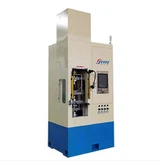
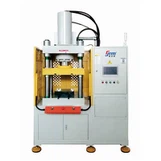
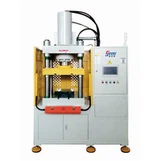
Can a servo hydraulic press machine be used for stamping operations? Well, as a supplier of Servo Hydraulic Press Machines, I've got some insights to share on this topic.
First off, let's understand what stamping operations are. Stamping is a manufacturing process where a piece of sheet metal is placed in a stamping press, and a die is used to cut, shape, or form the metal into a desired part. It's widely used in industries like automotive, aerospace, and electronics to make parts such as car body panels, aircraft components, and circuit boards.
Now, can a servo hydraulic press machine handle these stamping tasks? The answer is a big yes! Servo hydraulic press machines have several features that make them well - suited for stamping operations.
One of the key advantages is their precise control. Servo technology allows for accurate control of the press's speed, position, and force. In stamping, precision is crucial. For example, when stamping thin sheet metals for electronics, even a small deviation in force or position can lead to defective parts. With a servo hydraulic press machine, you can set the exact force required for the stamping operation, and the press will maintain that force throughout the process. This ensures consistent quality of the stamped parts.
Another benefit is the flexibility. Servo hydraulic press machines can be easily programmed to perform different stamping operations. You can change the stroke length, speed, and force settings depending on the requirements of the part you're stamping. Whether you're doing simple blanking operations or complex deep - drawing stamping, the press can be adjusted accordingly. This flexibility is a huge plus for manufacturers who produce a variety of stamped parts.
The energy efficiency of servo hydraulic press machines is also worth mentioning. Traditional hydraulic presses often run at a constant speed, consuming a lot of energy even when not performing a pressing operation. Servo hydraulic presses, on the other hand, only consume energy when needed. The servo motor adjusts its speed based on the load, which results in significant energy savings over time. This not only reduces the operating costs but also makes the manufacturing process more environmentally friendly.
In addition, servo hydraulic press machines offer better repeatability. Once you've set up the parameters for a particular stamping operation, the press will reproduce the same results every time. This is essential for mass - production stamping, where you need to produce a large number of identical parts. With high repeatability, you can minimize the number of defective parts and increase the overall productivity of your stamping process.
Let's compare servo hydraulic press machines with some other types of presses commonly used for stamping. For instance, the Hydraulic Servo Press has a more advanced control system compared to traditional hydraulic presses. It can achieve faster response times and more accurate force control, which are important for high - quality stamping.
The H Frame Electric Servo Press is another option. It offers a compact design and is suitable for smaller - scale stamping operations. However, servo hydraulic press machines can handle larger loads and are more versatile in terms of the stamping operations they can perform.
Then there's the Servo Mechanical Press. While it also has good precision and speed, servo hydraulic press machines have the advantage of being able to provide a more constant force throughout the stroke. This is especially important for stamping operations that require a large amount of force over a long distance.
When it comes to maintenance, servo hydraulic press machines are relatively easy to maintain. The servo system has fewer moving parts compared to some other types of presses, which means less wear and tear. Regular maintenance mainly involves checking the hydraulic fluid levels, filters, and the servo motor. By following a proper maintenance schedule, you can ensure the long - term reliability of the press and avoid costly breakdowns during stamping operations.
However, like any technology, servo hydraulic press machines also have some limitations. They can be more expensive to purchase compared to traditional hydraulic presses. But when you consider the long - term benefits such as energy savings, improved quality, and increased productivity, the investment is often worth it.
In conclusion, servo hydraulic press machines are a great choice for stamping operations. Their precision, flexibility, energy efficiency, repeatability, and relatively easy maintenance make them a valuable asset for manufacturers in various industries. If you're in the market for a press for your stamping needs, I highly recommend considering a servo hydraulic press machine.
If you're interested in learning more about our Servo Hydraulic Press Machines or want to discuss your specific stamping requirements, feel free to reach out. We're here to help you find the best solution for your manufacturing process.
References


- General knowledge of stamping operations and press technologies from industry experience.
- Technical specifications and research on servo hydraulic press machines from internal company resources.