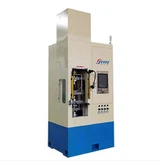
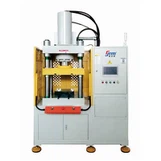
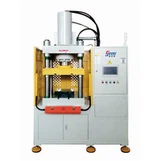
Hey there! As a supplier of Fast Hydraulic Presses, I often get asked how these machines can control pressure accurately. Well, let's dive right into it and break down the ins and outs of this fascinating process.
First off, we need to understand the basic components of a fast hydraulic press. At its core, a hydraulic press uses hydraulic fluid to generate force. The system typically consists of a hydraulic pump, a cylinder, a piston, and a control valve. The hydraulic pump is responsible for moving the hydraulic fluid into the cylinder, which then pushes the piston to create pressure.
Now, when it comes to accurate pressure control, there are several key factors at play. One of the most important is the control valve. This little device acts like a traffic cop for the hydraulic fluid, regulating the flow and pressure within the system. By adjusting the opening and closing of the valve, we can precisely control how much fluid enters the cylinder and, in turn, how much pressure is applied.
There are different types of control valves used in fast hydraulic presses, such as proportional valves and servo valves. Proportional valves are relatively simple and cost - effective. They can adjust the flow rate of the hydraulic fluid in proportion to an electrical input signal. For example, if we increase the electrical signal sent to the proportional valve, it will open wider, allowing more fluid to flow into the cylinder and increasing the pressure.
On the other hand, servo valves are more sophisticated. They offer extremely high precision and can respond very quickly to changes in the input signal. Servo valves are often used in applications where very accurate pressure control is required, like in the manufacturing of high - precision components. They can make rapid adjustments to the fluid flow to maintain a constant pressure, even when there are external disturbances.
Another crucial element in pressure control is the pressure sensor. This device measures the pressure within the hydraulic system and sends feedback to the control unit. The control unit, which is usually a computer - based system, uses this feedback to make real - time adjustments to the control valve. For instance, if the pressure sensor detects that the pressure is dropping below the set value, the control unit will send a signal to the control valve to open wider and increase the flow of hydraulic fluid.
In addition to the control valve and pressure sensor, the design of the hydraulic pump also plays a role in pressure control. A high - quality hydraulic pump can provide a stable and consistent flow of hydraulic fluid. Some pumps are designed with variable displacement capabilities, which means they can adjust the amount of fluid they deliver based on the system's requirements. This helps in maintaining accurate pressure control, especially when the load on the press changes.

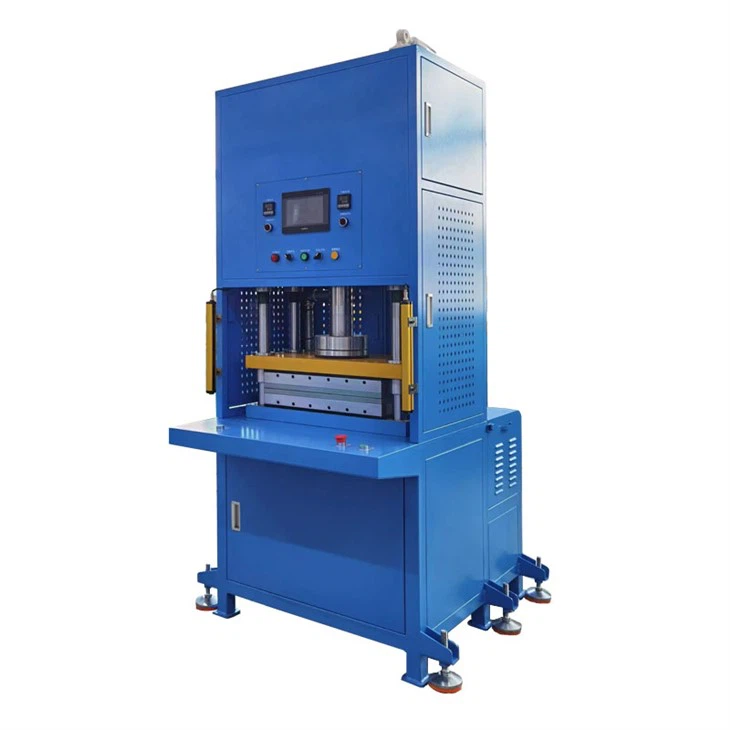
Now, let's talk about some of the benefits of accurate pressure control in fast hydraulic presses. In manufacturing processes, accurate pressure control ensures that the products being made have consistent quality. For example, in the stamping of metal parts, if the pressure is not controlled accurately, the parts may have uneven thickness or may not be formed correctly. This can lead to product defects and waste of materials.
Accurate pressure control also helps in reducing wear and tear on the press components. When the pressure is kept within the optimal range, the mechanical parts of the press, such as the piston and cylinder, are not subjected to excessive stress. This extends the lifespan of the press and reduces maintenance costs.
We offer a variety of hydraulic presses that feature advanced pressure control technology. Our Electric Hydraulic Press is a great option for those looking for a reliable and efficient press with precise pressure control. It combines the power of electricity with the benefits of hydraulic technology to provide consistent and accurate pressure for a wide range of applications.
If you have limited space in your workshop, our Small Benchtop Hydraulic Press is a perfect choice. Despite its small size, it still offers excellent pressure control capabilities, making it suitable for small - scale manufacturing and laboratory use.
For heavy - duty applications, our Four Column Three Beam Hydraulic Press is the go - to option. It is designed to handle large loads and can provide accurate pressure control even under high - stress conditions.
In conclusion, accurate pressure control in fast hydraulic presses is achieved through a combination of advanced components such as control valves, pressure sensors, and high - quality hydraulic pumps. This technology not only ensures the quality of the products being manufactured but also helps in reducing costs and extending the lifespan of the press.
If you're in the market for a fast hydraulic press and are interested in learning more about our products and how they can meet your specific pressure control needs, don't hesitate to reach out. We're here to help you find the perfect solution for your business. Whether you're a small - scale manufacturer or a large industrial company, we have the expertise and the products to get the job done right.
References:
- "Hydraulic Systems and Components" by an industry expert in hydraulic engineering
- Technical manuals of various hydraulic press manufacturers