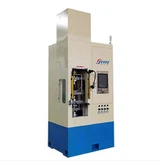
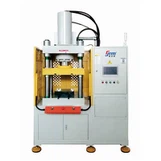
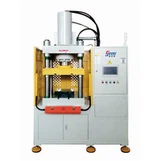
Measuring the pressure output of a fast hydraulic press is a crucial aspect of ensuring its optimal performance and safety in various industrial applications. As a supplier of fast hydraulic presses, I understand the significance of accurate pressure measurement and its impact on the quality of the pressing operations. In this blog post, I will delve into the methods and considerations for measuring the pressure output of a fast hydraulic press.
Understanding the Basics of Hydraulic Pressure
Before we explore the measurement techniques, it's essential to have a basic understanding of hydraulic pressure. Hydraulic systems operate on the principle of Pascal's law, which states that when pressure is applied to a confined fluid, the pressure change occurs throughout the entire fluid. In a hydraulic press, a hydraulic pump generates pressure by forcing hydraulic fluid into a cylinder, which then drives a piston to exert force on the workpiece.


The pressure in a hydraulic system is typically measured in pounds per square inch (psi) or megapascals (MPa). The pressure output of a hydraulic press is determined by several factors, including the size of the piston, the force applied by the hydraulic pump, and the efficiency of the hydraulic system.
Methods of Measuring Pressure Output
There are several methods available for measuring the pressure output of a fast hydraulic press. Each method has its advantages and limitations, and the choice of method depends on the specific requirements of the application.
Pressure Gauges
Pressure gauges are one of the most common and straightforward methods of measuring hydraulic pressure. They are typically installed directly on the hydraulic system and provide a visual indication of the pressure. Pressure gauges come in various types, including mechanical, digital, and differential gauges.
Mechanical pressure gauges use a Bourdon tube or a diaphragm to measure pressure. The pressure causes the Bourdon tube to deform, which is then translated into a needle movement on a calibrated scale. Mechanical gauges are reliable and relatively inexpensive, but they may require regular calibration to ensure accuracy.
Digital pressure gauges use electronic sensors to measure pressure and display the reading on a digital screen. They offer higher accuracy and precision compared to mechanical gauges and can also provide additional features such as data logging and alarm functions. Digital gauges are more expensive than mechanical gauges but are well-suited for applications where accurate pressure measurement is critical.
Differential pressure gauges measure the difference in pressure between two points in the hydraulic system. They are commonly used to monitor the pressure drop across filters, valves, or other components in the system. Differential gauges can help identify potential issues such as clogged filters or malfunctioning valves.
Transducers
Pressure transducers are electronic devices that convert pressure into an electrical signal. They are more accurate and sensitive than pressure gauges and can provide continuous real-time pressure measurements. Pressure transducers are commonly used in applications where precise pressure control and monitoring are required, such as in automated manufacturing processes.
There are several types of pressure transducers, including strain gauge transducers, piezoelectric transducers, and capacitive transducers. Strain gauge transducers are the most widely used type and work by measuring the change in electrical resistance of a strain gauge due to the applied pressure. Piezoelectric transducers generate an electrical charge in response to pressure, while capacitive transducers measure the change in capacitance due to pressure.
Pressure transducers can be connected to a data acquisition system or a control panel to monitor and record the pressure data. They can also be integrated with other sensors and control systems to provide a comprehensive monitoring and control solution for the hydraulic press.
Load Cells
Load cells are devices that measure the force applied by the hydraulic press. They are typically installed between the piston and the workpiece or on the frame of the press. Load cells work by converting the applied force into an electrical signal, which can then be used to calculate the pressure.
Load cells offer several advantages over pressure gauges and transducers. They provide a direct measurement of the force applied to the workpiece, which is often more relevant in applications where the quality of the pressing operation depends on the force rather than the pressure. Load cells are also more accurate and reliable in measuring the force, especially in applications where the pressure may vary due to factors such as friction or uneven loading.
However, load cells are more expensive than pressure gauges and transducers and require more complex installation and calibration procedures. They are typically used in applications where precise force measurement is critical, such as in the aerospace, automotive, and medical industries.
Considerations for Measuring Pressure Output
When measuring the pressure output of a fast hydraulic press, there are several considerations that need to be taken into account to ensure accurate and reliable measurements.
Calibration
Calibration is an essential step in ensuring the accuracy of pressure measurement devices. Pressure gauges, transducers, and load cells should be calibrated regularly to ensure that they are providing accurate readings. Calibration involves comparing the measurement device to a known standard and adjusting it if necessary.
The frequency of calibration depends on several factors, including the type of measurement device, the accuracy requirements of the application, and the operating conditions. In general, pressure gauges should be calibrated at least once a year, while transducers and load cells may require more frequent calibration.
Location
The location of the pressure measurement device can have a significant impact on the accuracy of the measurements. The device should be installed in a location where it can accurately measure the pressure at the point of interest. For example, if the pressure is being measured to monitor the force applied to the workpiece, the measurement device should be installed as close as possible to the workpiece.
In addition, the location of the measurement device should be free from vibrations, temperature fluctuations, and other factors that could affect the accuracy of the measurements. If necessary, the measurement device should be installed in a protective enclosure to shield it from these factors.
Operating Conditions
The operating conditions of the hydraulic press can also affect the accuracy of the pressure measurements. Factors such as temperature, viscosity of the hydraulic fluid, and the presence of contaminants can all have an impact on the pressure reading.
It's important to take these factors into account when selecting the measurement device and interpreting the measurements. For example, if the hydraulic fluid temperature is expected to vary significantly during operation, a measurement device that is insensitive to temperature changes should be selected. Similarly, if the hydraulic fluid is contaminated, the measurement device should be protected from the contaminants to ensure accurate measurements.
Applications of Pressure Measurement in Fast Hydraulic Presses
Accurate pressure measurement is essential in a wide range of applications where fast hydraulic presses are used. Some of the common applications include:
Metal Forming
In metal forming applications, such as stamping, forging, and bending, the pressure output of the hydraulic press determines the quality and accuracy of the formed parts. By measuring the pressure, manufacturers can ensure that the press is applying the correct amount of force to the workpiece, resulting in consistent and high-quality parts.
Plastic Molding
In plastic molding applications, such as injection molding and compression molding, the pressure output of the hydraulic press affects the filling and packing of the mold cavity. By measuring the pressure, manufacturers can optimize the molding process to ensure that the plastic material fills the mold completely and produces parts with the desired dimensions and properties.
Assembly
In assembly applications, such as riveting, pressing, and joining, the pressure output of the hydraulic press determines the strength and integrity of the assembled parts. By measuring the pressure, manufacturers can ensure that the press is applying the correct amount of force to the parts, resulting in a secure and reliable assembly.
Conclusion
Measuring the pressure output of a fast hydraulic press is a critical aspect of ensuring its optimal performance and safety in various industrial applications. By understanding the basics of hydraulic pressure, choosing the appropriate measurement method, and taking into account the calibration, location, and operating conditions, manufacturers can obtain accurate and reliable pressure measurements.
At our company, we offer a wide range of fast hydraulic presses, including C Frame Press, Hot Hydraulic Press, and Air Operated Hydraulic Press. Our presses are designed to provide high performance and reliability, and we can also provide customized solutions to meet the specific requirements of our customers.
If you are interested in learning more about our fast hydraulic presses or have any questions about pressure measurement, please feel free to contact us. We look forward to the opportunity to discuss your needs and provide you with the best solutions for your application.
References
- "Hydraulic Systems and Components" by John F. Watson
- "Industrial Hydraulics" by William W. Ford
- "Pressure Measurement Handbook" by Daniel W. Spitzer