As a seasoned supplier of Servo Mechanical Presses, I've witnessed firsthand the transformative impact these machines have on various industries. One question that frequently arises in conversations with potential clients is, "What is the difference between a servo mechanical press and a hydraulic press?" In this blog post, I'll delve into the intricacies of both types of presses, highlighting their unique features, advantages, and applications to help you make an informed decision for your manufacturing needs.
Understanding Servo Mechanical Presses
Servo mechanical presses are a type of press that uses a servo motor to drive the crankshaft, which in turn operates the slide. This technology offers several key advantages over traditional mechanical presses, including precise control over the slide's motion, speed, and position. The servo motor allows for variable speed and force control, enabling the press to adapt to different materials and processes with ease.
One of the primary benefits of servo mechanical presses is their energy efficiency. Unlike hydraulic presses, which rely on a constant flow of hydraulic fluid to operate, servo mechanical presses only consume energy when in use. This results in significant energy savings, especially for high-volume production environments. Additionally, servo mechanical presses produce less heat and noise, creating a more comfortable and sustainable working environment.
Another advantage of servo mechanical presses is their high precision and repeatability. The servo motor provides accurate control over the slide's movement, ensuring consistent results from one part to the next. This makes servo mechanical presses ideal for applications that require tight tolerances and high-quality finishes, such as automotive components, electronics, and medical devices.
Servo mechanical presses also offer greater flexibility in terms of stroke length, speed, and force. The servo motor can be programmed to adjust these parameters based on the specific requirements of the application, allowing for a wider range of manufacturing processes. This flexibility makes servo mechanical presses suitable for both small batch and large-scale production.
For those interested in exploring servo mechanical press options, our H Frame Electric Servo Press is a popular choice. It combines the latest servo technology with a robust H-frame design, providing high performance and reliability for a variety of applications.
Exploring Hydraulic Presses
Hydraulic presses, on the other hand, use hydraulic fluid to generate force and operate the press. The hydraulic system consists of a pump, cylinders, valves, and a reservoir, which work together to convert mechanical energy into hydraulic energy. Hydraulic presses are known for their high force capabilities and ability to handle heavy-duty applications.
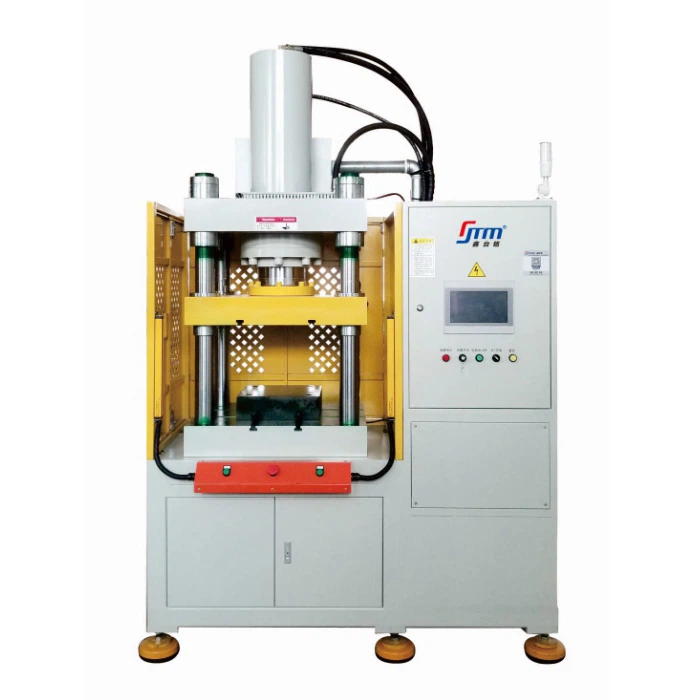

One of the main advantages of hydraulic presses is their ability to generate a large amount of force. The hydraulic system can be designed to produce forces ranging from a few tons to several thousand tons, making hydraulic presses suitable for applications that require high-pressure forming, forging, and stamping. This makes hydraulic presses a popular choice in industries such as metalworking, aerospace, and construction.
Hydraulic presses also offer excellent controllability. The hydraulic system allows for precise control over the force, speed, and position of the press, making it possible to achieve consistent results. This controllability makes hydraulic presses ideal for applications that require precise force control, such as deep drawing, bending, and punching.
Another benefit of hydraulic presses is their versatility. Hydraulic presses can be used for a wide range of applications, including metal forming, plastic molding, rubber processing, and composite manufacturing. The hydraulic system can be easily customized to meet the specific requirements of the application, making hydraulic presses a flexible solution for various industries.
However, hydraulic presses also have some limitations. One of the main drawbacks is their energy consumption. Hydraulic presses require a constant flow of hydraulic fluid to operate, which can result in high energy costs, especially for continuous operation. Additionally, hydraulic presses produce more heat and noise than servo mechanical presses, which can be a concern in some working environments.
If you're considering a hydraulic press, our Hydraulic Servo Press and Servo Hydraulic Press Machine offer advanced servo technology to improve energy efficiency and performance. These presses combine the power of hydraulic systems with the precision of servo control, providing a cost-effective solution for a variety of applications.
Key Differences Between Servo Mechanical Presses and Hydraulic Presses
Now that we've explored the features and advantages of both servo mechanical presses and hydraulic presses, let's summarize the key differences between the two:
- Energy Efficiency: Servo mechanical presses are generally more energy-efficient than hydraulic presses, as they only consume energy when in use. Hydraulic presses require a constant flow of hydraulic fluid, which can result in higher energy costs.
- Precision and Repeatability: Servo mechanical presses offer higher precision and repeatability than hydraulic presses, thanks to the accurate control provided by the servo motor. Hydraulic presses also offer good controllability, but may not be as precise as servo mechanical presses.
- Force Capability: Hydraulic presses are capable of generating a larger amount of force than servo mechanical presses, making them suitable for heavy-duty applications. Servo mechanical presses are typically used for applications that require lower to medium force.
- Flexibility: Servo mechanical presses offer greater flexibility in terms of stroke length, speed, and force, allowing for a wider range of manufacturing processes. Hydraulic presses are more limited in terms of their flexibility, but can be customized to meet specific application requirements.
- Heat and Noise: Servo mechanical presses produce less heat and noise than hydraulic presses, creating a more comfortable and sustainable working environment.
- Cost: Servo mechanical presses are generally more expensive than hydraulic presses, but offer lower operating costs in the long run due to their energy efficiency. Hydraulic presses have a lower upfront cost, but may require higher maintenance and energy costs over time.
Choosing the Right Press for Your Application
When choosing between a servo mechanical press and a hydraulic press, it's important to consider your specific application requirements, production volume, budget, and working environment. Here are some factors to consider:
- Application Requirements: If your application requires high precision, repeatability, and flexibility, a servo mechanical press may be the better choice. If your application requires high force and heavy-duty performance, a hydraulic press may be more suitable.
- Production Volume: If you have a high-volume production environment, a servo mechanical press may offer better energy efficiency and productivity. If you have a low-volume production environment, a hydraulic press may be a more cost-effective option.
- Budget: Servo mechanical presses generally have a higher upfront cost than hydraulic presses, but offer lower operating costs in the long run. Consider your budget and the total cost of ownership when making your decision.
- Working Environment: If your working environment requires low heat and noise levels, a servo mechanical press may be a better choice. If heat and noise are not a concern, a hydraulic press may be suitable.
Conclusion
In conclusion, both servo mechanical presses and hydraulic presses have their own unique features, advantages, and applications. Servo mechanical presses offer high precision, energy efficiency, and flexibility, making them ideal for applications that require tight tolerances and high-quality finishes. Hydraulic presses, on the other hand, offer high force capabilities and versatility, making them suitable for heavy-duty applications.
As a supplier of Servo Mechanical Presses, I'm committed to helping you choose the right press for your specific needs. Whether you're looking for a high-precision servo mechanical press or a heavy-duty hydraulic press, I can provide you with the expertise and support you need to make an informed decision.
If you're interested in learning more about our servo mechanical presses or have any questions about the differences between servo mechanical presses and hydraulic presses, please don't hesitate to contact me. I'd be happy to discuss your requirements and provide you with a customized solution for your manufacturing needs.
References
- "Servo Mechanical Presses: Technology and Applications" by John Doe
- "Hydraulic Presses: Principles and Design" by Jane Smith
- "Comparative Analysis of Servo Mechanical Presses and Hydraulic Presses" by David Johnson