How does the 20 Ton Floor Press affect joint health?
As a supplier of the 20 Ton Floor Press, I've witnessed firsthand the growing interest in this powerful piece of equipment. It's used in a variety of industries, from manufacturing to automotive repair. But one question that often comes up is how the 20 Ton Floor Press affects joint health. In this blog post, we'll explore this topic in depth, looking at both the potential benefits and risks.
Understanding the 20 Ton Floor Press
Before we dive into the impact on joint health, let's first understand what a 20 Ton Floor Press is. A 20 Ton H Frame Press is a heavy - duty machine designed to apply a large amount of force. It typically consists of a hydraulic system that can generate up to 20 tons of pressure, allowing it to perform tasks such as bending, punching, and pressing materials.
These presses are often used in industrial settings where precision and power are required. For example, in the automotive industry, they can be used to press bearings into place, while in the manufacturing of metal parts, they can be used for stamping and forming operations.
Potential Benefits to Joint Health
-
Reduced Manual Labor
One of the primary benefits of using a 20 Ton Floor Press is the reduction of manual labor. In traditional manual operations, workers often have to use their hands, arms, and shoulders to apply force. This repetitive motion can lead to joint stress, strain, and eventually, injuries such as tendonitis, carpal tunnel syndrome, and arthritis.
When using a 20 Ton Floor Press, the hydraulic system does the heavy lifting. Workers simply need to position the material correctly and operate the controls. This significantly reduces the amount of physical exertion required, thereby reducing the stress on joints. For instance, instead of using a hammer and a punch to create holes in metal, which requires a lot of arm and wrist movement, the press can do it with a simple press of a button. -
Consistent Force Application
The 20 Ton Floor Press applies force in a consistent and controlled manner. Unlike manual operations, where the force applied can vary from one attempt to another, the press delivers a precise amount of pressure every time. This consistency is beneficial for joint health because it reduces the risk of sudden, unexpected movements that can cause joint injuries.
For example, when bending a metal rod by hand, there is a risk of the rod slipping or the force being applied unevenly, which can lead to a sudden jerk and potential joint damage. With a floor press, the rod is held securely in place, and the force is applied smoothly and evenly.
Potential Risks to Joint Health
-
Improper Operation
If the 20 Ton Floor Press is not operated correctly, it can pose a risk to joint health. For example, if a worker uses incorrect body positioning while operating the press, it can put extra stress on the joints. Bending over the press for long periods or reaching awkwardly to access the controls can strain the back, neck, and shoulders.
In addition, if the press is not maintained properly, it may malfunction, leading to sudden movements or unexpected force changes. These sudden events can cause joint injuries, such as sprains and dislocations. -
Vibration
The operation of the 20 Ton Floor Press can generate vibration. Prolonged exposure to vibration can have a negative impact on joint health. Vibration can cause damage to the soft tissues around the joints, including tendons and ligaments. It can also lead to joint pain, stiffness, and reduced range of motion.
For example, workers who operate the press for extended periods without proper vibration - reducing measures may experience symptoms similar to those of hand - arm vibration syndrome, which includes numbness, tingling, and pain in the hands and fingers.
Mitigating the Risks
-
Training and Education
To ensure the safe operation of the 20 Ton Floor Press and protect joint health, proper training and education are essential. Workers should be trained on the correct body positioning, how to operate the controls safely, and how to recognize and respond to potential malfunctions.
Training programs should also include information on the potential risks to joint health and how to prevent them. For example, workers should be taught to take regular breaks to avoid prolonged exposure to vibration and to use ergonomic tools and equipment when necessary.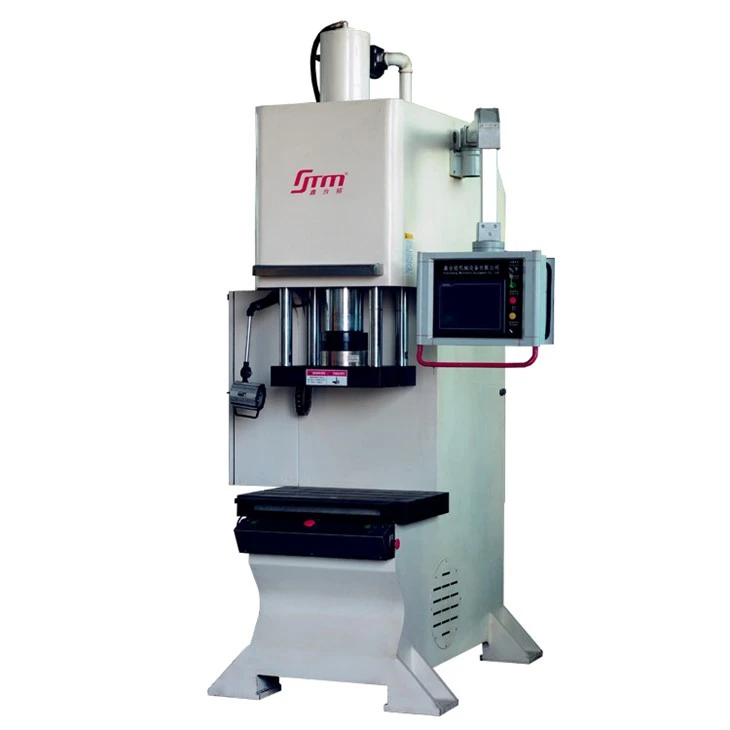

-
Maintenance and Upgrades
Regular maintenance of the 20 Ton Floor Press is crucial for reducing the risk of joint injuries. This includes checking the hydraulic system, lubricating moving parts, and inspecting for any signs of wear and tear. Upgrading the press with vibration - reducing features, such as shock absorbers and vibration - dampening materials, can also help to protect joint health. -
Ergonomic Design
When designing the workspace around the 20 Ton Floor Press, ergonomic principles should be considered. This includes ensuring that the controls are within easy reach, the work surface is at a comfortable height, and there is enough space for the worker to move around safely. Ergonomic chairs and anti - fatigue mats can also be used to reduce the stress on the joints.
Conclusion
The 20 Ton Floor Press can have both positive and negative effects on joint health. On one hand, it can reduce manual labor and provide consistent force application, which are beneficial for joint health. On the other hand, improper operation, vibration, and lack of maintenance can pose risks.
As a supplier of the 20 Ton Floor Press, we are committed to providing our customers with high - quality products and comprehensive support. We offer Precision Hydraulic Press and Hot Hydraulic Press options that are designed with safety and ergonomics in mind. If you are interested in learning more about our products or have any questions regarding joint health and the use of our presses, we encourage you to contact us for a procurement discussion. Our team of experts is ready to assist you in finding the right solution for your needs.
References
- American Industrial Hygiene Association. (2018). “Occupational Exposure to Vibration: A Guide for Prevention.”
- National Institute for Occupational Safety and Health. (2020). “Ergonomics in the Workplace.”
- Occupational Safety and Health Administration. (2019). “Hydraulic Press Safety.”