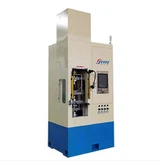
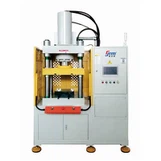
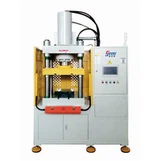
Hey there! I'm a supplier of 20 Ton Hydraulic Presses, and today I want to chat about how to select the appropriate mold for a 20 Ton Hydraulic Press. It's a crucial step that can make or break your production process, so let's dive right in.
First off, let's understand what a 20 Ton Hydraulic Press is all about. It's a powerful machine that uses hydraulic pressure to apply a force of up to 20 tons. This makes it suitable for a wide range of applications, from metal forming to plastic molding. But to get the most out of your press, you need to choose the right mold.
Consider the Material
The first thing you need to think about is the material you'll be working with. Different materials have different properties, and you need a mold that can handle them. For example, if you're working with metals like steel or aluminum, you'll need a mold made from a hard and durable material, such as tool steel. Tool steel can withstand the high pressures and temperatures involved in metal forming without deforming or wearing out quickly.
On the other hand, if you're working with plastics, you can use molds made from softer materials, like aluminum or even some types of plastics themselves. These materials are easier to machine and can be more cost - effective for plastic molding applications.
Match the Mold Size
The size of the mold is another critical factor. It needs to fit properly within the working area of your 20 Ton Hydraulic Press. You don't want a mold that's too big, as it won't fit, and you also don't want one that's too small, as it won't make full use of the press's capabilities.


Measure the available space in your press carefully. Consider both the horizontal and vertical dimensions. The mold should have enough clearance around it to allow for proper installation and operation. Also, make sure that the press can apply pressure evenly across the entire surface of the mold. If the mold is too large for the press's ram, you may end up with unevenly formed parts.
Think About the Shape
The shape of the part you want to produce determines the shape of the mold. Simple shapes, like flat sheets or cylinders, are relatively easy to mold. However, if you need to create complex shapes with undercuts or intricate details, you'll need a more sophisticated mold design.
For complex shapes, you might need to use multi - piece molds or molds with movable parts. These types of molds can be more expensive and require more skill to operate, but they're essential for producing high - quality parts with complex geometries.
Evaluate the Production Volume
Your expected production volume also plays a role in mold selection. If you're only planning to produce a small number of parts, you can use a simpler and less expensive mold. For example, a prototype mold made from a softer material might be sufficient. These molds are quick to make and can save you money in the short term.
However, if you're looking at high - volume production, you'll need a more robust and durable mold. A high - quality mold made from a hard material can withstand the repeated use and abuse of mass production without losing its shape or quality. It might cost more upfront, but it will pay off in the long run by reducing the need for frequent mold replacements.
Look at the Surface Finish
The surface finish of the part you're making is important, especially if it has aesthetic or functional requirements. The mold's surface finish directly affects the surface finish of the part. If you need a smooth surface, the mold should have a polished surface. A rough mold will transfer its roughness to the part.
Some molds can be treated with special coatings or finishes to improve the surface quality of the parts. For example, a chrome - plated mold can provide a smooth and shiny surface finish on the molded part.
Consider the Cost
Cost is always a factor in any business decision. When selecting a mold for your 20 Ton Hydraulic Press, you need to balance the cost of the mold with its quality and performance. Cheaper molds might seem like a good deal at first, but they may not last long or produce high - quality parts.
On the other hand, the most expensive mold isn't always the best choice either. You need to find a mold that offers the right combination of quality, performance, and cost for your specific application. Sometimes, it's worth investing a little more in a better - quality mold if it means higher production efficiency and fewer defects in the long run.
Other Types of Hydraulic Presses
Before we wrap up, I want to mention a few other types of hydraulic presses that you might be interested in. If you're looking for a Hydraulic Hose Press, it's a specialized press used for crimping hydraulic hoses. It has unique features and capabilities designed specifically for this task.
Another option is the Air Operated Hydraulic Press. These presses use compressed air to generate hydraulic pressure, which can be a more convenient and cost - effective solution in some situations.
And if you're in the industrial sector and need a more heavy - duty press, the Industrial Hydraulic Press Machine might be the right choice. It's designed to handle large - scale industrial applications with high precision and reliability.
Conclusion
Selecting the appropriate mold for a 20 Ton Hydraulic Press is a multi - faceted decision. You need to consider the material, size, shape, production volume, surface finish, and cost. By taking all these factors into account, you can choose a mold that will help you get the most out of your press and produce high - quality parts.
If you're interested in learning more about 20 Ton Hydraulic Presses or need help with mold selection, don't hesitate to reach out. We're here to assist you in making the best choices for your business. Contact us to start a conversation about your specific needs and let's work together to find the perfect solution.
References
- "Hydraulic Press Technology Handbook"
- "Mold Design and Manufacturing Principles"
- Industry research reports on hydraulic presses and mold selection