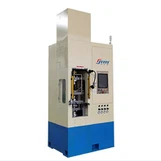
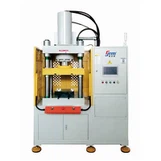
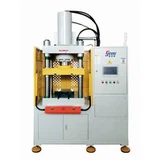
Setting the working stroke of an electric over hydraulic press is a crucial step that directly impacts the efficiency and effectiveness of your manufacturing operations. As a trusted supplier of electric over hydraulic presses, I understand the significance of this process and am here to guide you through it.

Understanding the Working Stroke
Before delving into how to set the working stroke, it's essential to understand what it is. The working stroke of an electric over hydraulic press refers to the distance the ram (the moving part of the press) travels from its fully retracted position to its fully extended position during the pressing operation. This distance determines the maximum height or thickness of the workpiece that the press can handle.
Factors Influencing the Working Stroke
Several factors need to be considered when setting the working stroke of an electric over hydraulic press:

- Workpiece Dimensions: The size and shape of the workpiece are the primary factors influencing the working stroke. You need to ensure that the press has enough stroke length to accommodate the height or thickness of the workpiece during the pressing process. For example, if you are working with thick metal sheets, you will need a press with a longer working stroke.
- Pressing Operation: Different pressing operations require different working strokes. For instance, a simple stamping operation may require a shorter stroke, while a deep drawing operation may need a longer stroke to form the workpiece properly.
- Tooling Requirements: The type of tooling used in the press also affects the working stroke. Some tools may require a certain amount of clearance above or below the workpiece, which needs to be factored into the stroke setting.
Steps to Set the Working Stroke
Here are the general steps to set the working stroke of an electric over hydraulic press:
- Refer to the Press Manual: The first step is to consult the press manual provided by the manufacturer. The manual will contain detailed instructions on how to set the working stroke for your specific model of the press. It will also provide information on the maximum and minimum stroke lengths and any safety precautions to be taken.
- Power Off the Press: Before making any adjustments to the press, ensure that it is powered off and disconnected from the electrical supply. This is a crucial safety measure to prevent any accidental activation of the press during the adjustment process.
- Locate the Stroke Adjustment Mechanism: The stroke adjustment mechanism may vary depending on the model of the press. In most electric over hydraulic presses, it can be found near the ram or the hydraulic cylinder. It may be a mechanical adjustment screw, a hydraulic valve, or an electronic control panel.
- Determine the Desired Stroke Length: Based on the factors mentioned above, determine the desired working stroke length for your pressing operation. You can use a measuring tool such as a ruler or a caliper to measure the required distance.
- Make the Adjustment: Once you have determined the desired stroke length, use the stroke adjustment mechanism to make the necessary adjustments. If it is a mechanical adjustment screw, turn it clockwise or counterclockwise to increase or decrease the stroke length, respectively. If it is a hydraulic valve, adjust the flow rate or pressure to change the stroke length. If it is an electronic control panel, enter the desired stroke length into the system.
- Test the Press: After making the adjustment, power on the press and perform a test run. Check if the ram moves smoothly through the desired stroke length and if the pressing operation is carried out correctly. If necessary, make further adjustments until the desired results are achieved.
Importance of Proper Stroke Setting
Properly setting the working stroke of an electric over hydraulic press offers several benefits:
- Improved Product Quality: A correctly set working stroke ensures that the workpiece is pressed uniformly and accurately, resulting in high-quality products with consistent dimensions and properties.
- Increased Efficiency: By optimizing the working stroke, you can reduce the cycle time of the pressing operation, leading to increased productivity and efficiency.
- Extended Press Life: Overloading the press by setting an incorrect working stroke can cause excessive wear and tear on the components, leading to premature failure. Proper stroke setting helps to protect the press and extend its service life.
Additional Considerations
- Regular Maintenance: To ensure the accurate and reliable operation of the press, it is essential to perform regular maintenance on the stroke adjustment mechanism. This includes cleaning, lubricating, and inspecting the components for any signs of wear or damage.
- Operator Training: Proper training of the operators is crucial to ensure that they understand how to set the working stroke correctly and operate the press safely. Provide comprehensive training on the press operation, maintenance, and safety procedures.
As a supplier of electric over hydraulic presses, we offer a wide range of products to meet your specific needs. Our Hot Hydraulic Press is designed for high-temperature applications, while our 20 Ton Press provides a reliable solution for medium-duty pressing operations. For more heavy-duty applications, our 4 Post Hydraulic Press offers excellent stability and precision.
If you are interested in purchasing an electric over hydraulic press or need further assistance with setting the working stroke, please feel free to contact us for a consultation. Our team of experts will be happy to help you find the right press for your application and ensure that it is set up correctly for optimal performance.
References
- ASME B31.3 Process Piping Code
- ISO 12100 Safety of Machinery - General Principles for Design
- Manufacturer's Press Manuals