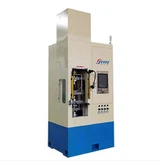
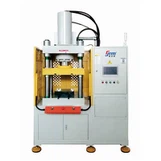
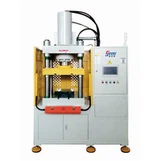
In the realm of industrial machinery, hydraulic line presses play a crucial role in various manufacturing and processing operations. As a leading supplier of hydraulic line presses, we understand the significance of advanced communication interfaces in enhancing the efficiency, precision, and overall performance of these machines. In this blog post, we will explore the communication interfaces available in some of our advanced hydraulic line presses and how they contribute to a seamless and productive working environment.
Understanding the Importance of Communication Interfaces
Communication interfaces in hydraulic line presses serve as the bridge between the machine and external devices, such as controllers, sensors, and monitoring systems. These interfaces enable the exchange of data, commands, and feedback, allowing for real-time monitoring, control, and optimization of the pressing process. By integrating advanced communication interfaces, hydraulic line presses can achieve higher levels of automation, accuracy, and reliability, leading to improved productivity and reduced downtime.
Common Communication Interfaces in Advanced Hydraulic Line Presses
Ethernet Interface
The Ethernet interface is one of the most widely used communication interfaces in modern hydraulic line presses. It provides a high-speed, reliable, and flexible connection to the local area network (LAN) or the internet. With an Ethernet interface, the hydraulic line press can be easily integrated into a larger manufacturing system, allowing for remote monitoring, control, and data sharing. For example, operators can access the press's status, settings, and production data from a central control room or even from a mobile device, enabling them to make informed decisions and take immediate action if necessary.
In addition, the Ethernet interface supports various industrial communication protocols, such as Modbus TCP, Profinet, and EtherNet/IP. These protocols ensure seamless communication between the hydraulic line press and other devices in the network, enabling interoperability and compatibility with different control systems and software applications. For instance, a manufacturer can use a Modbus TCP-compatible PLC to control the hydraulic line press and collect data from its sensors, while a Profinet-based monitoring system can be used to visualize and analyze the production data in real-time.


USB Interface
The USB interface is another common communication interface found in advanced hydraulic line presses. It offers a simple and convenient way to connect external devices, such as flash drives, keyboards, and mice, to the press's control system. This allows operators to transfer data, programs, and settings between the press and other devices, as well as to perform maintenance and troubleshooting tasks more easily. For example, a technician can use a USB flash drive to update the press's firmware or to backup its configuration data, while an operator can use a USB keyboard and mouse to interact with the press's touchscreen interface more efficiently.
Moreover, the USB interface can also be used to connect the hydraulic line press to a computer for data logging and analysis. By using a dedicated software application, operators can collect and analyze the press's production data, such as force, pressure, and displacement, over a period of time. This data can then be used to identify trends, optimize the pressing process, and improve the overall quality of the products. For instance, a manufacturer can use the data analysis results to adjust the press's settings, such as the pressing force and speed, to achieve better product quality and consistency.
CAN Bus Interface
The CAN (Controller Area Network) bus interface is a popular communication interface in the automotive and industrial sectors. It provides a reliable and cost-effective way to connect multiple devices in a network, allowing for high-speed data transfer and real-time communication. In hydraulic line presses, the CAN bus interface is often used to connect the press's sensors, actuators, and control modules, enabling them to communicate with each other and with the main control system.
The CAN bus interface offers several advantages over other communication interfaces, such as its high noise immunity, fault tolerance, and multi-master capability. These features make it suitable for use in harsh industrial environments, where electromagnetic interference and electrical noise can affect the performance of other communication interfaces. For example, in a hydraulic line press used in a metalworking factory, the CAN bus interface can ensure reliable communication between the press's sensors and control modules, even in the presence of high levels of electrical noise generated by the factory's machinery.
RS-232 and RS-485 Interfaces
The RS-232 and RS-485 interfaces are two legacy communication interfaces that are still widely used in some hydraulic line presses. The RS-232 interface is a serial communication interface that uses a single-ended signal to transmit data between devices. It is commonly used for connecting the press's control system to a computer or a terminal for configuration, monitoring, and troubleshooting purposes. The RS-485 interface, on the other hand, is a differential communication interface that uses a balanced signal to transmit data over longer distances and in noisy environments. It is often used for connecting multiple devices in a network, such as sensors, actuators, and control modules, to the main control system.
Although the RS-232 and RS-485 interfaces are not as fast or as flexible as the Ethernet or USB interfaces, they still offer a reliable and cost-effective way to communicate with the hydraulic line press. For example, a manufacturer can use an RS-232 interface to connect a simple text-based display to the press's control system, allowing operators to view the press's status and settings in real-time. Similarly, an RS-485 interface can be used to connect multiple sensors to the press's control system, enabling the collection and analysis of data from different parts of the press.
Benefits of Advanced Communication Interfaces in Hydraulic Line Presses
The integration of advanced communication interfaces in hydraulic line presses offers several benefits to manufacturers, including:
Improved Productivity
By enabling real-time monitoring and control, advanced communication interfaces allow manufacturers to optimize the pressing process and reduce downtime. For example, operators can use the data collected from the press's sensors to adjust the pressing force, speed, and duration, ensuring that the products are produced with consistent quality and accuracy. In addition, remote monitoring and control capabilities enable operators to respond quickly to any issues or emergencies, minimizing the impact on production.
Enhanced Quality Control
Advanced communication interfaces provide manufacturers with access to detailed production data, allowing them to monitor and control the quality of the products more effectively. For example, operators can use the data analysis results to identify trends and patterns in the production process, enabling them to take proactive measures to prevent quality issues before they occur. In addition, the ability to collect and analyze data from multiple sensors and devices in real-time allows for more accurate and comprehensive quality control.
Increased Safety
Communication interfaces in hydraulic line presses can also contribute to increased safety in the workplace. For example, by integrating safety sensors and devices into the press's control system, operators can monitor and control the press's safety features, such as emergency stops, interlocks, and guards, in real-time. In addition, remote monitoring and control capabilities enable operators to operate the press from a safe distance, reducing the risk of accidents and injuries.
Cost Savings
The integration of advanced communication interfaces in hydraulic line presses can also result in cost savings for manufacturers. By optimizing the pressing process and reducing downtime, manufacturers can increase their production efficiency and output, leading to lower production costs per unit. In addition, the ability to remotely monitor and control the press reduces the need for on-site maintenance and troubleshooting, saving time and money on labor costs.
Conclusion
In conclusion, advanced communication interfaces play a vital role in enhancing the performance, efficiency, and productivity of hydraulic line presses. By enabling seamless communication between the press and external devices, these interfaces allow for real-time monitoring, control, and data sharing, leading to improved quality control, increased safety, and cost savings. As a leading supplier of hydraulic line presses, we offer a wide range of advanced communication interfaces to meet the diverse needs of our customers. Whether you need an Ethernet interface for remote monitoring and control, a USB interface for data transfer and maintenance, or a CAN bus interface for reliable communication in a harsh environment, we have the solution for you.
If you are interested in learning more about our hydraulic line presses and their communication interfaces, please visit our website at Hot Hydraulic Press, Jet Hydraulic Press, or 20 Ton H Frame Press. Our team of experts is always ready to assist you in selecting the right hydraulic line press for your application and to provide you with the support and service you need to ensure its optimal performance. Contact us today to start a discussion about your specific requirements and to explore the possibilities of working together.
References
- Smith, J. (2020). Industrial Communication Networks: Principles, Technologies, and Applications. Wiley.
- Brown, A. (2019). Hydraulic Systems and Components: Design, Installation, and Maintenance. Elsevier.
- Johnson, R. (2018). Control Systems Engineering. Prentice Hall.