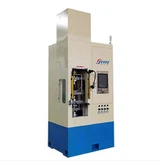
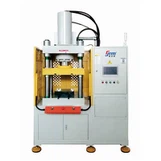
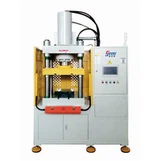
Hey there! As a supplier of 20 Ton H Frame Presses, I've seen firsthand how different factors can impact the performance of these machines. One of the most crucial yet often overlooked elements is oil viscosity. In this blog, I'll break down what oil viscosity is, how it affects the performance of a 20 Ton H Frame Press, and why it matters for your operations.
What is Oil Viscosity?
Let's start with the basics. Oil viscosity is a measure of its resistance to flow. Think of it like honey and water. Honey is thick and flows slowly, so it has a high viscosity. Water, on the other hand, is thin and flows quickly, meaning it has a low viscosity. In the context of a 20 Ton H Frame Press, the oil in the hydraulic system acts as the lifeblood, transferring power and enabling the press to function.
The viscosity of the oil is typically measured at different temperatures, usually 40°C (104°F) and 100°C (212°F). The Society of Automotive Engineers (SAE) has a grading system for oil viscosity, with numbers like 10W-30 or 20W-50. The "W" stands for winter, and the number before it indicates the oil's viscosity at low temperatures. The number after the "W" represents the viscosity at high temperatures.
How Oil Viscosity Affects the Performance of a 20 Ton H Frame Press
1. Pump Efficiency
The hydraulic pump in a 20 Ton H Frame Press is responsible for generating the pressure needed to operate the press. The efficiency of the pump is highly dependent on the oil viscosity. If the oil is too thick (high viscosity), the pump has to work harder to move the oil through the system. This can lead to increased energy consumption, higher operating temperatures, and premature wear and tear on the pump components.
On the other hand, if the oil is too thin (low viscosity), it may not provide enough lubrication to the pump's moving parts. This can cause metal-to-metal contact, resulting in increased friction, heat, and potential damage to the pump. In extreme cases, a low-viscosity oil can lead to pump cavitation, where bubbles form in the oil due to low pressure, causing further damage to the pump.
2. System Response Time
The response time of a 20 Ton H Frame Press is crucial for efficient operation. When you activate the press, you want it to respond quickly and precisely. Oil viscosity plays a significant role in determining the system's response time. High-viscosity oil takes longer to flow through the hydraulic lines and valves, which can slow down the press's movement. This can be a problem in applications where fast cycle times are required, such as in stamping operations.
Conversely, low-viscosity oil can flow more quickly, resulting in a faster response time. However, if the viscosity is too low, it may cause the press to be less stable and more prone to vibration and noise.
3. Seal Integrity
The seals in a 20 Ton H Frame Press are designed to prevent oil leakage and maintain the hydraulic system's pressure. Oil viscosity affects the performance of these seals. High-viscosity oil can put more stress on the seals, causing them to wear out faster. This can lead to oil leaks, which not only waste oil but can also contaminate the work environment and potentially damage other components of the press.
Low-viscosity oil, on the other hand, may not provide enough resistance to prevent leakage past the seals. This can also result in oil loss and reduced system performance.
4. Temperature Control
The operating temperature of a 20 Ton H Frame Press can have a significant impact on its performance and lifespan. Oil viscosity is closely related to temperature. As the temperature of the oil increases, its viscosity decreases. If the oil has a high viscosity at normal operating temperatures, it may become too thick when the temperature drops, causing problems with pump efficiency and system response time.
Conversely, if the oil has a low viscosity, it may become too thin at high temperatures, leading to reduced lubrication and increased wear on the components. Therefore, it's essential to choose an oil with the right viscosity range to ensure proper temperature control and optimal performance of the press.


Choosing the Right Oil Viscosity for Your 20 Ton H Frame Press
So, how do you choose the right oil viscosity for your 20 Ton H Frame Press? Here are some factors to consider:
1. Operating Temperature
The ambient temperature in your workshop or manufacturing facility is a crucial factor. If you operate in a cold environment, you'll need an oil with a lower viscosity at low temperatures to ensure easy starting and proper pump operation. In a hot environment, a higher-viscosity oil may be required to maintain adequate lubrication and prevent oil thinning.
2. Press Application
The type of work your 20 Ton H Frame Press is used for also affects the oil viscosity selection. For applications that require high-speed operation and fast cycle times, a lower-viscosity oil may be more suitable to ensure quick system response. For heavy-duty applications with high pressures and loads, a higher-viscosity oil may be needed to provide better lubrication and protection.
3. Manufacturer Recommendations
Always refer to the manufacturer's recommendations for oil viscosity. The manufacturer has tested the press with specific oils and can provide the most accurate information on the best oil to use for optimal performance and longevity.
Conclusion
In conclusion, oil viscosity is a critical factor that can significantly impact the performance of a 20 Ton H Frame Press. Choosing the right oil viscosity can improve pump efficiency, system response time, seal integrity, and temperature control. As a supplier of Stamping Presses, including 20 Ton Press and 50 Ton Press, we understand the importance of proper maintenance and the role of oil viscosity in ensuring the smooth operation of your press.
If you're looking to purchase a 20 Ton H Frame Press or need advice on oil viscosity and maintenance, don't hesitate to reach out. We're here to help you make the right choices and keep your press running at its best.
References
- Society of Automotive Engineers (SAE) - Viscosity Grading System
- Hydraulic Press Manufacturer's Manuals