


What Is Stamping Presses?
A stamping press is a metalworking machine tool used to shape or cut metal by deforming it with a die. A stamping press uses precision-made male and female dies to shape the final product. It is a modern-day counterpart to the hammer and anvil.
A die is a very specialized tool; it is a metal block with the right shapes cut into it. By pressing down on the metal, the die can cut and contour the metal and create that unique shape. The die must be created specifically for the part that is being created.
Advantages of Stamping Presses
Powerful forming techniques
Stamping presses utilize several forming techniques such as bending, blanking, drawing, and embossing to create complex parts and components. These techniques allow manufacturers to produce intricate designs and structures that would be difficult or impossible to achieve through traditional machining methods.
Material versatility
One of the key advantages of a stamping press is its ability to work with a wide range of materials. From aluminum and steel to brass and copper, these machines can handle various metals with different thicknesses and properties.
Precision and accuracy
Presses are known for their outstanding precision and accuracy. They can create parts with tight tolerances and minimal variability with the right tooling and setup. This degree of accuracy is vital for industries like aerospace and automotive, as even the slightest deviation from specifications can lead to life-threatening consequences.
High production speed and cost-efficiency
Due to its automation, a stamping press can quickly produce large parts, allowing manufacturers to fulfill orders quickly and meet tight deadlines. The efficient use of raw materials and minimal downtime also contribute to overall cost savings.
Customization and scalability
Presses offer a high degree of customization and enable manufacturers to adapt their processes to meet specific requirements. These machines can be easily adjusted to accommodate unique designs or changes in production volume thanks to custom tooling, dies, and adjustable press parameters. This makes them a perfect solution for businesses seeking to scale operations and broaden their range of products.
Reduced waste and environmental sustainability
By employing precise forming techniques and efficient material usage, metalworking presses can significantly reduce waste during production. Numerous contemporary machines are also designed with energy-saving features to reduce environmental impact. These aspects promote a more sustainable manufacturing process, aligning with the industry's increasing focus on eco-friendly practices.
Integration with other manufacturing processes
A stamping press can facilitate the creation of complete products or sub-assemblies by easily integrating with other manufacturing processes like welding, machining, and assembly. This smooth assimilation allows manufacturers to increase efficiency and consistency within their operations.
Enhanced safety and reliability
Engineered with advanced safety features and built-in redundancies, stamping presses protect operators against potential hazards throughout production. These safety measures and the machines' robust construction ensure reliable and consistent performance with minimal downtime. Additionally, computerized controls and monitoring systems provide real-time feedback and adjustments, helping manufacturers maintain ideal conditions and avoid expensive mistakes or equipment issues.

20 Ton Electric Hydraulic Press
The 20 ton electric hydraulic press is a hydraulic equipment that integrates efficiency, accuracy, and safety. It adopts electric drive combined with hydraulic transmission technology to achieve high-precision control and large tonnage pressing. This equipment is widely used in various industries such as light industry, food, shoemaking, lighting, electrical appliances, toys, hardware equipment, furniture, etc. It is particularly suitable for various sheet metal forming processing, pressing, die-cutting and other operations.

The 50 ton hydraulic press is a powerful and compact hydraulic forming equipment. It adopts advanced hydraulic transmission technology, converts mechanical energy into liquid pressure energy through hydraulic pumps, and then uses hydraulic cylinders to transfer pressure to the workpiece, achieving various material pressing, forming, stretching, bending and other process operations.

Electric Over Hydraulic Press is a molding equipment that combines electric drive and hydraulic transmission technology. It uses an electric motor to drive a hydraulic pump, converting electrical energy into hydraulic energy, and then converting hydraulic energy into mechanical energy through a hydraulic cylinder, achieving process operations such as pressing, forming, stretching, and bending of workpieces.

50 ton pressure is a mechanical equipment that can generate 50 tons of pressure. This type of press is widely used in various production and manufacturing processes that require precise control and the application of a large amount of pressure.

Efficient design: Jet Hydraulic Press adopts a unique spraying technology that can quickly and effectively inject high-pressure liquid into the working area that needs to be processed, greatly improving work efficiency.
Accurate control: Through a precise control system, it is possible to ensure accurate control of the pressure and flow rate of the liquid during the spraying process, thereby achieving precise processing results.

75 ton hydraulic press is a high-performance mechanical equipment mainly used for pressing and forming processes of materials such as metal, plastic, rubber, etc.
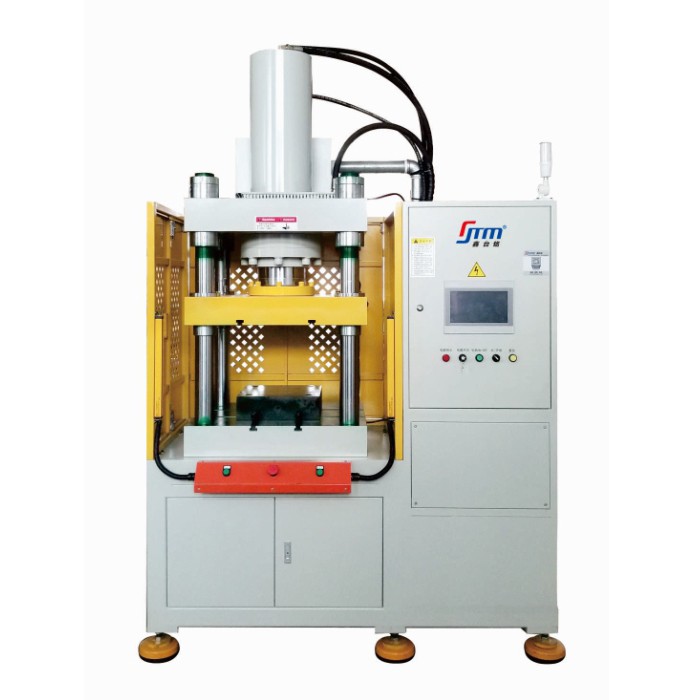
Electric Hydraulic Press for Blacksmithing
Electric Hydraulic Press for Blacksmith is an electric hydraulic press designed specifically for blacksmiths. This device combines electric drive and hydraulic transmission technology to provide efficient and accurate solutions for processes such as forging, pressing, and bending of metal materials.

Four Column Three Beam Hydraulic Press
Four column three beam hydraulic press is a hydraulic mechanical equipment that adopts a four column and three plate structure. It uses a hydraulic system to achieve compression, which has the characteristics of simple operation, high pressure, and good stability. It mainly consists of oil cylinders, guide pillars, guide sleeves, movable plates, workbenches, and other parts.

50 Ton Electric Hydraulic Press
A 50 ton electric hydraulic press is a mechanical equipment that uses an electric motor to drive, convert electrical energy into hydraulic energy, and then generate pressure through a hydraulic cylinder to achieve material forming and processing. Its efficient, precise, and safe characteristics make it widely used in industries such as light industry, food, shoemaking, lighting, electrical appliances, toys, hardware equipment, furniture, etc.
Our factory
Shenzhen xintaiming intelligent equipment co., ltd. Was established in 2008 and is a manufacturer of precision press equipment and intelligent systems with nearly 20 years of experience in the hydraulic equipment industry.
Advanced equipment
Having multiple production equipment, such as high-precision cnc machine tools, large water mills, precision carving machines, cutting machines, milling machines, etc.
High quality
Our products are manufactured to very high standards, using the finest materials and manufacturing processes.
Customized services
According to customer needs and scenarios, to provide personalized customized program to meet the special needs of customers.
24h online service
We try and respond to all concerns within 24 hours and our teams are always at your disposal in case of any emergencies.
Types of Stamping Presses
Mechanical
Mechanical stamping presses have a motor that's connected to the mechanical flywheel. The flywheel then stores that energy to help the machine operate. These presses can produce a variety of punch sizes, ranging anywhere from 5mm to 500mm depending on the specific press being used.
The speed of mechanical presses ranges as well. It can operate as slow as 20 strokes per minute or operate as fast as 1,500 strokes per minute. In the case that additional energy is needed when the speed is lower, the operator can add an auxiliary flywheel to the drive. Mechanical presses are typically faster than hydraulic presses, however.
The operator of the mechanical press will use electronic control, a clutch, and a brake to help engage and disengage the press drive as necessary.
Mechanical stamping presses are most often used to create simple and shallow parts made from coils of sheet metal, most notably for large production runs for transfer and progressive stamping.
Hydraulic
As the name implies, hydraulic stamping presses use the hydraulic fluid as the power source. The technology used in hydraulic presses has significantly improved over time, with each improvement offering an upgrade in electronics and valves.
The hydraulic pistons release fluid that has a proportional amount of force to the piston head's diameter. This allows for a high level of control over how much pressure is applied at any given moment. Despite so much flexibility in its stroke and speed capabilities, hydraulic presses can still deliver full power at any point in the stroke.
The pressure used in hydraulic presses may be preset by the user. The velocity can also be tweaked to adjust how fast the slide travels while the die closes. When the right pressure level is achieved, the valve helps activate pressure reversal to avoid overloading.
Hydraulic presses range anywhere from 20 tons to 10,000 tons. Their stroke sizes are anywhere from 10mm to 800 mm. This type of press is ideal for creating small, intricate parts thanks to its changeable stroke length and consistent pressure.
Mechanical servo
Mechanical servo stamping presses don't use flywheels as their power source. Instead, they rely on high-capacity motors to ultimately create intricate designs at a faster pace than standard hydraulic presses.
Servo presses are highly programmable, making it easy to have control over the stroke, slide position, motion, and speed of the press. These machines operate on a link-assisted drive system or a direct drive system.
Their high speed and high levels of customization make mechanical servo presses the most expensive option out of the three.
Application of Stamping Presses
Automotive industry
The automotive industry heavily relies on stamping presses for the production of high-precision, high-quality metal parts. These presses are used to create everything from engine components to body panels, offering the speed and efficiency necessary for mass production. The precision and consistency provided by stamping presses are crucial in meeting the automotive industry's stringent safety and quality standards.
Aerospace and defense
In aerospace and defense, the stakes are incredibly high when it comes to the quality of metal components. Stamping presses are invaluable in this sector due to their ability to produce parts that meet exact specifications with outstanding precision. Components for aircraft, spacecraft, and defense equipment require the utmost reliability, and metal stamping presses deliver this by producing parts that consistently meet the industry's exacting standards.
Consumer electronics
The consumer electronics industry is another significant beneficiary of stamping presses. As electronic devices become smaller and more complex, the need for precisely stamped metal components increases. Stamping presses enable the production of small, intricate parts used in smartphones, computers, and other electronic gadgets, maintaining the high level of precision and quality these products demand.
Medical industry
The medical industry also uses stamping presses to manufacture surgical instruments and equipment, implantable devices, and diagnostic equipment. Surgical instruments and equipment include items like forceps and scalpels, while implantable devices include items like pacemaker components and joint replacements. Diagnostic equipment includes items like ultrasound probes and ct scanner components.
Components of Stamping Presses
Frame: The frame provides the structure and support for the press. It is typically made of heavy-duty steel and is designed to withstand the forces generated during the stamping process.
Bed: The bed is a large, flat surface located at the bottom of the press. It provides a stable platform for the material being worked on.The bed of a stamping press is its foundation, providing a stable platform for the entire operation. It must be strong enough to withstand the forces of stamping without warping or shifting, as any movement could affect the quality of the parts being produced.
It is typically made from high-grade steel or iron, materials known for their strength and durability. The bed's design often includes channels or slots for waste material to be ejected, keeping the work area clean and preventing damage to the press or the parts.
Ram: The ram is the moving component of the press. It is connected to the upper part of the frame and moves up and down to apply force on the material.
Die set: The die set is a specialized tooling system that consists of upper and lower dies. The upper die is attached to the ram, while the lower die is mounted on the bed. The dies have cavities or contours that define the shape of the final part.
Visual inspection: Check the overall condition of the machine and its components. Look for any signs of wear and tear, damage, or leakage.
Lubrication: Ensure all moving parts are properly lubricated to reduce friction and prevent wear.
Cleaning: Machine cleanliness should be regularly maintained to keep it free from dust and debris that might affect its functioning.
Die and punch inspection: Regularly inspect the dies and punches for wear and proper alignment.
Bolts and fasteners: Check all bolts and fasteners to ensure they are tight and secure.

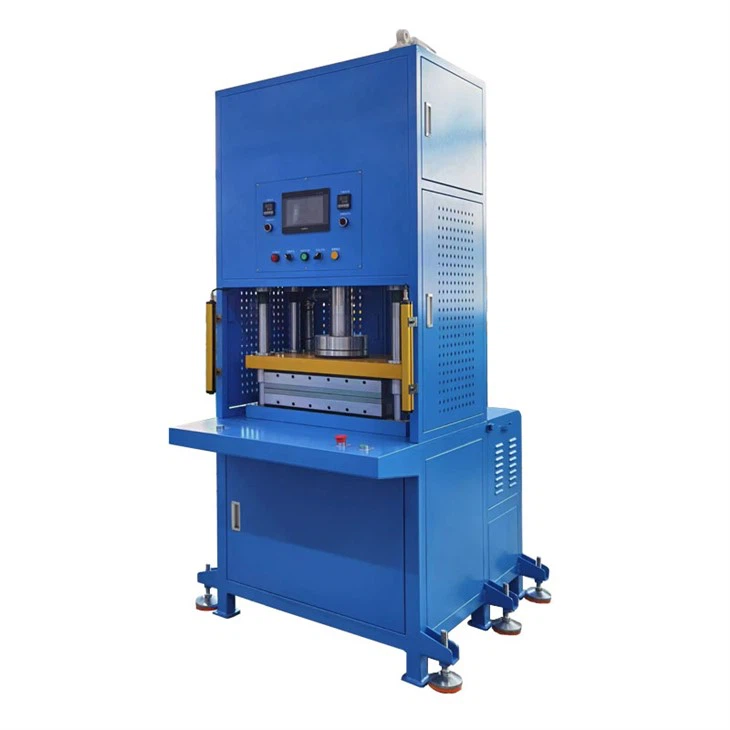
Safety systems: Inspect machine guards, light curtains, and pressure-sensitive mats for proper operation.
Noise and vibration: Monitor for unusual noise or vibration, indicating potential issues.
Hydraulic system: Inspect the hydraulic system for leaks and ensure it operates at the correct pressure.
Control system: Inspect the control system for potential faults.
Emergency stop mechanism: Ensure the emergency stop mechanism is functioning properly.
Documentation: Record all inspections, maintenance activities, and any issue resolution for future reference.
How to Choose a Stamping Presses
The selection of the type of stamping press machine is mainly based on the nature of the stamping process to be completed, the size of the production batch, the geometric size and precision requirements of the stamped parts, etc.
For the stamping production of small and medium-sized blanked parts, bent parts or shallow-drawn parts, open crank presses are often used. Although the rigidity of the open type press with c-shaped bed is not good enough and the punching force will cause the bed deformation and lead to uneven distribution of die clearance, it has the advantages of open space on three sides, convenient operation, easy installation of mechanized attachments and low cost. At present, it is still the main equipment for the production of small and medium-sized stamping parts.
For large and medium-sized stamping parts with high precision requirements, closed crank presses are mostly used. These presses are closed on both sides, with good rigidity and high precision, but the operation is not as convenient as open presses.
For large or more complex deep drawing parts, closed double-action deep drawing presses with upper drive are often used. For small and medium-sized deep drawing parts (especially enamel products, aluminum products deep drawing parts), often use the bottom drive type double-action deep drawing press. The closed double-action drawing press has two sliders, the outer slider for crimping and the inner slider for deep drawing. Crimping force is reliable, easy to adjust, simple die structure, suitable for mass production.
For small and medium-sized stamping parts with large production volume or complex shape and large volume, automatic high-speed press or multi-station automatic press should be preferred.
For small batch and thick material stamping parts, hydraulic press is often used. Hydraulic presses have adjustable closing stroke, especially for stamping processing with larger force stroke, and have obvious advantages compared with mechanical presses, and will not be overloaded due to over thickness of sheet material. However, the production speed is slow and the efficiency is low. It can be used for bending, deep drawing, forming, leveling and so on.
For precision stamping parts, it is better to choose special precision punching presses. Otherwise, it is necessary to use ordinary crank press or hydraulic press with higher precision and rigidity, and add crimping system and counter-pressure system to carry out fine stamping.
After the type of punch press machine is selected, the specifications of the punch press machine should be selected according to the punching pressure (including unloading force, pressing force, etc.), deformation work required in the punching process, as well as the structure form and closing height of the die and the contour size of the shape.
The nominal pressure of the press refers to the maximum working pressure allowed on the slider of the press at a specific distance from the lower stop point, i.E., when the crankshaft of the press rotates to a specific angle (called the nominal pressure angle, about 30 degrees) from the lower stop point. According to the working principle of the crank linkage mechanism can be learned, the pressure of the press slider is not a constant in the full stroke, but changes with the change of the crankshaft angle. Therefore, when selecting a press, it is necessary to consider not only the size of the nominal pressure, but also to ensure that the stamping process force curve must be under the permissible load curve of the press slide when finishing the stamping process.
The slide stroke of the press is the distance passed by the slide from the upper stop point to the lower stop point. The size of the press stroke should be able to ensure that the blank or semi-finished products into and out of the formed parts. Generally, the stroke required for blanking and fine pressing process is small, while the stroke required for bending and deep drawing process is large. The stroke of the press used for deep-drawing parts should be at least 2.5 times greater than or equal to the height of the finished part.
The closing height of the press refers to the height between the bottom plane of the slide and the working table when the slide is at the lower stop. Adjust the length of the press linkage to adjust the size of the closing height. When the press linkage is adjusted to the uppermost position, the closing height reaches its maximum value, which is called the maximum closing height. When the press linkage is adjusted to the bottom position, the closing height reaches the minimum value, which is called 4.
Stamping press machine table size
The plane size of the press machine table pad should be larger than the plane size of the lower die, and leave sufficient room for fixing the die, usually 50-70mm on each side.
Stamping press machine table hole size
The size of the leakage hole or pop-up device set at the bottom of the mold must be smaller than the size of the table hole of the press machine.
Stamping press machine hole size
The die shank diameter of the die must be the same as the diameter of the hole for die shank mounting in the press machine slide, and the height of the die shank should be less than the depth of the die shank mounting hole.
How the Stamping Presses Works
The operation of a stamping press is a symphony of precision and power. It starts with placing a metal sheet or blank on the bolster plate. The drive mechanism then activates the ram, moving it towards the die set. As the ram exerts force, the die shapes the metal into the desired form. This process can include various operations such as cutting, bending, or drawing. The force and speed of the ram are crucial; they determine the quality of the stamped part. After the operation, the ram retracts, and the finished part is removed, ready for the next cycle. This process is repeated with remarkable speed and accuracy, making the stamping press an indispensable tool in metal fabrication.
Our Factory
The company's headquarters is located in Longgang District, Shenzhen, with a factory area of over 10000 square meters. In 2014, Jiangxi Xintaiming Intelligent Technology Co., Ltd. was established as a production base with a self built factory of over 40000 square meters in Fuzhou High tech Zone, Jiangxi.
Our Certificate
We have 5 invention patents, 53 utility model patents, 3 appearance patents, and 20 software copyrights, and have been awarded the National High tech Enterprise Certificate, ISO9001 Quality Management System Certification, and ISO14001 Environmental Management System Certification. We have independent export qualifications.


FAQ
Hot Tags: stamping presses, China stamping presses manufacturers, suppliers, factory, Four Column Three Beam Hydraulic Press, cost effective hydraulic press, energy efficient hydraulic press, hydraulic press orders, powerful hydraulic press, advanced hydraulic press


