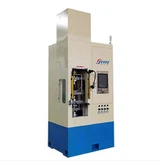
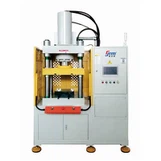
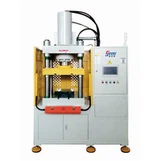
As a supplier of fast hydraulic presses, I understand the critical role that cooling methods play in the performance and longevity of these powerful machines. Fast hydraulic presses are designed to operate at high speeds and generate a significant amount of heat during the pressing process. If this heat is not effectively managed, it can lead to a range of issues, including reduced efficiency, premature wear and tear, and even system failures. In this blog post, I will explore the various cooling methods available for fast hydraulic presses and discuss their advantages and disadvantages.
1. Air Cooling
Air cooling is one of the simplest and most cost - effective cooling methods for fast hydraulic presses. It works by using fans to blow air over the hydraulic components, such as the hydraulic oil tank and the heat exchanger, to dissipate the heat.
Advantages
- Low cost: Air - cooled systems are generally less expensive to purchase and install compared to other cooling methods. They do not require complex plumbing or a constant supply of water, which reduces the initial investment.
- Easy maintenance: Air - cooled systems have fewer components, making them easier to maintain. Regular cleaning of the fans and the heat exchanger fins is usually sufficient to keep the system running smoothly.
- Portability: Since air - cooled systems do not rely on a water source, they are more portable and can be easily moved to different locations if needed.
Disadvantages
- Limited cooling capacity: Air cooling is less efficient than liquid cooling methods, especially in high - heat applications. In hot environments or when the hydraulic press is operating at high loads for extended periods, air cooling may not be able to remove enough heat to keep the system within the optimal temperature range.
- Noise: The fans used in air - cooled systems can generate a significant amount of noise, which may be a concern in some work environments.
2. Water Cooling
Water cooling is a more efficient cooling method that uses water as a coolant to transfer heat away from the hydraulic components. There are two main types of water - cooling systems for fast hydraulic presses: direct water cooling and indirect water cooling.
Direct Water Cooling
In direct water cooling, water is circulated directly through the hydraulic components, such as the hydraulic cylinders and the valves, to absorb the heat. The heated water is then sent to a cooling tower or a heat exchanger to dissipate the heat before being recirculated.


Advantages
- High cooling efficiency: Direct water cooling can remove a large amount of heat quickly, making it suitable for high - performance fast hydraulic presses that generate a significant amount of heat.
- Precise temperature control: By adjusting the flow rate and temperature of the water, it is possible to maintain a precise temperature in the hydraulic system, which can improve the performance and accuracy of the press.
Disadvantages
- Corrosion and scaling: Water can cause corrosion and scaling in the hydraulic components over time, especially if the water quality is not properly maintained. This can lead to reduced efficiency and increased maintenance costs.
- Complex installation: Direct water - cooling systems require a more complex installation, including plumbing and a water treatment system, which can increase the initial cost and installation time.
Indirect Water Cooling
Indirect water cooling uses a heat exchanger to transfer heat from the hydraulic oil to the water. The hydraulic oil is circulated through one side of the heat exchanger, while the water is circulated through the other side. The heat is transferred from the oil to the water, and the heated water is then cooled in a cooling tower or a heat exchanger.
Advantages
- Protection of hydraulic components: Since the water does not come into direct contact with the hydraulic components, there is less risk of corrosion and scaling. This can extend the lifespan of the hydraulic components and reduce maintenance costs.
- Flexibility: Indirect water - cooling systems can be designed to work with different types of hydraulic fluids and can be easily integrated into existing hydraulic systems.
Disadvantages
- Higher cost: Indirect water - cooling systems are generally more expensive than air - cooled systems due to the cost of the heat exchanger and the additional plumbing required.
- Energy consumption: The pumps used to circulate the water and the fans in the cooling tower consume energy, which can increase the operating cost of the system.
3. Refrigeration Cooling
Refrigeration cooling is the most advanced and efficient cooling method for fast hydraulic presses. It uses a refrigeration cycle to remove heat from the hydraulic oil. A refrigeration unit consists of a compressor, a condenser, an expansion valve, and an evaporator.
Advantages
- Precise temperature control: Refrigeration cooling can maintain a very precise temperature in the hydraulic system, even in extreme operating conditions. This is especially important for applications that require high precision and consistency.
- High cooling capacity: Refrigeration cooling can remove a large amount of heat, making it suitable for high - power fast hydraulic presses that generate a significant amount of heat.
Disadvantages
- High cost: Refrigeration cooling systems are the most expensive type of cooling system due to the cost of the refrigeration unit and the energy consumption.
- Complex maintenance: Refrigeration systems are more complex than air - cooled or water - cooled systems and require specialized knowledge and skills for maintenance and repair.
Choosing the Right Cooling Method
When choosing a cooling method for a fast hydraulic press, several factors need to be considered:
- Heat load: The amount of heat generated by the hydraulic press is the most important factor in determining the cooling method. High - power presses that operate at high speeds and generate a large amount of heat will require a more efficient cooling method, such as water cooling or refrigeration cooling.
- Operating environment: The temperature and humidity of the operating environment can also affect the choice of cooling method. In hot and humid environments, air cooling may not be sufficient, and a water - cooled or refrigeration - cooled system may be required.
- Budget: The initial cost and operating cost of the cooling system are also important considerations. Air - cooled systems are the least expensive, while refrigeration - cooled systems are the most expensive.
- Maintenance requirements: Different cooling methods have different maintenance requirements. Air - cooled systems are the easiest to maintain, while refrigeration - cooled systems require the most specialized maintenance.
As a supplier of fast hydraulic presses, we offer a range of cooling solutions to meet the specific needs of our customers. Whether you need a simple air - cooled system for a small hydraulic press or a high - performance refrigeration - cooled system for a large - scale industrial application, we can provide you with the right solution.
If you are interested in our Hot Hydraulic Press, Small Hydraulic Press, or Four Column Three Beam Hydraulic Press, and would like to discuss the cooling options, please feel free to contact us. We are committed to providing you with the best products and services to ensure the optimal performance of your hydraulic press.
References
- "Hydraulic Systems: Design, Installation, and Maintenance" by Peter Nachtwey
- "Industrial Refrigeration Handbook" by Arno Arlt