In the realm of modern manufacturing, electric servo presses have emerged as a revolutionary force, offering unparalleled precision, efficiency, and flexibility. As a leading supplier of electric servo presses, I am excited to delve into the programming functions that make these machines indispensable in various industries.
Understanding Electric Servo Presses
Before we explore the programming functions, let's briefly understand what an electric servo press is. An electric servo press is a type of press machine that uses a servo motor to control the movement of the ram. Unlike traditional hydraulic or mechanical presses, electric servo presses offer precise control over the force, position, and speed of the ram, allowing for highly accurate and repeatable operations.
Key Programming Functions of Electric Servo Presses
Force and Position Control
One of the most significant programming functions of an electric servo press is the ability to control the force and position of the ram with high precision. Through the programming interface, operators can set specific force and position targets for each stage of the pressing operation. For example, in a stamping process, the press can be programmed to apply a specific force to form the part and then move the ram to a precise position for ejection. This level of control ensures consistent product quality and reduces the risk of over - or under - pressing.
The programming of force and position control also allows for the creation of complex force - displacement profiles. For instance, a press can be programmed to apply a gradually increasing force during the initial stages of a forming operation and then maintain a constant force at a specific position. This is particularly useful in applications such as powder compaction, where precise force control is crucial for achieving the desired density and shape of the compact.
Speed Control
Another important programming function is speed control. Electric servo presses can be programmed to operate at different speeds throughout the pressing cycle. This is beneficial in many applications. In a high - speed stamping operation, the press can be programmed to move the ram quickly during the approach and retract phases to minimize cycle time. However, during the actual pressing phase, the speed can be reduced to ensure accurate force application and prevent damage to the tooling and the workpiece.
Speed control also enables the press to adapt to different materials and processes. For example, when working with delicate materials, a slower speed can be programmed to avoid cracking or deformation. On the other hand, for more robust materials, a higher speed can be used to increase productivity.
Multi - Step Programming
Electric servo presses support multi - step programming, which allows for the execution of complex pressing operations in a single cycle. Each step can have its own set of force, position, and speed parameters. For example, in a multi - stage forming process, the press can be programmed to perform a series of bending, stretching, and punching operations in sequence.
Multi - step programming is particularly useful in industries such as automotive manufacturing, where components often require multiple forming steps. By programming these steps into the press, manufacturers can streamline their production processes, reduce the need for multiple machines, and improve overall efficiency.
Monitoring and Data Logging
Modern electric servo presses are equipped with advanced monitoring and data logging capabilities. Through the programming interface, operators can set up real - time monitoring of various parameters such as force, position, speed, and temperature. This data can be used to ensure the proper operation of the press and to detect any potential issues early on.
Data logging is also an important feature. The press can record all the relevant data during each pressing cycle, including the maximum force applied, the displacement of the ram, and the cycle time. This data can be analyzed to identify trends, optimize the pressing process, and provide valuable information for quality control and process improvement.
Applications of Electric Servo Presses Based on Programming Functions
Automotive Industry
In the automotive industry, electric servo presses are widely used for various applications such as stamping, forging, and assembly. The precise force, position, and speed control offered by the programming functions make them ideal for producing high - quality automotive components. For example, in the stamping of body panels, the press can be programmed to apply the exact force required to form the panel without causing any defects. In the assembly of engine components, multi - step programming allows for the precise insertion and fitting of parts.
Electronics Industry
The electronics industry requires high - precision manufacturing processes, and electric servo presses are well - suited for this purpose. The ability to control the force and position accurately is crucial for applications such as the assembly of micro - components, the bonding of circuit boards, and the pressing of connectors. The speed control function also helps in reducing the cycle time and increasing the productivity of the manufacturing process.
Medical Device Manufacturing
In medical device manufacturing, the quality and precision of the products are of utmost importance. Electric servo presses can be programmed to meet the strict requirements of this industry. For example, in the production of medical implants, the press can be programmed to apply a specific force to ensure the proper shaping and compaction of the implant material. The data logging function also provides traceability, which is essential for quality control and regulatory compliance.


Advantages of Our Electric Servo Presses
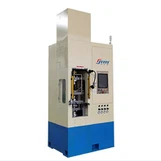
As a supplier of electric servo presses, we offer a range of products with advanced programming functions. Our High Precision Servo Press is designed to provide the highest level of precision and accuracy, making it suitable for applications that require tight tolerances. The programming interface is user - friendly, allowing operators to easily set up and modify the pressing parameters.
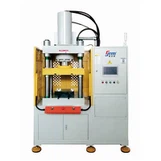
Our Hydraulic Servo Press combines the advantages of hydraulic power with the precise control of a servo system. It offers high force capabilities while maintaining excellent control over the pressing process. With its multi - step programming function, it can handle complex operations with ease.
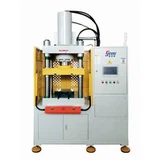
The Servo Hydraulic Press Machine in our product line is a versatile solution for various industries. It can be programmed to adapt to different materials and processes, providing flexibility and efficiency in the manufacturing process.
Conclusion
The programming functions of electric servo presses play a crucial role in their performance and versatility. From force and position control to multi - step programming and data logging, these functions enable precise and efficient manufacturing processes across a wide range of industries. As a leading supplier of electric servo presses, we are committed to providing high - quality products with advanced programming capabilities to meet the diverse needs of our customers.
If you are interested in learning more about our electric servo presses or would like to discuss your specific requirements, we invite you to contact us for a detailed consultation. Our team of experts is ready to assist you in finding the best solution for your manufacturing needs.
References
- Smith, J. (2018). Advanced Manufacturing Technologies: Electric Servo Presses. Manufacturing Journal, 25(3), 45 - 56.
- Johnson, A. (2019). Precision Control in Pressing Operations: The Role of Electric Servo Presses. Industrial Engineering Review, 32(2), 78 - 89.
- Brown, C. (2020). Applications of Electric Servo Presses in the Automotive Industry. Automotive Technology Magazine, 45(4), 67 - 79.