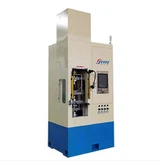
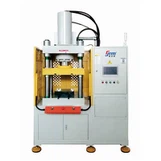
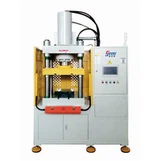
Hey there! As a supplier of Fast Hydraulic Press, I've had the privilege of diving deep into the world of these powerful machines. In this blog, I'm gonna break down the key components that make a fast hydraulic press tick. So, let's get right into it!


Hydraulic Pump
The hydraulic pump is like the heart of a fast hydraulic press. It's responsible for generating the hydraulic pressure that powers the entire system. There are different types of hydraulic pumps out there, but the most common ones used in fast hydraulic presses are gear pumps, vane pumps, and piston pumps.
Gear pumps are simple and reliable. They work by using two meshing gears to move the hydraulic fluid. This type of pump is great for applications that don't require extremely high pressures. Vane pumps, on the other hand, use vanes that slide in and out of slots in a rotor to create pressure. They're known for their smooth operation and high efficiency.
Piston pumps are the heavy hitters. They're capable of generating very high pressures, which is crucial for fast hydraulic presses that need to perform tasks like metal forming and stamping. These pumps use pistons that move back and forth in cylinders to displace the hydraulic fluid.
Hydraulic Cylinder
The hydraulic cylinder is where the real action happens. It's the component that converts the hydraulic pressure generated by the pump into mechanical force. In a fast hydraulic press, the cylinder is designed to move quickly and deliver a high amount of force.
One important thing to consider when it comes to hydraulic cylinders is their tonnage. For example, our 50 Ton Press Cylinder is capable of exerting a massive 50 tons of force. This makes it suitable for a wide range of applications, from small-scale manufacturing to heavy-duty industrial processes.
The cylinder consists of a piston, a rod, and a cylinder barrel. The piston moves inside the barrel when hydraulic fluid is pumped into one side of the cylinder. This movement of the piston causes the rod to extend or retract, which in turn applies the force needed to perform the desired task.
Control Valves
Control valves are like the brain of a fast hydraulic press. They regulate the flow and pressure of the hydraulic fluid, allowing the operator to control the movement and force of the press. There are several types of control valves used in hydraulic presses, including directional valves, pressure control valves, and flow control valves.
Directional valves determine the direction of the hydraulic fluid flow. They can be used to control whether the cylinder extends or retracts. Pressure control valves, as the name suggests, regulate the pressure of the hydraulic fluid. They ensure that the pressure doesn't exceed a safe level, which is important for the safety of the machine and the operator.
Flow control valves control the speed at which the hydraulic fluid flows. This is crucial for achieving the desired speed of the press. By adjusting the flow rate, the operator can make the press move faster or slower, depending on the requirements of the task.
Frame and Bed
The frame and bed of a fast hydraulic press provide the structural support for the entire machine. They need to be strong and rigid enough to withstand the high forces generated during operation. The frame is usually made of heavy-duty steel and is designed to hold all the other components in place.
The bed is the surface on which the workpiece is placed. It needs to be flat and smooth to ensure accurate and consistent results. Some fast hydraulic presses have adjustable beds, which allow the operator to change the height of the bed to accommodate different-sized workpieces.
Electrical System
The electrical system of a fast hydraulic press plays a crucial role in its operation. It provides the power needed to run the hydraulic pump, control valves, and other electrical components. The electrical system also includes sensors and switches that monitor the operation of the press and ensure its safety.
For example, there are sensors that detect the position of the cylinder and send signals to the control system. This allows the control system to accurately control the movement of the press. There are also safety switches that can stop the press in case of an emergency.
Jet Hydraulic Press Technology
In addition to the basic components mentioned above, some fast hydraulic presses incorporate jet hydraulic press technology. Jet Hydraulic Press technology uses high-pressure jets of hydraulic fluid to increase the speed and force of the press.
This technology allows the press to perform tasks more quickly and efficiently. It's especially useful in applications where high-speed operation is required, such as in the automotive and aerospace industries.
Maintenance and Safety
Proper maintenance and safety are essential for the long-term performance and reliability of a fast hydraulic press. Regular maintenance includes checking the hydraulic fluid level, inspecting the hoses and fittings for leaks, and lubricating the moving parts.
It's also important to follow all safety procedures when operating the press. This includes wearing appropriate safety gear, such as gloves and safety glasses, and following the manufacturer's instructions.
Conclusion
So, there you have it! These are the key components that make a fast hydraulic press a powerful and efficient machine. Whether you're in the manufacturing, automotive, or aerospace industry, a fast hydraulic press can help you increase productivity and improve the quality of your products.
If you're interested in learning more about our Fast Hydraulic Press or other hydraulic press products, feel free to reach out. We're here to answer any questions you might have and help you find the right solution for your needs. Let's start a conversation and see how we can work together to take your business to the next level!
References
- Hydraulics and Pneumatics: A Technician's and Engineer's Guide, by John F. Cimbala
- Industrial Hydraulics Manual, by Eaton Corporation