What are the key performance indicators for stamping presses?
As a supplier of stamping presses, I understand the importance of key performance indicators (KPIs) in evaluating the efficiency, productivity, and overall performance of these machines. Stamping presses are essential in various industries, including automotive, aerospace, electronics, and manufacturing, where they are used to shape and form metal sheets into various components. In this blog post, I will discuss the key performance indicators that are crucial for stamping presses and how they can impact your business.
1. Throughput
Throughput is one of the most critical KPIs for stamping presses. It refers to the number of parts produced per unit of time, typically measured in parts per minute (PPM) or parts per hour (PPH). A high throughput indicates that the stamping press can produce a large number of parts in a short period, which is essential for meeting production targets and increasing profitability.


Several factors can affect the throughput of a stamping press, including the press speed, die changeover time, and the complexity of the parts being produced. To improve throughput, it is essential to optimize these factors. For example, choosing a stamping press with a high press speed can significantly increase the number of parts produced per minute. Additionally, reducing the die changeover time by using quick - die - change systems can minimize downtime between different production runs.
2. Accuracy and Precision
Accuracy and precision are vital KPIs for stamping presses, especially when producing parts that require tight tolerances. Accuracy refers to how close the actual dimensions of the produced part are to the desired dimensions, while precision refers to the consistency of the dimensions of multiple parts produced.
In industries such as aerospace and electronics, where parts need to fit together precisely, a high level of accuracy and precision is non - negotiable. To ensure accuracy and precision, stamping presses should be equipped with advanced control systems and high - quality components. For example, servo - driven stamping presses offer better control over the press stroke and speed, which can improve the accuracy of the formed parts. Regular maintenance and calibration of the stamping press are also necessary to maintain its accuracy and precision over time.
3. Energy Efficiency
Energy efficiency is becoming an increasingly important KPI for stamping presses, as businesses are looking to reduce their energy consumption and operating costs. An energy - efficient stamping press can help lower electricity bills and reduce the environmental impact of the manufacturing process.
There are several ways to improve the energy efficiency of a stamping press. For instance, using a hydraulic system with variable - speed pumps can adjust the pump speed according to the actual demand, reducing energy waste. Additionally, implementing energy - saving features such as standby modes and regenerative braking systems can further optimize energy consumption. Some modern stamping presses also use advanced materials and design techniques to reduce the overall weight of the machine, which in turn reduces the energy required to operate it.
4. Reliability and Uptime
Reliability and uptime are crucial for maintaining a smooth production process. A reliable stamping press is one that operates consistently without frequent breakdowns, while uptime refers to the percentage of time that the press is available for production.
To ensure reliability, stamping presses should be built with high - quality materials and components. Regular maintenance and preventive maintenance programs are also essential to identify and address potential issues before they cause major breakdowns. For example, checking and lubricating the moving parts, inspecting the electrical systems, and replacing worn - out components at regular intervals can significantly improve the reliability of the stamping press.
High uptime is directly related to productivity. A stamping press with a high uptime can produce more parts over a given period, reducing production delays and increasing customer satisfaction. By investing in a reliable stamping press and implementing a comprehensive maintenance program, businesses can minimize downtime and maximize their production output.
5. Die Life
Die life is an important KPI that refers to the number of parts that can be produced using a single set of dies before they need to be replaced. A longer die life means lower tooling costs and less downtime for die replacement.
The die life of a stamping press is affected by several factors, including the material of the dies, the design of the dies, and the operating conditions of the stamping press. Using high - quality die materials, such as tool steel with proper heat treatment, can significantly increase the die life. Additionally, optimizing the die design to reduce stress concentrations and wear can also extend the die life. Proper lubrication and cooling during the stamping process can also help protect the dies and increase their lifespan.
6. Safety
Safety is a top - priority KPI for stamping presses. Stamping presses are powerful machines that can pose significant risks to operators if not properly safeguarded. A safe stamping press can prevent workplace accidents and injuries, which not only protects the well - being of employees but also reduces potential legal liabilities for the business.
Modern stamping presses are equipped with various safety features, such as light curtains, safety interlocks, and emergency stop buttons. These features are designed to detect potential hazards and stop the press operation immediately to prevent accidents. Training operators on proper safety procedures and providing them with personal protective equipment (PPE) are also essential aspects of ensuring safety in stamping press operations.
Our Product Offerings
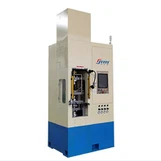
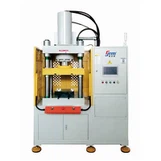
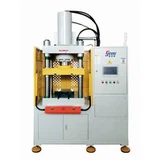
As a stamping press supplier, we offer a wide range of stamping presses that are designed to meet the diverse needs of our customers. Our product portfolio includes Hot Hydraulic Press, which is suitable for applications that require high - temperature forming processes. The Hydraulic Baling Press Machine is ideal for recycling and waste management industries, where it can compress materials into compact bales. And our Air Operated Hydraulic Press offers a cost - effective and efficient solution for light - to - medium - duty stamping applications.
Conclusion
In conclusion, the key performance indicators for stamping presses, including throughput, accuracy and precision, energy efficiency, reliability and uptime, die life, and safety, play a crucial role in determining the success of a manufacturing operation. By carefully considering these KPIs when selecting a stamping press and implementing strategies to optimize them, businesses can improve their productivity, reduce costs, and enhance the quality of their products.
If you are in the market for a stamping press and want to learn more about how our products can meet your specific requirements, we encourage you to contact us for a detailed discussion. Our team of experts is ready to assist you in finding the best stamping press solution for your business.
References
- "Stamping Press Technology Handbook", Industrial Press Inc.
- "Advanced Manufacturing Processes", McGraw - Hill Education
- Industry whitepapers on stamping press performance and optimization