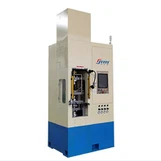
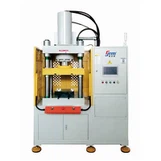
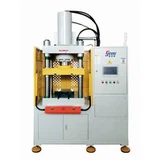
Hey there! As a supplier of Hydraulic Servo Presses, I'm super stoked to share with you the main components of these awesome machines. Hydraulic servo presses are widely used in various industries, from automotive to electronics, thanks to their high precision, efficiency, and flexibility. So, let's dive right in and take a closer look at what makes these presses tick.
1. Hydraulic Power Unit
The hydraulic power unit is like the heart of the hydraulic servo press. It's responsible for generating the hydraulic pressure needed to operate the press. This unit typically consists of a hydraulic pump, a motor, a reservoir, and various valves.
The hydraulic pump is the key component here. It sucks in hydraulic fluid from the reservoir and pressurizes it. There are different types of pumps, such as gear pumps, vane pumps, and piston pumps. Piston pumps are often used in high - performance hydraulic servo presses because they can provide high pressure and precise flow control.
The motor drives the pump. It can be an electric motor, which is common in most industrial settings. The reservoir stores the hydraulic fluid. It also helps in cooling the fluid and separating any air or contaminants that might be present in it.
The valves in the hydraulic power unit control the flow and pressure of the hydraulic fluid. Directional control valves determine the direction of fluid flow, while pressure control valves regulate the pressure. For example, relief valves are used to prevent the pressure from exceeding a safe limit.
2. Servo Controller
The servo controller is the brain of the hydraulic servo press. It takes input signals from the operator or a control system and uses them to precisely control the movement and force of the press.
This controller uses advanced algorithms to adjust the hydraulic system based on the desired parameters. For instance, if you need to apply a specific force at a certain speed during a pressing operation, the servo controller will calculate the necessary hydraulic pressure and flow rate and send commands to the valves in the hydraulic power unit.
Modern servo controllers are often programmable, which means you can set up different operating modes and sequences for different jobs. This flexibility is one of the reasons why hydraulic servo presses are so popular in industries where a variety of products need to be manufactured.
3. Cylinder
The cylinder is where the actual pressing action takes place. It consists of a piston and a cylinder barrel. When the pressurized hydraulic fluid enters the cylinder, it pushes the piston, which in turn applies force to the workpiece.
The size and design of the cylinder depend on the application. For high - force applications, larger cylinders with bigger pistons are used. The material of the cylinder and piston is also important. They are usually made of high - strength steel to withstand the high pressures and forces involved in the pressing process.
The cylinder can be single - acting or double - acting. In a single - acting cylinder, the hydraulic fluid is used to push the piston in one direction, and a spring or gravity is used to return it to its original position. In a double - acting cylinder, the hydraulic fluid can be used to move the piston in both directions, which provides more control and flexibility.
4. Frame
The frame of the hydraulic servo press provides the structural support for all the other components. It needs to be strong and rigid to withstand the high forces generated during the pressing operation.
There are different types of frames, such as C - frame and H - frame. The H Frame Electric Servo Press is a popular choice because it offers good stability and access to the workpiece from multiple sides. The frame is usually made of welded steel plates or cast iron, depending on the size and requirements of the press.
5. Tooling
Tooling refers to the dies and fixtures used in the pressing operation. They are designed to shape, form, or assemble the workpiece according to the specific requirements.
The design of the tooling is crucial for the quality of the final product. It needs to be precise and durable. For example, in the automotive industry, tooling is used to form metal parts with high precision. Different types of tooling can be used for different processes, such as blanking, punching, and bending.
6. Control Panel
The control panel is the interface between the operator and the hydraulic servo press. It allows the operator to set the operating parameters, such as force, speed, and stroke length.
The control panel usually has a display screen where the operator can see the current status of the press, including the actual force and position of the piston. It also has buttons or a touchscreen for inputting commands. Some advanced control panels can be connected to a computer network, which enables remote monitoring and control of the press.
7. Safety Devices
Safety is always a top priority in any industrial setting. Hydraulic servo presses are equipped with various safety devices to protect the operator and the machine.
One of the most common safety devices is the emergency stop button. It allows the operator to immediately stop the press in case of an emergency. Light curtains are also used. These are arrays of infrared light beams that create a safety barrier around the working area of the press. If an object breaks the light beam, the press will stop automatically.
Overload protection devices are used to prevent the press from being damaged by excessive force. They work by sensing the pressure in the hydraulic system and shutting down the press if the pressure exceeds a safe limit.
Why Our Hydraulic Servo Presses Stand Out
At our company, we offer high - quality hydraulic servo presses that incorporate all these essential components. Our High Precision Servo Press is designed to provide accurate and reliable performance. It uses the latest servo control technology to ensure precise force and position control.


Our Servo Hydraulic Press Machine is built with a robust frame and high - quality cylinders to withstand heavy - duty applications. We also pay great attention to the safety features of our presses, ensuring that they meet all the relevant safety standards.
If you're in the market for a hydraulic servo press, we'd love to have a chat with you. Whether you're a small - scale manufacturer or a large industrial company, we can provide you with a press that meets your specific needs. Contact us today to start the discussion about your requirements and let's work together to find the perfect solution for your business.
References
- "Hydraulic Systems and Components" by Peter A. Nachtwey
- "Industrial Automation: Theory and Practice" by B. Ramachandran