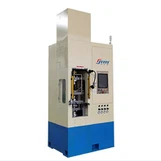
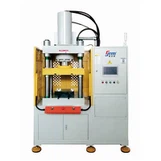
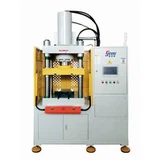
As a seasoned supplier of Hot Hydraulic Presses, I've witnessed firsthand the critical role that sealing materials play in the efficient and reliable operation of these powerful machines. In this blog post, I'll delve into the various sealing materials used in hot hydraulic presses, their properties, and why they are essential for optimal performance.
The Importance of Sealing in Hot Hydraulic Presses
Hot hydraulic presses are designed to exert high pressures at elevated temperatures, making them suitable for a wide range of applications, including metal forming, plastic molding, and composite manufacturing. However, these extreme operating conditions can pose significant challenges to the sealing components of the press.
A proper seal is crucial for several reasons. Firstly, it prevents hydraulic fluid leakage, which can lead to a loss of pressure, reduced efficiency, and potential environmental hazards. Secondly, it helps maintain the integrity of the hydraulic system by preventing contaminants from entering, which can cause damage to the internal components and reduce the lifespan of the press. Finally, a good seal ensures consistent and reliable performance, allowing the press to operate at its maximum capacity without interruptions.


Types of Sealing Materials
There are several types of sealing materials commonly used in hot hydraulic presses, each with its own unique properties and advantages. Let's take a closer look at some of the most popular options:
Nitrile Rubber (NBR)
Nitrile rubber is one of the most widely used sealing materials in hydraulic systems due to its excellent resistance to oil, fuel, and other hydraulic fluids. It also has good mechanical properties, including high tensile strength and abrasion resistance, making it suitable for use in high-pressure applications.
Nitrile rubber seals can operate at temperatures ranging from -40°C to 120°C, making them suitable for most hot hydraulic press applications. However, they may not be suitable for use in applications where the temperature exceeds 120°C or where the fluid contains aggressive chemicals.
Fluorocarbon Rubber (FKM)
Fluorocarbon rubber, also known as Viton, is a high-performance sealing material that offers excellent resistance to heat, chemicals, and ozone. It can operate at temperatures ranging from -20°C to 250°C, making it ideal for use in hot hydraulic presses where high temperatures are involved.
Fluorocarbon rubber seals also have excellent resistance to hydraulic fluids, including synthetic oils and phosphate esters, making them suitable for use in a wide range of applications. However, they are more expensive than nitrile rubber seals and may not be suitable for use in applications where the temperature is below -20°C.
Silicone Rubber (VMQ)
Silicone rubber is a versatile sealing material that offers excellent resistance to heat, cold, and weathering. It can operate at temperatures ranging from -60°C to 230°C, making it suitable for use in a wide range of applications, including hot hydraulic presses.
Silicone rubber seals also have good electrical insulation properties, making them suitable for use in applications where electrical conductivity is a concern. However, they have relatively poor mechanical properties, including low tensile strength and abrasion resistance, making them less suitable for use in high-pressure applications.
Polyurethane (PU)
Polyurethane is a high-performance sealing material that offers excellent resistance to abrasion, tear, and wear. It also has good mechanical properties, including high tensile strength and elasticity, making it suitable for use in high-pressure applications.
Polyurethane seals can operate at temperatures ranging from -40°C to 80°C, making them suitable for most hot hydraulic press applications. However, they may not be suitable for use in applications where the temperature exceeds 80°C or where the fluid contains aggressive chemicals.
PTFE (Polytetrafluoroethylene)
PTFE, also known as Teflon, is a high-performance sealing material that offers excellent resistance to heat, chemicals, and friction. It can operate at temperatures ranging from -200°C to 260°C, making it suitable for use in a wide range of applications, including hot hydraulic presses.
PTFE seals also have excellent non-stick properties, making them suitable for use in applications where adhesion is a concern. However, they are relatively expensive and may not be suitable for use in applications where the pressure is very high.
Factors to Consider When Choosing Sealing Materials
When choosing sealing materials for a hot hydraulic press, there are several factors to consider, including:
Temperature
The operating temperature of the hot hydraulic press is one of the most important factors to consider when choosing sealing materials. Different sealing materials have different temperature ratings, and it's important to choose a material that can withstand the maximum temperature of the press.
Pressure
The operating pressure of the hot hydraulic press is another important factor to consider when choosing sealing materials. Different sealing materials have different pressure ratings, and it's important to choose a material that can withstand the maximum pressure of the press.
Fluid Compatibility
The type of hydraulic fluid used in the hot hydraulic press is also an important factor to consider when choosing sealing materials. Different sealing materials have different chemical resistance properties, and it's important to choose a material that is compatible with the hydraulic fluid used in the press.
Environment
The environment in which the hot hydraulic press operates is also an important factor to consider when choosing sealing materials. If the press is exposed to harsh chemicals, extreme temperatures, or high levels of moisture, it's important to choose a sealing material that can withstand these conditions.
Conclusion
In conclusion, choosing the right sealing materials is crucial for the efficient and reliable operation of a hot hydraulic press. By considering factors such as temperature, pressure, fluid compatibility, and environment, you can select the sealing materials that are best suited for your specific application.
At our company, we offer a wide range of hot hydraulic presses, including Hydraulic Baling Press Machine, 50 Ton Press, and 20 Ton Hydraulic Press, all of which are designed to meet the highest standards of quality and performance. Our team of experts can help you choose the right sealing materials for your hot hydraulic press and provide you with the support and service you need to ensure its long-term reliability.
If you're interested in learning more about our hot hydraulic presses or would like to discuss your specific requirements, please don't hesitate to contact us. We look forward to hearing from you and helping you find the perfect solution for your needs.
References
- "Sealing Technology Handbook" by John P. Blair
- "Hydraulic Seals: Design, Materials, and Applications" by William A. Granger
- "Rubber Seals and Gaskets: A Practical Guide" by David A. Thomas