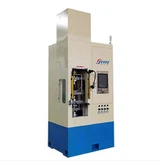
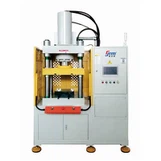
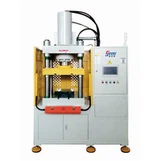
As a supplier of 30 Ton Presses, I often encounter inquiries regarding the clamping force of these powerful machines. Understanding the clamping force is crucial for anyone considering the purchase of a press, as it directly impacts the machine's performance and suitability for specific applications. In this blog post, I will delve into the concept of clamping force, explain how it is measured, and discuss its significance in the context of a 30 Ton Press.
What is Clamping Force?
Clamping force refers to the amount of pressure that a press can exert on a workpiece during the pressing operation. It is a critical parameter that determines the press's ability to perform various tasks, such as stamping, punching, bending, and forming. The clamping force is typically measured in tons or kilonewtons (kN), with one ton being equivalent to approximately 8.896 kN.
In the case of a 30 Ton Press, the clamping force is 30 tons, which means that the press can exert a maximum pressure of 30 tons on the workpiece. This force is generated by the press's hydraulic system, which uses pressurized fluid to drive the ram or plunger down onto the workpiece. The hydraulic system consists of a pump, a cylinder, and a control valve, which work together to regulate the flow and pressure of the fluid.
How is Clamping Force Measured?
The clamping force of a press is typically measured using a load cell or a pressure transducer. A load cell is a device that converts mechanical force into an electrical signal, which can be measured and displayed on a digital readout. A pressure transducer, on the other hand, measures the pressure of the hydraulic fluid in the cylinder and converts it into an electrical signal.


To measure the clamping force of a 30 Ton Press, the load cell or pressure transducer is placed between the ram or plunger and the workpiece. The press is then activated, and the clamping force is applied to the workpiece. The load cell or pressure transducer measures the force or pressure exerted on the workpiece and converts it into an electrical signal, which is displayed on a digital readout.
Significance of Clamping Force in a 30 Ton Press
The clamping force of a 30 Ton Press is a critical factor that determines the machine's performance and suitability for specific applications. A higher clamping force allows the press to perform more demanding tasks, such as stamping thick materials or forming complex shapes. However, a higher clamping force also requires a more powerful hydraulic system, which can increase the cost and complexity of the press.
When selecting a 30 Ton Press, it is important to consider the specific requirements of your application. If you need to perform light-duty tasks, such as bending thin sheets of metal or pressing small components, a press with a lower clamping force may be sufficient. On the other hand, if you need to perform heavy-duty tasks, such as stamping thick plates or forming large parts, a press with a higher clamping force may be necessary.
Applications of a 30 Ton Press
A 30 Ton Press is a versatile machine that can be used in a wide range of applications, including:
- Metalworking: A 30 Ton Press can be used for various metalworking tasks, such as stamping, punching, bending, and forming. It can be used to produce a variety of metal components, including automotive parts, electrical components, and consumer products.
- Plastic Processing: A 30 Ton Press can also be used for plastic processing tasks, such as injection molding, compression molding, and thermoforming. It can be used to produce a variety of plastic components, including automotive parts, medical devices, and consumer products.
- Woodworking: A 30 Ton Press can be used for woodworking tasks, such as pressing veneers, laminates, and composites. It can be used to produce a variety of wood products, including furniture, cabinets, and doors.
- Other Applications: A 30 Ton Press can also be used for other applications, such as pressing bearings, assembling components, and testing materials. It can be used in a variety of industries, including manufacturing, automotive, aerospace, and electronics.
Advantages of a 30 Ton Press
There are several advantages to using a 30 Ton Press, including:
- High Clamping Force: A 30 Ton Press can exert a maximum pressure of 30 tons on the workpiece, which allows it to perform more demanding tasks than a press with a lower clamping force.
- Versatility: A 30 Ton Press is a versatile machine that can be used in a wide range of applications, including metalworking, plastic processing, woodworking, and other applications.
- Precision: A 30 Ton Press can be equipped with a variety of precision controls, such as digital readouts, programmable logic controllers (PLCs), and servo motors, which allow for precise control of the pressing operation.
- Safety: A 30 Ton Press can be equipped with a variety of safety features, such as emergency stop buttons, safety guards, and light curtains, which help to prevent accidents and injuries.
- Cost-Effectiveness: A 30 Ton Press is a cost-effective solution for many applications, as it offers a high level of performance and versatility at a relatively low cost.
Considerations When Selecting a 30 Ton Press
When selecting a 30 Ton Press, there are several factors to consider, including:
- Clamping Force: The clamping force of the press is a critical factor that determines its performance and suitability for specific applications. Make sure to select a press with a clamping force that is appropriate for your needs.
- Stroke Length: The stroke length of the press refers to the distance that the ram or plunger can travel down onto the workpiece. Make sure to select a press with a stroke length that is appropriate for your needs.
- Bed Size: The bed size of the press refers to the size of the work surface on which the workpiece is placed. Make sure to select a press with a bed size that is appropriate for your needs.
- Speed: The speed of the press refers to the rate at which the ram or plunger can travel down onto the workpiece. Make sure to select a press with a speed that is appropriate for your needs.
- Control System: The control system of the press refers to the system that is used to regulate the flow and pressure of the hydraulic fluid. Make sure to select a press with a control system that is easy to use and maintain.
- Safety Features: The safety features of the press refer to the features that are designed to prevent accidents and injuries. Make sure to select a press with a variety of safety features, such as emergency stop buttons, safety guards, and light curtains.
- Cost: The cost of the press is an important factor to consider, as it can vary significantly depending on the brand, model, and features of the press. Make sure to select a press that offers a high level of performance and versatility at a reasonable cost.
Conclusion
In conclusion, the clamping force of a 30 Ton Press is a critical factor that determines the machine's performance and suitability for specific applications. A higher clamping force allows the press to perform more demanding tasks, but it also requires a more powerful hydraulic system, which can increase the cost and complexity of the press. When selecting a 30 Ton Press, it is important to consider the specific requirements of your application, as well as the clamping force, stroke length, bed size, speed, control system, safety features, and cost of the press.
If you are in the market for a 30 Ton Press, I encourage you to contact us to learn more about our products and services. We are a leading supplier of Small Electric Hydraulic Press, 50 Ton Hydraulic Press, Air Operated Hydraulic Press, and other types of presses, and we are committed to providing our customers with the highest quality products and services at the most competitive prices. Contact us today to discuss your specific needs and to request a quote.
References
- ASME B11.2-2015, Safety Standard for Power Presses
- ISO 16092-1:2014, Hydraulic fluid power - Cylinders - Part 1: General rules and safety requirements
- OSHA 29 CFR 1910.217, Mechanical Power Presses