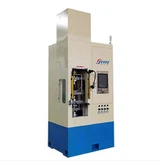
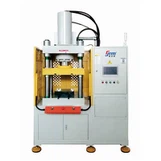
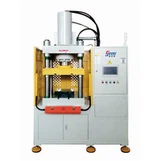
As a supplier of Hydraulic Servo Press, I've witnessed firsthand the transformative power of these machines in various industrial applications. In this blog, we'll delve into the control system of a Hydraulic Servo Press, exploring its components, functions, and the benefits it brings to manufacturing processes.
Understanding the Basics of a Hydraulic Servo Press
Before we dive into the control system, let's briefly understand what a hydraulic servo press is. A Servo Hydraulic Press Machine combines the power of hydraulic systems with the precision control of servo technology. It uses hydraulic fluid to generate force, while the servo control system ensures accurate and repeatable movements. These presses are widely used in industries such as automotive, aerospace, and electronics for tasks like stamping, forging, and assembly.
Components of the Control System
The control system of a hydraulic servo press consists of several key components, each playing a crucial role in ensuring optimal performance.
Servo Motor
The servo motor is the heart of the control system. It converts electrical energy into mechanical energy, providing the necessary power to drive the hydraulic pump. Unlike traditional hydraulic systems, which use fixed-speed motors, servo motors can adjust their speed and torque based on the requirements of the pressing operation. This allows for precise control of the press's movement and force.
Hydraulic Pump
The hydraulic pump is responsible for converting the mechanical energy from the servo motor into hydraulic energy. It draws in hydraulic fluid from the reservoir and pressurizes it, which is then used to actuate the press's cylinders. The pump's output flow and pressure can be precisely controlled by the servo motor, enabling accurate force and speed regulation.
Control Valve
Control valves are used to regulate the flow and direction of the hydraulic fluid within the system. They can be either proportional or servo valves, depending on the level of control required. Proportional valves provide a variable flow rate based on an electrical input signal, while servo valves offer even greater precision and response times. These valves play a critical role in controlling the press's movement, force, and position.
Sensors
Sensors are essential for monitoring the press's performance and providing feedback to the control system. They can measure various parameters such as force, position, speed, and temperature, allowing the system to make real-time adjustments. For example, a force sensor can measure the pressing force and compare it to the setpoint. If the force deviates from the desired value, the control system can adjust the servo motor's speed and torque to correct it.
Controller
The controller is the brain of the control system. It receives input signals from the sensors and processes them to generate output signals for the servo motor and control valves. The controller uses algorithms and control strategies to ensure that the press operates within the specified parameters. It can also store and recall different pressing programs, allowing for quick and easy setup of different jobs.
Functions of the Control System
The control system of a hydraulic servo press performs several important functions, which contribute to its high precision and efficiency.
Force Control
One of the primary functions of the control system is to control the pressing force. By adjusting the servo motor's speed and torque, the system can precisely regulate the hydraulic pressure and, consequently, the force applied by the press. This is crucial for applications where a specific force is required, such as in precision stamping or assembly operations.
Position Control
Position control is another key function of the control system. It ensures that the press's ram moves to the desired position with high accuracy. The system uses position sensors to monitor the ram's position and compares it to the setpoint. If there is a deviation, the controller adjusts the servo motor's speed and direction to correct it. This allows for precise control of the press's stroke length and positioning, which is essential for applications such as deep drawing and bending.
Speed Control
The control system also enables speed control of the press's movement. The servo motor can adjust its speed based on the requirements of the pressing operation, allowing for smooth and efficient operation. For example, during the approach phase, the press can move quickly to reduce cycle times, while during the pressing phase, it can slow down to ensure accurate force application.
Energy Efficiency
One of the significant advantages of a hydraulic servo press is its energy efficiency. The servo motor's ability to adjust its speed and torque based on the pressing requirements means that the system only consumes the necessary amount of energy. This results in significant energy savings compared to traditional hydraulic systems, which operate at a fixed speed and consume more energy even when not in use.


Benefits of a Hydraulic Servo Press Control System
The use of a sophisticated control system in a hydraulic servo press offers several benefits to manufacturers.
High Precision
The precise control of force, position, and speed provided by the control system allows for high-precision pressing operations. This is essential for industries that require tight tolerances, such as aerospace and electronics. The ability to accurately control the pressing parameters ensures consistent product quality and reduces the risk of defects.
Flexibility
The control system's programmability allows for easy customization of the pressing operations. Different pressing programs can be stored and recalled, enabling quick setup changes for different jobs. This flexibility makes the hydraulic servo press suitable for a wide range of applications, from small batch production to high-volume manufacturing.
Reduced Maintenance
The use of servo motors and advanced control technology in the hydraulic servo press reduces the wear and tear on the system's components. The precise control of the press's movement and force minimizes the stress on the hydraulic pump, valves, and cylinders, resulting in longer component life and reduced maintenance requirements.
Improved Productivity
The combination of high precision, flexibility, and energy efficiency leads to improved productivity. The ability to perform precise pressing operations with shorter cycle times and reduced scrap rates allows manufacturers to increase their output and profitability.
Conclusion
The control system of a Hydraulic Servo Press is a complex and sophisticated technology that plays a crucial role in its performance. By combining the power of hydraulic systems with the precision control of servo technology, these presses offer high precision, flexibility, energy efficiency, and reduced maintenance. As a supplier of hydraulic servo presses, we understand the importance of providing our customers with reliable and advanced control systems. If you're interested in learning more about our Servo Hydraulic Press Machine or H Frame Electric Servo Press, or if you have any questions about the control system, please don't hesitate to contact us for a consultation. We're here to help you find the right solution for your manufacturing needs.
References
- "Hydraulic Servo Systems: Principles and Applications" by J. F. Maciejewski
- "Industrial Automation: Theory and Practice" by S. K. Bhattacharyya