Hey there! I'm with a stamping presses supply company, and I often get asked about the types of lubricants used in stamping presses. So, I thought I'd share some insights on this topic.
First off, why do we even need lubricants in stamping presses? Well, stamping is all about shaping metal sheets into different forms, and that involves a lot of friction between the tooling and the metal. Lubricants play a crucial role here. They reduce friction, which in turn helps to extend the life of the tooling. Less friction means less wear and tear on the dies and punches, saving you money on replacements. Also, a good lubricant can improve the surface finish of the stamped parts. No one wants rough or scratched products, right?
Now, let's talk about the different types of lubricants.
Mineral Oil - Based Lubricants
Mineral oil - based lubricants are one of the most common choices in stamping presses. They're relatively inexpensive, which is a big plus for many manufacturers. These lubricants have good lubricating properties, meaning they can effectively reduce the friction between the metal sheet and the tooling.
They also have decent thermal stability. During the stamping process, a lot of heat is generated due to the high - pressure contact between the tool and the metal. Mineral oil - based lubricants can handle this heat to some extent without breaking down. However, they do have some drawbacks. They're not very environmentally friendly. When it comes to disposal, you need to follow strict regulations to avoid polluting the environment. Also, they can leave a residue on the stamped parts, which might require additional cleaning steps.
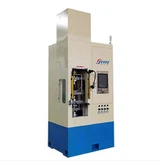
If you're looking for a reliable stamping press to use with these lubricants, check out our 20 Ton Electric Hydraulic Press. It's a great machine that can handle a variety of stamping jobs.


Synthetic Lubricants
Synthetic lubricants are another option. They're designed to offer superior performance compared to mineral oil - based ones. These lubricants have excellent thermal stability, which means they can withstand even higher temperatures without degrading. This is especially important for high - speed stamping operations where a lot of heat is produced quickly.
Synthetic lubricants also have better oxidation resistance. Oxidation can cause the lubricant to thicken and lose its effectiveness over time. With synthetic lubricants, this process is much slower, so you don't have to change the lubricant as often.
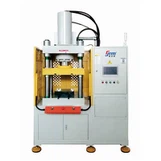
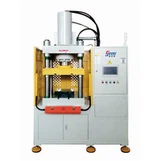
In terms of environmental friendliness, they're a better choice than mineral oil - based lubricants. They can be formulated to be biodegradable, which makes disposal easier and more sustainable. But the downside is that they're more expensive. If you're running a large - scale stamping operation and can afford the upfront cost, synthetic lubricants can save you money in the long run by reducing tool wear and maintenance costs. Our 4 Post Hydraulic Press pairs well with synthetic lubricants, providing a smooth and efficient stamping process.
Water - Based Lubricants
Water - based lubricants are becoming increasingly popular, especially in industries where environmental concerns are high. These lubricants are mainly made up of water, with additives to improve their lubricating properties.
One of the biggest advantages of water - based lubricants is their low flammability. This makes them a safer option, especially in workplaces where there's a risk of fire. They're also easy to clean up. Since they're water - based, you can simply use water to wash away any residue from the stamped parts and the equipment.
However, they do have some limitations. Their lubricating performance might not be as good as mineral oil - based or synthetic lubricants in some cases. They also need proper storage to prevent the growth of bacteria and fungi, which can affect their quality. If you're considering using water - based lubricants, our 20 Ton Floor Press is a great choice for your stamping needs.
Vegetable Oil - Based Lubricants
Vegetable oil - based lubricants are a relatively new entrant in the stamping press lubricant market. They're made from natural vegetable oils, such as soybean oil or canola oil.
These lubricants are highly biodegradable and non - toxic, making them an excellent choice for environmentally conscious manufacturers. They also have good lubricating properties and can provide a good surface finish on the stamped parts.
But there are some challenges. Vegetable oil - based lubricants have a relatively short shelf life compared to other types. They can oxidize and go rancid if not stored properly. And their performance might be affected by temperature changes more than synthetic or mineral oil - based lubricants.
When choosing a lubricant for your stamping press, there are a few factors you need to consider. First, think about the type of metal you're stamping. Different metals have different properties, and some might require a specific type of lubricant. For example, aluminum is a soft metal and might need a lubricant that can prevent galling.
The stamping speed is another important factor. High - speed stamping generates more heat, so you'll need a lubricant with good thermal stability. Also, consider the cost. You need to balance the performance of the lubricant with its price to ensure you're getting the best value for your money.
In conclusion, there's no one - size - fits - all solution when it comes to choosing a lubricant for stamping presses. Each type of lubricant has its own advantages and disadvantages. Mineral oil - based lubricants are cost - effective but less environmentally friendly. Synthetic lubricants offer superior performance but come with a higher price tag. Water - based lubricants are safe and easy to clean but might have lower lubricating performance. Vegetable oil - based lubricants are eco - friendly but have a shorter shelf life.
If you're in the market for a stamping press or need more advice on choosing the right lubricant for your specific application, don't hesitate to reach out. We're here to help you make the best decision for your business. Whether you're a small - scale workshop or a large manufacturing plant, we have the products and expertise to meet your needs. Let's talk and see how we can work together to optimize your stamping operations.
References
- Metals Handbook: Forming and Forging, ASM International
- Lubrication Fundamentals, Society of Tribologists and Lubrication Engineers