In the realm of manufacturing and industrial processes, presses play a crucial role in shaping, cutting, and assembling various materials. Two commonly used types of presses are hand power press machines and pneumatic hand presses. As a supplier of Hand Power Press Machines, I often encounter inquiries about the differences between these two types of equipment. In this blog post, I will delve into the characteristics, advantages, and applications of each, helping you make an informed decision for your specific needs.
Hand Power Press Machine
A hand power press machine is a manually operated device that utilizes human force to generate pressure. It typically consists of a frame, a ram, a handle, and a die set. The operator uses the handle to apply force to the ram, which then moves downwards to perform the desired operation, such as punching, bending, or stamping.
Characteristics
- Simplicity: Hand power press machines are relatively simple in design and operation. They do not require any external power source, making them easy to set up and use in small workshops or home-based businesses.
- Portability: Due to their compact size and lack of external power requirements, hand power press machines are highly portable. They can be easily moved from one location to another, allowing for flexibility in production.
- Cost-effective: Hand power press machines are generally more affordable than pneumatic hand presses. They are a great option for small businesses or hobbyists on a budget.
Advantages
- Precision: Hand power press machines offer excellent control and precision. The operator can adjust the force applied to the ram, allowing for accurate and consistent results.
- Versatility: These machines can be used for a wide range of applications, including metalworking, plastics processing, and leatherworking. They can be equipped with different die sets to perform various operations.
- Safety: Hand power press machines are inherently safer than pneumatic hand presses. Since they are manually operated, there is no risk of accidental activation or over-pressurization.
Applications
- Small-scale production: Hand power press machines are ideal for small-scale production runs. They are commonly used in jewelry making, model building, and custom fabrication.
- Prototyping: These machines are also useful for prototyping new products. They allow designers to quickly test and refine their designs before investing in more expensive equipment.
- Maintenance and repair: Hand power press machines can be used for maintenance and repair work in various industries. They can be used to replace worn-out parts or to perform minor modifications.
Pneumatic Hand Press
A pneumatic hand press is a powered device that uses compressed air to generate pressure. It consists of a frame, a ram, a pneumatic cylinder, and a control valve. The operator activates the control valve to release compressed air into the cylinder, which then drives the ram downwards to perform the desired operation.
Characteristics
- Powerful: Pneumatic hand presses are capable of generating much higher pressures than hand power press machines. They can handle larger and thicker materials, making them suitable for heavy-duty applications.
- Automation: These machines can be automated to a certain extent. They can be equipped with sensors and controllers to perform repetitive tasks with high precision and efficiency.
- Speed: Pneumatic hand presses can operate at much higher speeds than hand power press machines. They can significantly increase productivity in high-volume production environments.
Advantages
- Efficiency: Pneumatic hand presses offer high efficiency and productivity. They can perform operations quickly and accurately, reducing production time and costs.
- Consistency: These machines provide consistent results, as the force applied to the ram is controlled by the compressed air pressure. This ensures uniformity in the finished products.
- Safety features: Pneumatic hand presses are equipped with various safety features, such as emergency stop buttons and pressure relief valves. These features help to prevent accidents and protect the operator.
Applications
- Mass production: Pneumatic hand presses are commonly used in mass production environments. They are ideal for industries such as automotive, electronics, and packaging.
- High-pressure applications: These machines are suitable for applications that require high pressures, such as metal forming, riveting, and pressing.
- Assembly operations: Pneumatic hand presses can be used for assembly operations, such as inserting pins, clips, and bearings. They provide a reliable and efficient way to join components together.
Key Differences
Now that we have explored the characteristics, advantages, and applications of hand power press machines and pneumatic hand presses, let's summarize the key differences between the two:
Power source
- Hand power press machines are manually operated, relying on human force to generate pressure.
- Pneumatic hand presses are powered by compressed air, which provides a more powerful and consistent source of pressure.
Pressure capacity
- Hand power press machines typically have a lower pressure capacity compared to pneumatic hand presses. They are suitable for light to medium-duty applications.
- Pneumatic hand presses can generate much higher pressures, making them suitable for heavy-duty applications.
Speed and efficiency
- Hand power press machines are generally slower and less efficient than pneumatic hand presses. They are better suited for small-scale production or prototyping.
- Pneumatic hand presses can operate at high speeds and offer high efficiency, making them ideal for mass production.
Cost
- Hand power press machines are more affordable than pneumatic hand presses. They are a great option for small businesses or hobbyists on a budget.
- Pneumatic hand presses are more expensive due to their higher power and automation capabilities. They are a better investment for large-scale production or high-pressure applications.
Conclusion
In conclusion, both hand power press machines and pneumatic hand presses have their own unique characteristics, advantages, and applications. The choice between the two depends on your specific needs, budget, and production requirements. If you are looking for a cost-effective, portable, and precise solution for small-scale production or prototyping, a hand power press machine may be the right choice for you. On the other hand, if you need a powerful, efficient, and automated solution for mass production or high-pressure applications, a pneumatic hand press may be more suitable.
As a supplier of Hand Power Press Machine, I am committed to providing high-quality products and excellent customer service. If you have any questions or need further information about our hand power press machines or pneumatic hand presses, please do not hesitate to contact us. We would be happy to assist you in finding the right equipment for your needs.
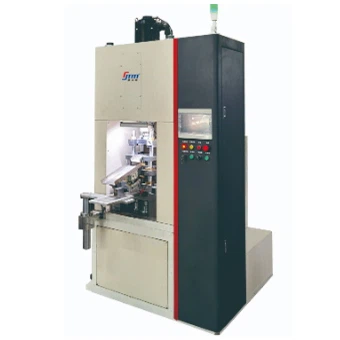
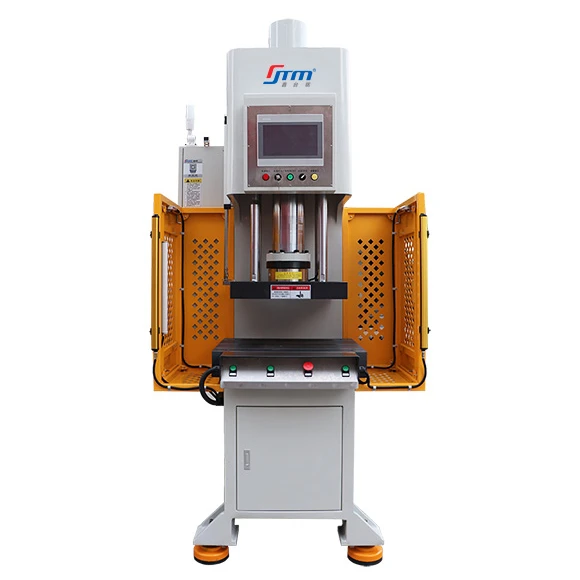
If you are interested in purchasing a used power press machine, we also offer a wide selection of Power Press Machine Second Hand and Power Press Second Hand. Our used equipment is carefully inspected and refurbished to ensure optimal performance and reliability.
Thank you for reading this blog post. I hope it has been informative and helpful. If you have any feedback or suggestions, please feel free to leave a comment below.
References
- "Hand Press Machines: Types, Applications, and Advantages." Industrial Machinery Digest.
- "Pneumatic Presses: How They Work and Their Applications." Manufacturing.net.
- "Choosing the Right Press for Your Application." The Fabricator.