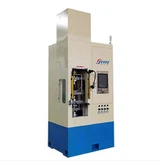
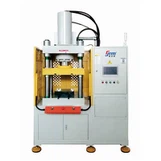
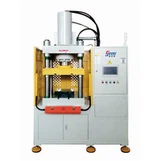
In the manufacturing industry, the choice of the right press machine is crucial for achieving high - quality production, efficiency, and cost - effectiveness. Two commonly used types of presses are servo mechanical presses and pneumatic presses. As a supplier of Servo Mechanical Press, I am well - versed in the differences between these two types of presses, and I will elaborate on them in this blog.
1. Working Principle
Servo Mechanical Press
A servo mechanical press operates based on a servo - motor - driven system. The servo motor precisely controls the movement of the press ram. By adjusting the speed, position, and torque of the servo motor, the press can perform complex motion profiles. For example, during a stamping operation, the press can slow down at the moment of contact with the workpiece to reduce impact and then speed up for the return stroke, which is beneficial for improving the quality of the stamped parts and the service life of the dies.
The servo - motor technology allows for real - time feedback and adjustment. Sensors continuously monitor the position, speed, and force of the ram, and the control system can make immediate corrections to ensure accurate and consistent operation. This level of precision control is one of the most significant advantages of servo mechanical presses.
Pneumatic Press
A pneumatic press, on the other hand, uses compressed air as its power source. Compressed air is stored in a reservoir and then released to drive a piston, which in turn moves the press ram. The operation of a pneumatic press is relatively simple. When the control valve is opened, the compressed air enters the cylinder, creating a force that moves the piston downwards. Once the operation is completed, the air is released, and the piston returns to its original position, usually with the help of a spring.
However, the control of a pneumatic press is less precise compared to a servo mechanical press. The force generated by the compressed air is mainly determined by the air pressure and the size of the piston. It is difficult to make fine - tuned adjustments during the operation, and the motion profile is relatively fixed.
2. Force and Power
Servo Mechanical Press
Servo mechanical presses can generate high forces. The force output can be precisely controlled according to the requirements of the manufacturing process. For heavy - duty stamping or forming operations, servo mechanical presses can provide a large amount of force when needed. Moreover, the power consumption of servo mechanical presses is relatively efficient. Since the servo motor can adjust its power output based on the actual load, it consumes less energy during idle or low - load periods.
For example, in a progressive stamping process where different levels of force are required at different stations, a servo mechanical press can easily adjust the force at each step, ensuring high - quality production while saving energy.
Pneumatic Press
Pneumatic presses generally have a limited force output. The maximum force they can generate is restricted by the air pressure that can be safely and economically maintained in the system. For applications that require high - force operations, such as deep - drawing thick metal sheets, pneumatic presses may not be sufficient.
In terms of power consumption, pneumatic presses need to continuously compress air to maintain the required pressure in the reservoir. This continuous operation of the air compressor consumes a significant amount of energy, especially when the press is used frequently.
3. Precision and Repeatability
Servo Mechanical Press
One of the outstanding features of servo mechanical presses is their high precision and repeatability. The servo - motor control system can position the ram with an accuracy of up to ±0.01 mm or even higher. This level of precision is essential for manufacturing parts with tight tolerances, such as in the electronics and automotive industries.
The repeatability of servo mechanical presses is also excellent. Since the control system can precisely reproduce the same motion profile and force for each cycle, the quality of the produced parts is highly consistent. For example, when stamping small electronic components, the consistent performance of the servo mechanical press ensures that each part meets the strict quality standards.
Pneumatic Press
Pneumatic presses have relatively lower precision and repeatability. The movement of the ram is affected by factors such as air leakage, pressure fluctuations, and the elasticity of the components. The positioning accuracy of a pneumatic press is typically in the range of ±0.1 - 0.5 mm, which may not be sufficient for high - precision manufacturing applications.
The repeatability of pneumatic presses is also compromised due to the inherent instability of the compressed - air system. Small variations in air pressure can lead to differences in the force and position of the ram from one cycle to another, resulting in inconsistent part quality.
4. Speed and Flexibility
Servo Mechanical Press
Servo mechanical presses offer high - speed operation and great flexibility. The speed of the ram can be adjusted over a wide range, from very slow for delicate operations to high - speed for mass production. The ability to change the speed and motion profile during the operation makes servo mechanical presses suitable for a variety of manufacturing processes.
For example, in a multi - stage forming process, the press can operate at a slow speed during the initial forming stage to ensure proper material flow and then increase the speed for subsequent operations, improving the overall production efficiency.
Pneumatic Press
Pneumatic presses have a relatively fixed speed range. The speed of the ram is mainly determined by the air flow rate and the size of the cylinder. It is difficult to make significant adjustments to the speed during the operation. This lack of flexibility limits the application scope of pneumatic presses, especially for processes that require variable speed and complex motion profiles.
5. Maintenance and Durability
Servo Mechanical Press
Servo mechanical presses require regular maintenance, but the maintenance tasks are relatively straightforward. The main components that need attention are the servo motor, control system, and mechanical transmission parts. With proper maintenance, such as lubrication of the moving parts and regular inspection of the electrical components, the service life of a servo mechanical press can be quite long.
The advanced control system of servo mechanical presses can also detect potential problems in advance. For example, if there is an abnormal increase in the motor current or a deviation in the ram position, the system can issue an alarm, allowing operators to take preventive measures before a major breakdown occurs.
Pneumatic Press
Pneumatic presses also need regular maintenance, but they have some unique maintenance requirements. The air compressor, which is the power source of the pneumatic press, needs to be maintained regularly to ensure proper air compression. Air filters also need to be replaced frequently to prevent dust and debris from entering the system and causing damage to the components.
In addition, pneumatic presses are more prone to air leakage, which can affect the performance and efficiency of the press. Leakage detection and repair are important maintenance tasks for pneumatic presses. Overall, the durability of pneumatic presses may be affected by factors such as air - related corrosion and component wear.
6. Cost
Servo Mechanical Press
The initial investment cost of a servo mechanical press is relatively high. The advanced servo - motor technology and sophisticated control system contribute to the higher price. However, considering the long - term benefits, such as high productivity, energy efficiency, and high - quality production, the return on investment can be significant.
For large - scale manufacturing operations where precision and efficiency are crucial, the cost - effectiveness of servo mechanical presses becomes more apparent. The reduction in scrap rate and the improvement in production speed can offset the initial high cost over time.
Pneumatic Press
Pneumatic presses generally have a lower initial cost. They are relatively simple in structure and do not require expensive servo - motor systems. However, the long - term operating cost of pneumatic presses can be high due to the continuous energy consumption of the air compressor and the cost of maintaining the pneumatic system.
Applications
Servo Mechanical Press
Servo mechanical presses are widely used in industries that require high - precision and complex forming operations. In the automotive industry, they are used for stamping body parts, engine components, and transmission parts. The high precision and repeatability of servo mechanical presses ensure the quality and safety of these critical components.
In the electronics industry, High Precision Servo Press are used for assembling small components, such as connectors and switches. The ability to control the force and position accurately is essential for preventing damage to these delicate parts.


Pneumatic Press
Pneumatic presses are commonly used in applications where the force requirements are relatively low and the precision is not extremely critical. They are often used in light - duty stamping, riveting, and pressing operations in industries such as furniture manufacturing, packaging, and small - part assembly.
Conclusion
In conclusion, servo mechanical presses and pneumatic presses have distinct differences in working principle, force and power, precision and repeatability, speed and flexibility, maintenance and durability, and cost. As a supplier of Servo Mechanical Press, I believe that servo mechanical presses offer significant advantages in terms of precision, flexibility, and long - term cost - effectiveness, especially for high - end manufacturing applications.
If you are looking for a press machine that can provide high - quality production, energy efficiency, and advanced control capabilities, a servo mechanical press may be the ideal choice for your business. Whether you need a High Precision Servo Press for delicate operations or a Servo Hydraulic Press Machine for heavy - duty tasks, we can offer you the most suitable solutions.
If you are interested in learning more about our servo mechanical presses or have any procurement needs, please feel free to contact us for further discussion and negotiation. We are committed to providing you with the best products and services to meet your manufacturing requirements.
References
- Smith, J. (2018). "Advanced Manufacturing Press Technologies". Manufacturing Journal, 25(3), 123 - 135.
- Johnson, A. (2019). "Comparison of Press Machines in Modern Manufacturing". Industrial Engineering Review, 32(2), 89 - 98.
- Brown, C. (2020). "Servo - Driven Presses: A New Era in Precision Manufacturing". Precision Engineering Magazine, 40(4), 67 - 75.