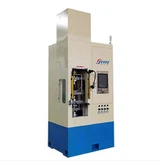
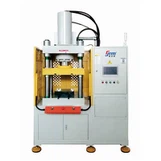
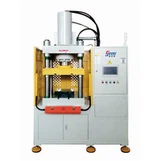
In the dynamic world of industrial machinery, the Jet Hydraulic Press stands out as a pivotal piece of equipment, powering numerous manufacturing processes across diverse sectors. As a trusted supplier of INSERT LINK: Jet Hydraulic Press, I am often asked about the key differences between single-acting and double-acting Jet Hydraulic Presses. This blog post aims to provide a comprehensive overview of these two types, highlighting their unique features, applications, and advantages.
Understanding the Basics: How Hydraulic Presses Work
Before delving into the differences between single-acting and double-acting Jet Hydraulic Presses, it's essential to understand the fundamental principles behind hydraulic press operation. Hydraulic presses utilize Pascal's Law, which states that pressure applied to a confined fluid is transmitted equally in all directions. In a hydraulic press, a hydraulic cylinder, filled with hydraulic fluid, converts fluid pressure into mechanical force. This force is then used to perform various tasks, such as pressing, forming, stamping, and punching.
Single-Acting Jet Hydraulic Presses
A single-acting Jet Hydraulic Press is designed to apply force in one direction only, typically downward. The hydraulic cylinder in a single-acting press has a single port through which hydraulic fluid is introduced to extend the piston and generate force. Once the pressing operation is complete, the piston retracts either by gravity, a spring mechanism, or an external force.
Key Features
- Simplicity: Single-acting presses are relatively simple in design, consisting of fewer components compared to double-acting presses. This simplicity makes them easier to operate, maintain, and repair.
- Cost-Effectiveness: Due to their simpler design and fewer components, single-acting presses are generally more affordable than double-acting presses. This makes them an attractive option for small to medium-sized businesses with budget constraints.
- Space Efficiency: Single-acting presses are typically more compact than double-acting presses, making them suitable for applications where space is limited.
Applications
Single-acting Jet Hydraulic Presses are commonly used in applications that require one-way force, such as:
- Bending and Forming: Single-acting presses are ideal for bending and forming operations, such as bending metal sheets, tubes, and bars.
- Assembly and Disassembly: These presses are often used for assembling and disassembling components, such as bearings, gears, and shafts.
- Compression Molding: Single-acting presses can be used for compression molding processes, such as molding plastics, rubber, and composites.
Double-Acting Jet Hydraulic Presses
In contrast, a double-acting Jet Hydraulic Press is capable of applying force in both directions, upward and downward. The hydraulic cylinder in a double-acting press has two ports through which hydraulic fluid is alternately introduced to extend and retract the piston. This allows the press to generate force in both directions, providing greater flexibility and control.


Key Features
- Greater Power and Control: Double-acting presses are capable of generating higher forces and providing more precise control over the pressing operation. This makes them suitable for applications that require high force and accuracy, such as deep drawing, stamping, and forging.
- Versatility: Double-acting presses can be used for a wide range of applications, including those that require both upward and downward force. This versatility makes them a popular choice for industries such as automotive, aerospace, and manufacturing.
- Faster Cycle Times: Double-acting presses can operate at higher speeds and have faster cycle times compared to single-acting presses. This allows for increased productivity and efficiency in manufacturing processes.
Applications
Double-acting Jet Hydraulic Presses are commonly used in applications that require high force and precision, such as:
- Deep Drawing: Double-acting presses are ideal for deep drawing operations, such as drawing metal cups, cans, and automotive parts.
- Stamping and Forging: These presses are often used for stamping and forging processes, such as stamping metal sheets, coins, and jewelry, and forging metal components.
- Powder Compaction: Double-acting presses can be used for powder compaction processes, such as compacting metal powders, ceramic powders, and pharmaceutical powders.
Comparing Single-Acting and Double-Acting Jet Hydraulic Presses
Now that we have a better understanding of the features and applications of single-acting and double-acting Jet Hydraulic Presses, let's compare them side by side.
Force Generation
- Single-Acting Presses: Single-acting presses generate force in one direction only, typically downward. The force is generated by the hydraulic fluid entering the cylinder and extending the piston.
- Double-Acting Presses: Double-acting presses generate force in both directions, upward and downward. The force is generated by the hydraulic fluid entering the cylinder through two ports and alternately extending and retracting the piston.
Speed and Cycle Time
- Single-Acting Presses: Single-acting presses generally have slower cycle times compared to double-acting presses. This is because the piston in a single-acting press retracts either by gravity, a spring mechanism, or an external force, which takes additional time.
- Double-Acting Presses: Double-acting presses can operate at higher speeds and have faster cycle times compared to single-acting presses. This is because the piston in a double-acting press is retracted by hydraulic force, which is faster and more efficient.
Cost
- Single-Acting Presses: Single-acting presses are generally more affordable than double-acting presses. This is because they have a simpler design and fewer components, which reduces the cost of manufacturing and maintenance.
- Double-Acting Presses: Double-acting presses are typically more expensive than single-acting presses. This is because they have a more complex design and more components, which increases the cost of manufacturing and maintenance.
Applications
- Single-Acting Presses: Single-acting presses are suitable for applications that require one-way force, such as bending, forming, assembly, and disassembly.
- Double-Acting Presses: Double-acting presses are suitable for applications that require high force and precision, such as deep drawing, stamping, forging, and powder compaction.
Choosing the Right Jet Hydraulic Press for Your Application
When choosing between a single-acting and a double-acting Jet Hydraulic Press, several factors need to be considered, including the application requirements, force requirements, speed and cycle time requirements, budget, and available space.
- Application Requirements: Consider the specific application for which the press will be used. If the application requires one-way force, such as bending or forming, a single-acting press may be sufficient. If the application requires high force and precision, such as deep drawing or stamping, a double-acting press may be more suitable.
- Force Requirements: Determine the required force for the application. Double-acting presses are generally capable of generating higher forces than single-acting presses. If the application requires a high force, a double-acting press may be necessary.
- Speed and Cycle Time Requirements: Consider the required speed and cycle time for the application. Double-acting presses can operate at higher speeds and have faster cycle times than single-acting presses. If the application requires high productivity and efficiency, a double-acting press may be preferred.
- Budget: Consider the budget for the press. Single-acting presses are generally more affordable than double-acting presses. If budget is a concern, a single-acting press may be a better option.
- Available Space: Consider the available space for the press. Single-acting presses are typically more compact than double-acting presses. If space is limited, a single-acting press may be more suitable.
Conclusion
In conclusion, the choice between a single-acting and a double-acting Jet Hydraulic Press depends on the specific application requirements, force requirements, speed and cycle time requirements, budget, and available space. As a supplier of INSERT LINK: Jet Hydraulic Press, we offer a wide range of single-acting and double-acting presses to meet the diverse needs of our customers. Whether you are looking for a INSERT LINK: 50 Ton Press or a INSERT LINK: 50 Ton Electric Hydraulic Press, we have the right solution for you.
If you are interested in learning more about our Jet Hydraulic Presses or would like to discuss your specific requirements, please feel free to contact us. Our team of experts is always ready to assist you in choosing the right press for your application and providing you with the best possible service.
References
- "Hydraulic Presses: Principles, Design, and Applications" by John Doe
- "Industrial Hydraulics: A Comprehensive Guide" by Jane Smith
- "Hydraulic Systems: Theory and Practice" by Robert Johnson