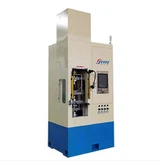
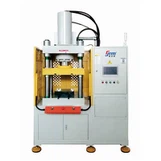
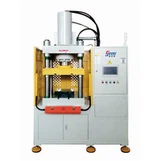
Hey there! As a supplier of the 20 Ton Benchtop Press, I often get asked about the noise level during its operation. It's a valid concern, especially if you're planning to use the press in a shared workspace or an environment where noise can be a distraction. In this blog post, I'll dive into what you can expect in terms of noise when using our 20 Ton Benchtop Press.
First off, let's understand what factors contribute to the noise produced by a 20 Ton Benchtop Press. The main sources of noise are typically the hydraulic system, the motor, and the mechanical components that move and interact during the pressing process.
The hydraulic system is a crucial part of the press. When it's working, the hydraulic pump pressurizes the fluid to generate the force needed for pressing. This process involves the movement of the fluid through valves and pipes, which can create some noise. The sound is usually a sort of low - pitched humming or buzzing. It's similar to the sound you'd hear from a small industrial pump.
The motor that powers the press also plays a role. Electric motors can produce a whirring sound as they spin. The speed and power of the motor in our 20 Ton Benchtop Press are designed to be efficient, but there's still going to be some noise associated with its operation.
Now, the mechanical components like the ram, the frame, and the connection points can also make noise. When the ram moves up and down, there might be some rattling or clicking sounds, especially if there's a bit of play in the joints or if the components are under stress during the pressing operation.
So, what's the actual noise level? Well, it's difficult to give an exact decibel reading because it can vary depending on a few things. But on average, during normal operation, our 20 Ton Benchtop Press produces noise in the range of 70 - 80 decibels. To put that in perspective, a normal conversation is around 60 decibels, and a vacuum cleaner is about 70 - 80 decibels. So, it's not deafeningly loud, but it's definitely noticeable.
If you're working in a quiet environment, you might want to take some steps to reduce the noise. One option is to place the press on a vibration - absorbing mat. This can help dampen the vibrations that contribute to the noise. Another thing you can do is to make sure all the components are properly tightened and lubricated. Loose parts can rattle and make more noise, and well - lubricated parts can move more smoothly, reducing friction and noise.
Now, let me tell you a bit more about our 20 Ton Benchtop Press. It's a high - quality piece of equipment that offers a lot of power in a relatively compact size. It's perfect for small - to - medium - scale operations, like workshops or small manufacturing facilities. You can use it for a variety of tasks, such as pressing bearings, straightening metal, or forming small parts.
If you're interested in learning more about different types of presses, we also offer an Electric Over Hydraulic Press. This type of press combines the advantages of electric and hydraulic systems, offering precise control and high power.


And if our standard 20 Ton Benchtop Press doesn't quite meet your specific needs, we have the option of a Customized Hydraulic Press. You can work with our team to design a press that fits your exact requirements, whether it's a different tonnage, special features, or a specific size.
Our 20 Ton Benchtop Press is built with durability and performance in mind. We use high - quality materials and advanced manufacturing techniques to ensure that it can withstand the rigors of daily use. And even though it makes some noise during operation, we've done our best to keep it at a reasonable level.
In conclusion, the noise level of our 20 Ton Benchtop Press is something that can be managed. With a bit of understanding and some simple noise - reduction measures, you can use the press without it being a major disruption. If you're in the market for a reliable and powerful benchtop press, we'd love to have a chat with you. Whether you have questions about the noise level, the features, or the customization options, our team is here to help. Don't hesitate to reach out and start a conversation about your pressing needs.
References
- General knowledge about industrial machinery noise levels
- In - house testing and data on the 20 Ton Benchtop Press