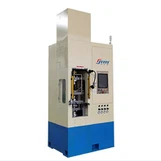
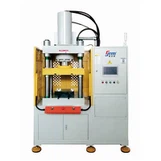
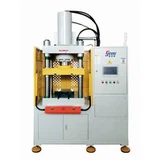
As a seasoned supplier of electric servo presses, I've witnessed firsthand the transformative impact these machines have on various industries. Electric servo presses are renowned for their precision, efficiency, and flexibility, making them indispensable in modern manufacturing processes. But what exactly powers these remarkable machines? In this blog post, I'll delve into the power sources of electric servo presses, exploring the technologies that drive their performance and the benefits they offer.
Electric Servo Motors: The Heart of the Press
At the core of every electric servo press is an electric servo motor. These motors are designed to provide precise control over the press's movement, allowing for accurate positioning and force application. Unlike traditional hydraulic or pneumatic presses, which rely on fluid power, electric servo presses use electric motors to convert electrical energy into mechanical motion.
How Electric Servo Motors Work
Electric servo motors operate on the principle of electromagnetic induction. When an electric current is applied to the motor's coils, a magnetic field is created, which interacts with the motor's permanent magnets to produce torque. The amount of torque generated is proportional to the current flowing through the coils, allowing for precise control over the motor's speed and position.
In an electric servo press, the servo motor is connected to a ball screw or a belt drive, which converts the rotary motion of the motor into linear motion. This linear motion is then transferred to the press ram, which applies force to the workpiece. By controlling the speed and position of the servo motor, the press can achieve high levels of precision and repeatability.
Advantages of Electric Servo Motors
There are several advantages to using electric servo motors in electric servo presses:
- Precision: Electric servo motors offer precise control over the press's movement, allowing for accurate positioning and force application. This makes them ideal for applications that require high levels of precision, such as electronics manufacturing and medical device production.
- Efficiency: Electric servo motors are more energy-efficient than traditional hydraulic or pneumatic presses. They only consume power when they are in use, reducing energy waste and operating costs.
- Flexibility: Electric servo presses can be easily programmed to perform a variety of tasks, making them highly flexible and adaptable to different production requirements. They can also be integrated with other automation systems, such as robots and conveyors, to create a fully automated production line.
- Low Maintenance: Electric servo motors have fewer moving parts than traditional hydraulic or pneumatic presses, reducing the need for maintenance and downtime. They also do not require hydraulic fluid or compressed air, eliminating the risk of leaks and contamination.
Power Supply and Control Systems
In addition to the servo motor, an electric servo press also requires a power supply and a control system to operate. The power supply provides the electrical energy needed to drive the servo motor, while the control system manages the press's operation and ensures its safety.

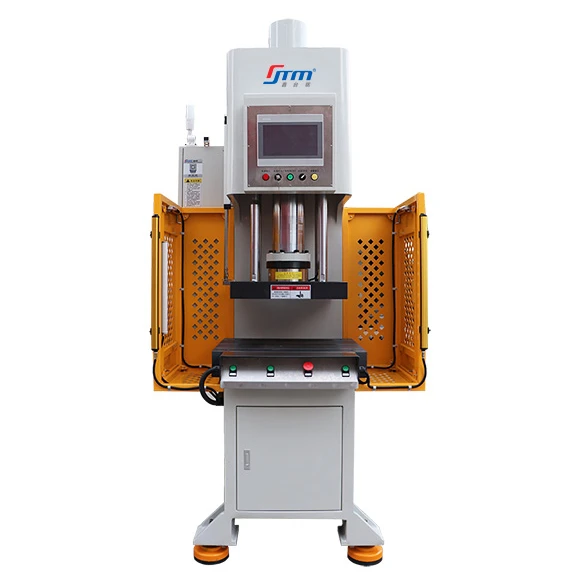
Power Supply
The power supply for an electric servo press typically consists of a transformer, a rectifier, and a capacitor bank. The transformer steps down the voltage from the main power supply to a level suitable for the servo motor. The rectifier converts the alternating current (AC) from the transformer into direct current (DC), which is used to power the servo motor. The capacitor bank stores electrical energy and provides a stable power supply to the servo motor, reducing the impact of voltage fluctuations.
Control System
The control system for an electric servo press is responsible for managing the press's operation and ensuring its safety. It typically consists of a programmable logic controller (PLC), a human-machine interface (HMI), and a servo drive. The PLC is the brain of the control system, which executes the control program and monitors the press's operation. The HMI provides a user interface for the operator to input commands and monitor the press's status. The servo drive controls the speed and position of the servo motor, based on the commands from the PLC.
The control system also includes various safety features, such as emergency stop buttons, light curtains, and safety interlocks, to protect the operator and the equipment. These safety features are designed to prevent accidents and ensure the safe operation of the press.
Types of Electric Servo Presses
There are several types of electric servo presses available on the market, each with its own unique features and applications. The most common types of electric servo presses include:
- Servo Mechanical Press: A servo mechanical press uses a servo motor to drive a mechanical crankshaft or a toggle mechanism, which converts the rotary motion of the motor into linear motion. Servo mechanical presses are known for their high speed and high force capabilities, making them suitable for applications such as stamping, forging, and deep drawing.
- Servo Hydraulic Press Machine: A servo hydraulic press machine combines the advantages of hydraulic and electric servo technology. It uses a servo motor to drive a hydraulic pump, which provides the hydraulic pressure needed to operate the press. Servo hydraulic presses are known for their high force capabilities and precise control, making them suitable for applications such as metal forming, extrusion, and injection molding.
- High Precision Servo Press: A high precision servo press is designed for applications that require high levels of precision and repeatability. It uses a servo motor and a ball screw or a belt drive to achieve precise control over the press's movement. High precision servo presses are commonly used in electronics manufacturing, medical device production, and micro-machining.
Conclusion
In conclusion, the power source of an electric servo press is an electric servo motor, which converts electrical energy into mechanical motion. The servo motor is connected to a ball screw or a belt drive, which transfers the rotary motion of the motor into linear motion. The press also requires a power supply and a control system to operate, which provide the electrical energy and manage the press's operation, respectively.
Electric servo presses offer several advantages over traditional hydraulic or pneumatic presses, including precision, efficiency, flexibility, and low maintenance. They are also available in various types, each with its own unique features and applications. Whether you are looking for a high-speed stamping press or a high-precision micro-machining press, there is an electric servo press that can meet your needs.
If you are interested in learning more about electric servo presses or are considering purchasing one for your manufacturing process, please don't hesitate to contact us. Our team of experts is available to answer your questions and provide you with the information you need to make an informed decision. We look forward to working with you to find the perfect electric servo press for your application.
References
- "Electric Servo Presses: Principles, Applications, and Advantages." Industrial Press Handbook, 2023.
- "Servo Motor Technology for Precision Motion Control." Motion Control Magazine, 2022.
- "Power Supply and Control Systems for Electric Servo Presses." Automation World, 2021.