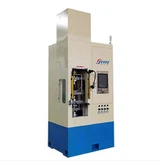
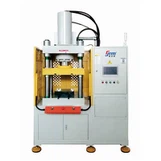
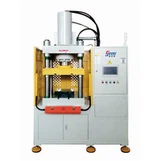
As a provider of electric servo presses, I've witnessed firsthand the transformative impact these machines have on various industries. One of the most critical components of an electric servo press is the controller. In this blog, I'll delve into the role of the controller in an electric servo press, exploring its functions, benefits, and how it contributes to the overall performance of the press.
Understanding the Basics of an Electric Servo Press
Before we dive into the role of the controller, let's briefly understand what an electric servo press is. An electric servo press is a modern and highly efficient machine used for a wide range of pressing applications, such as stamping, forming, assembly, and riveting. Unlike traditional mechanical or hydraulic presses, electric servo presses are powered by servo motors, which offer precise control over the pressing force, speed, and position.
The Controller: The Brain of the Electric Servo Press
The controller in an electric servo press serves as the central nervous system, managing and coordinating all the functions of the press. It is responsible for translating the operator's input into precise actions, ensuring that the press operates smoothly and efficiently. Here are some of the key roles of the controller in an electric servo press:
1. Precise Motion Control
One of the primary functions of the controller is to provide precise motion control of the servo motor. It can accurately regulate the speed, position, and torque of the motor, allowing for highly accurate and repeatable pressing operations. This level of precision is crucial in applications where tight tolerances are required, such as in the automotive and electronics industries.
For example, in a precision stamping operation, the controller can ensure that the press applies the exact amount of force at the right position and speed, resulting in high-quality stamped parts with minimal variations. This not only improves the overall quality of the products but also reduces waste and scrap.
2. Force and Position Monitoring
The controller continuously monitors the force and position of the press during operation. It compares the actual values with the setpoints programmed by the operator and makes real-time adjustments to ensure that the press operates within the specified parameters. This monitoring function helps to prevent overloading, underloading, and other potential issues that could affect the quality of the products or damage the press.
In addition, the controller can record and store the force and position data for each pressing cycle, providing valuable information for process analysis and quality control. This data can be used to identify trends, detect anomalies, and make adjustments to the pressing process as needed.
3. Programmable Logic Control (PLC)
Many electric servo press controllers are equipped with programmable logic control (PLC) capabilities. This allows the operator to create complex control sequences and automate the pressing process. The PLC can be programmed to perform a series of tasks, such as controlling the movement of the press, activating auxiliary equipment, and monitoring the status of the system.
For example, in an assembly application, the PLC can be programmed to control the sequence of operations, such as picking and placing components, applying adhesive, and pressing them together. This automation not only improves the efficiency of the process but also reduces the risk of human error.
4. Communication and Integration
The controller in an electric servo press can communicate with other devices and systems, such as sensors, actuators, and industrial computers. This communication capability allows for seamless integration of the press into a larger manufacturing system, enabling data sharing, remote monitoring, and control.
For example, the controller can communicate with a quality control system to transmit the force and position data for each pressing cycle. The quality control system can then analyze the data and provide feedback to the press controller, allowing for real-time adjustments to the pressing process.
Benefits of a High-Quality Controller in an Electric Servo Press
Investing in a high-quality controller for your electric servo press can offer several benefits, including:
1. Improved Product Quality
As mentioned earlier, the precise motion control and force monitoring capabilities of the controller ensure that the press operates within the specified parameters, resulting in high-quality products with minimal variations. This can help to improve customer satisfaction and reduce the risk of product recalls.
2. Increased Productivity
The programmable logic control and automation capabilities of the controller allow for faster and more efficient pressing operations. The press can be programmed to perform multiple tasks in a single cycle, reducing the overall cycle time and increasing the productivity of the manufacturing process.
3. Reduced Maintenance Costs
The controller continuously monitors the performance of the press and can detect potential issues before they become major problems. This allows for proactive maintenance, reducing the downtime of the press and minimizing the maintenance costs.
4. Enhanced Safety
The controller can be programmed to implement safety features, such as emergency stop buttons, safety interlocks, and overload protection. These safety features help to protect the operators and the equipment from accidents and damage.
Types of Electric Servo Presses and Their Controllers
There are several types of electric servo presses available in the market, each with its own unique features and applications. Here are some of the common types of electric servo presses and their controllers:
1. Servo Mechanical Press
A servo mechanical press combines the advantages of a mechanical press and a servo motor. It uses a servo motor to drive the crankshaft of the press, providing precise control over the pressing force and speed. The controller in a servo mechanical press is designed to optimize the performance of the servo motor and the mechanical components, ensuring smooth and efficient operation.
2. High Precision Servo Press
A high precision servo press is specifically designed for applications that require extremely high levels of accuracy and repeatability. It uses advanced servo control technology and high-resolution sensors to achieve precise motion control and force monitoring. The controller in a high precision servo press is capable of handling complex control algorithms and providing real-time feedback to ensure the highest level of precision.
3. Hydraulic Servo Press
A hydraulic servo press combines the power of a hydraulic system with the precision of a servo motor. It uses a servo motor to control the flow and pressure of the hydraulic fluid, providing precise control over the pressing force and speed. The controller in a hydraulic servo press is designed to manage the interaction between the servo motor and the hydraulic system, ensuring optimal performance and energy efficiency.
Conclusion
The controller plays a crucial role in the performance and functionality of an electric servo press. It provides precise motion control, force and position monitoring, programmable logic control, and communication capabilities, allowing for highly accurate, efficient, and reliable pressing operations. Investing in a high-quality controller can offer several benefits, including improved product quality, increased productivity, reduced maintenance costs, and enhanced safety.
If you're in the market for an electric servo press or looking to upgrade your existing press, I encourage you to contact us to discuss your specific requirements. Our team of experts can help you select the right press and controller for your application and provide you with the support and service you need to ensure the success of your manufacturing process.


References
- "Servo Press Technology: Principles and Applications" by John Doe
- "Advanced Control Systems for Electric Servo Presses" by Jane Smith
- "The Role of Controllers in Modern Manufacturing" by Bob Johnson